Unleashing the Power of 13Cr Steel in Oil Fields: Shunfu Metal Pioneering Excellence
Short answer: 13Cr is the cheapest way to stop CO2 corrosion in a well that has no H2S. Plain L80 13Cr covers sweet service to about 150 °C; modified 13Cr adds nickel for toughness; super 13Cr (13Cr-5Ni-2Mo) takes 95–110 ksi and tolerates up to 1.5 psi H2S. Beyond that the answer is duplex or a nickel alloy, not a harder 13Cr.
Almost every CO2-bearing development reaches the same fork: run carbon steel with a corrosion allowance and an inhibitor programme, or pay three to five times the tube price for a corrosion-resistant alloy and stop thinking about it. 13Cr sits at the cheaper end of that second option, and for a large share of onshore and shelf wells it is the point where the total cost actually falls — no chemical injection skid, no inhibitor logistics, no periodic wall-thickness surveys on a line you cannot easily reach.
What it is not is a general-purpose stainless. The grade is martensitic, it is hardenable, and its corrosion resistance collapses once H2S enters the picture. Most of the expensive mistakes in 13Cr specification come from treating it as “stainless steel, but cheaper”.
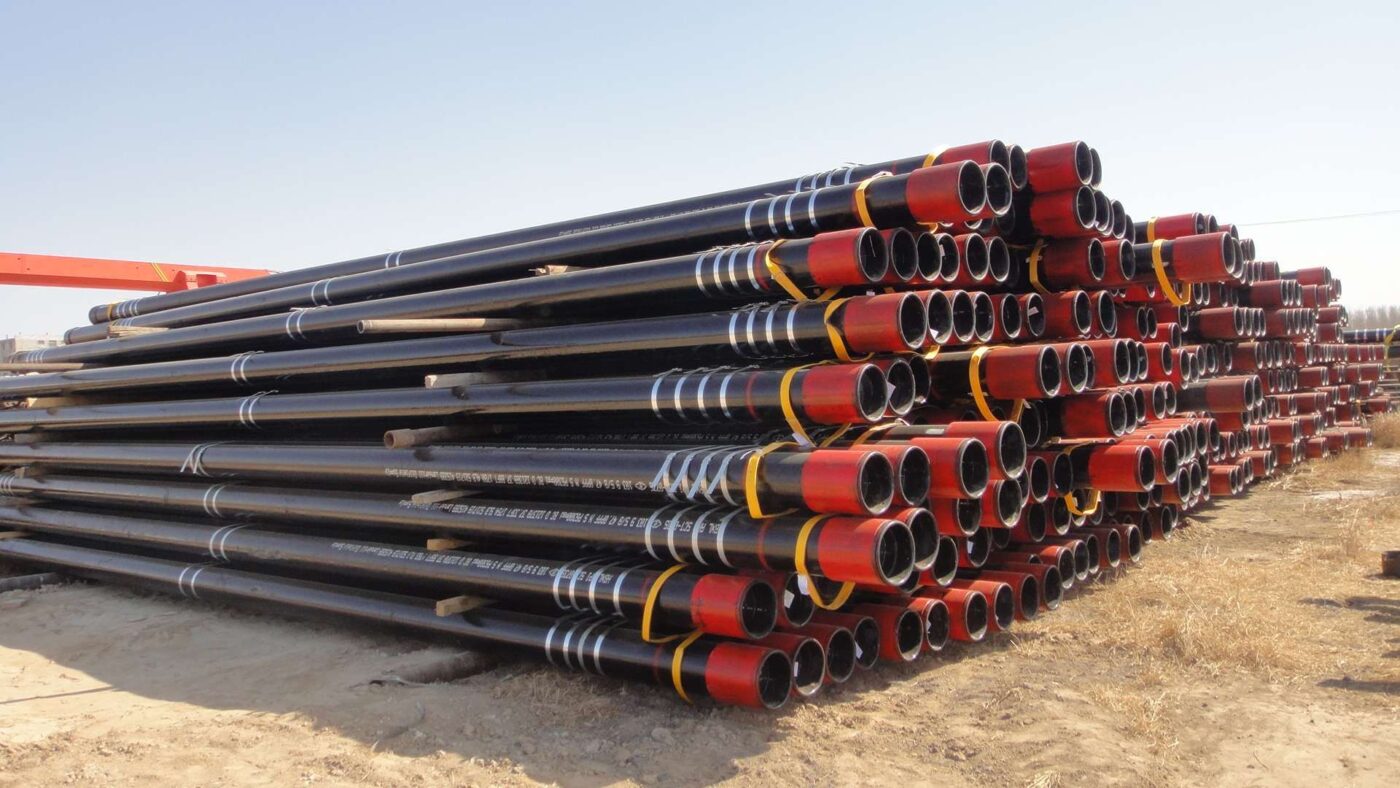
Where does carbon steel stop being viable? As a working rule, once the CO2 partial pressure climbs above about 30 psi, uninhibited carbon steel corrodes fast enough that the corrosion allowance and the inhibitor programme stop being economic — and that is the point at which a CRA tubular is considered. 13Cr is the cheapest member of that family.
What 13Cr Actually Is
13Cr is a martensitic stainless with 11.5–14% chromium and a carbon content that varies by grade from about 0.03% to 0.22%. It is austenitised around 950–1,000 °C, quenched, and double tempered. The tempering temperature sets the strength: a high temper gives the 80 ksi L80 condition, a lower temper gives 95 or 110 ksi.
The corrosion resistance comes from a thin chromium oxide film. That film is stable in CO2-saturated brine and in dilute organic acids, which is precisely the produced-fluid chemistry of a sweet well. It is not stable in the presence of sulphide, because H2S converts the protective oxide into a sulphide that is both less protective and a ready path for hydrogen entry. That single mechanism explains every limit in the table below.
The Three Grades Buyers Usually Mean
“13Cr” on an enquiry can mean three different materials with very different price tags and completely different service envelopes. Asking which one is the first question worth asking.
| Grade family | Typical chemistry | Yield | H2S limit | Practical ceiling |
| L80 Type 13Cr (S42000) | 13Cr, C up to 0.22% | 80 ksi / 552 MPa | Sweet service only | ~150 °C, low chloride |
| Modified 13Cr (HP1 class) | 13Cr-4Ni-0.5Mo | 95–110 ksi | Sweet service only | ~175 °C, better toughness |
| Super 13Cr (S41426 / HP2) | 13Cr-5Ni-2Mo | 95–110 ksi | ≤ 1.5 psi at pH ≥ 3.5 | ~180 °C |
The step from L80 to super 13Cr is not just strength. Adding 5% nickel lowers the martensite-start temperature, which keeps thick sections tough after quenching; adding 2% molybdenum lifts the pitting resistance enough to tolerate chlorides that would pit plain 13Cr. That is what buys the NACE MR0175 Table A.19 listing, and it is why super 13Cr is the default for 10K and 15K tree bodies while L80 13Cr remains a tubing material.
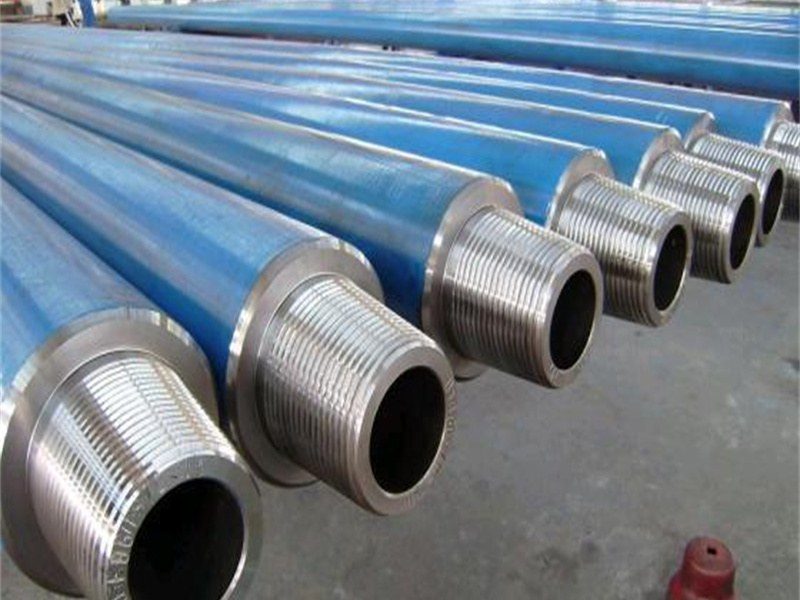
We supply 13Cr CRA OCTG pipe to API 5CT and 5CRA, modified 13Cr tubing for the intermediate case, and super 13Cr forged valve bodies where a tree component has to be machined from a single block.
Where 13Cr Stops — Four Hard Limits
These four limits are worth putting in front of a client before the specification is frozen, because each one changes the material rather than the heat treatment.
1. Any meaningful H2S
Plain and modified 13Cr are sweet-service materials, full stop. Super 13Cr tolerates up to about 1.5 psi H2S partial pressure at pH 3.5 or above; below that pH, or above that pressure, sulphide stress cracking becomes the governing failure mode and no amount of hardness control saves it. The material changes to duplex or to a nickel alloy.
2. Temperature above roughly 180 °C
The oxide film thins and becomes more defective as temperature rises, and the tempering response of the steel starts to be affected. Above about 180 °C the corrosion rate in CO2 brine climbs back toward what a corrosion allowance was designed for, which removes the economic argument.
3. Chlorides and oxygen together
13Cr resists chlorides in oxygen-free produced brine, but produced water that has been aerated — during workover, storage or hydrotest left wet — will pit. Our pipe is supplied pickled, passivated and dry, and we recommend nitrogen purging on any 13Cr line that will be mothballed.
4. Sulphur and solids
Sand-producing wells erode the passive film faster than it can reform. Where sand is present, the choice moves to a duplex or to a chrome overlay, not to a thicker 13Cr wall.
What 13Cr Is Actually Used For
The applications that justify the price are narrower than most articles suggest, and worth stating precisely:
- Production casing and tubing in CO2 wells where the partial pressure is high enough that carbon steel would need a thick allowance or continuous inhibition.
- Wellhead adapters, spools and small-bore flowlines upstream of the choke, where the fluid is still hot and wet.
- Tree valve bodies and trim in the 95–110 ksi super 13Cr condition.
- Completion equipment — mandrels, sleeves and subs that see the same fluid as the tubing.
Two applications are frequently mis-attributed. 13Cr is not a drill collar material: collars are made from 4145H MOD or from non-magnetic chromium-manganese steels, because they must survive impact loading rather than CO2. And 13Cr is not an offshore structural or seawater material; splash-zone and seawater piping belongs to duplex, super duplex or a copper-nickel alloy.
Choosing Between 13Cr and Super 13Cr
The decision usually comes down to two numbers: H2S partial pressure and design pressure. If there is no H2S and the pressure is moderate, L80 13Cr is the cheapest compliant answer. If the tree has to hold 15K and the fluid carries a trace of H2S, super 13Cr at 110 ksi is the only member of the family that qualifies. The middle case — some chlorides, higher temperature, no sulphide — is where modified 13Cr earns its place.
For a side-by-side of the two most common choices, our article on 13Cr versus super 13Cr walks through the same comparison from the metallurgical side. If H2S is already at a level that rules 13Cr out, the starting point becomes 2507 super duplex.
Who Actually Makes 13Cr Casing
The reason 13Cr costs what it does is that very few mills can make it. The grade needs tight chemistry control, a controlled quench on a heavy wall, and a double temper that holds hardness inside the NACE limit across the section — and the yield loss on a bad heat is large enough that most producers avoid it altogether.
Capacity is concentrated. Baosteel’s 13Cr oil casing ranked among the world’s top three by annual output as of October 2022, with eight independently patented grades and integrated production from billet to finished pipe. For a buyer this has a practical consequence: 13Cr is not a commodity that can be picked up from any stocking mill, and a quotation significantly below market usually reflects either a different grade or a heat without the full test package.
Supply, Standards and Testing
Pipe is ordered to API 5CT (L80 Type 13Cr) or API 5CRA / ISO 13680 (Group 1, Category 13-5-2 for super 13Cr). Forging stock follows ASTM A182 F6NM where the chemistry allows, or a purchaser specification referencing A276 S41426 for the super grade. Bar for completion tools is supplied quenched and tempered to the specified yield condition.
Two documentation points matter more than they look. First, hardness must be verified on the finished wall or section, not on a test coupon from the same heat — the NACE limit is a hardness limit and thick sections cool differently. Second, the heat treatment condition has to appear on the certificate: an L80 13Cr tube and a super 13Cr forging are both “13Cr” and neither is interchangeable with the other.
Related product specifications from SHUNFU METAL: 13Cr CRA OCTG pipe.