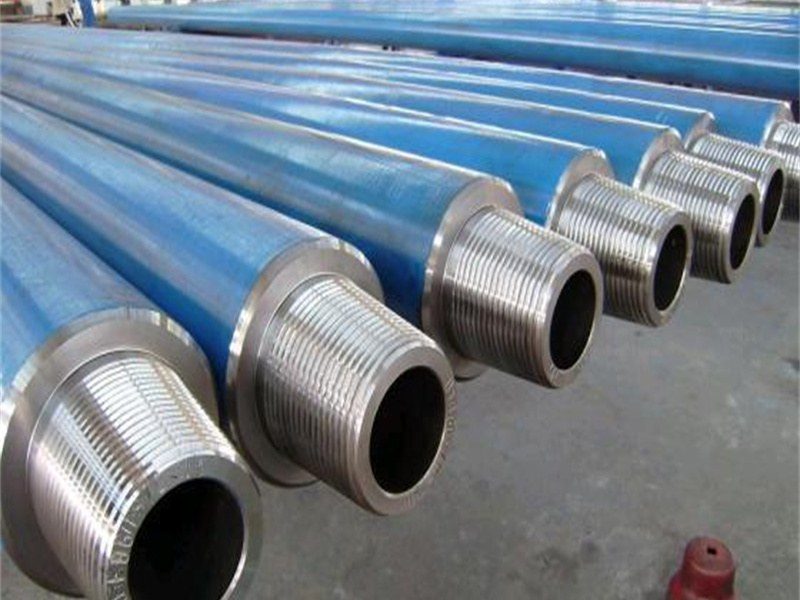
Short answer: 17Cr is a martensitic stainless that sits between 13Cr and the duplex grades. It buys more CO2 corrosion resistance than 13Cr and more strength than an austenitic, and it is not a sour-service material. Specify it for CO2-dominated wells where 13Cr is marginal and duplex is over-specified.
What “17Cr” means
The name refers to the chromium content — roughly 17%. That is enough chromium to form a passive film in wet CO2 service, and low enough to keep the steel martensitic, which means it can be hardened by quenching and softened by tempering. Strength therefore comes from heat treatment rather than from cold work or from nickel.
That single sentence explains both the appeal and the limit. Because it is martensitic, it can be supplied at yield strengths that compete with carbon steel; because it is martensitic, its toughness and its resistance to sulphide stress cracking are lower than the austenitic and duplex families.
Where it sits between 13Cr and duplex
| Family | Cr | How it gets strength | CO2 service | Sour (H2S) service |
|---|---|---|---|---|
| 13Cr martensitic | ~13% | Quench and temper | Good at moderate temperature | Limited; hardness-controlled grades only |
| 17Cr martensitic | ~17% | Quench and temper | Better than 13Cr, wider temperature window | Not a sour-service grade |
| 22Cr duplex | ~22% | Ferrite + austenite, no hardening | Good | Yes, within limits |
| 25Cr super duplex | ~25% | Ferrite + austenite | Very good | Yes, higher limits |
The table is a map, not a specification. Actual limits come from the applicable standard and from the well conditions — temperature, CO2 partial pressure, chloride content, pH and H2S partial pressure, taken together. A grade that performs at one chloride level can fail at another.
What the extra chromium buys
- Higher temperature before CO2 corrosion becomes a problem. The passive film on 17Cr is more stable than on 13Cr, which moves the practical temperature ceiling up.
- More tolerance to chloride. Not unlimited tolerance — but a wider window before pitting and crevice attack begin.
- Strength without cold work. Tempering gives a range of yield levels from one chemistry, which simplifies procurement compared with cold-worked austenitics.
Where it does not fit
Three boundaries are worth stating plainly:
- Sour service. Martensitic stainless under H2S carries a hardness ceiling and a cracking risk that 17Cr does not escape. If the well has meaningful H2S, the conversation moves to duplex or to a nickel alloy, not to a harder 17Cr.
- Welded construction without qualification. Martensitic steels need preheat and post-weld heat treatment; a field weld on 17Cr is a procedure, not a repair.
- Very high chloride at high temperature. Above the crevice-corrosion threshold the extra 4% chromium is not enough, and 22Cr or 25Cr takes over.
What to put in an enquiry
- Product form and size (tubing, casing, bar for trim, forged body).
- Required yield strength and the tempering condition that delivers it.
- Well chemistry: CO2, H2S, chlorides, temperature, pH.
- Applicable standard and inspection regime, including hardness testing on the finished part.
- Whether the part is welded, and if so, the qualified procedure.
Where to read next
The 13Cr baseline is covered in 13Cr steel in oil fields and the direct comparison in 13Cr versus super 13Cr. For the duplex step up, see the duplex stainless guide, and for selection by environment, CRA selection: CO2 versus H2S.