
Super 13Cr (UNS S41426, EN 1.4415) is the martensitic stainless that let 13Cr move from sweet CO₂ wells into mildly sour service. Adding 5% nickel and 2% molybdenum to plain 13Cr lowers the martensite start temperature enough to keep the forged section tough, and it buys a NACE MR0175 Table A.19 listing up to 1.5 psi H₂S.
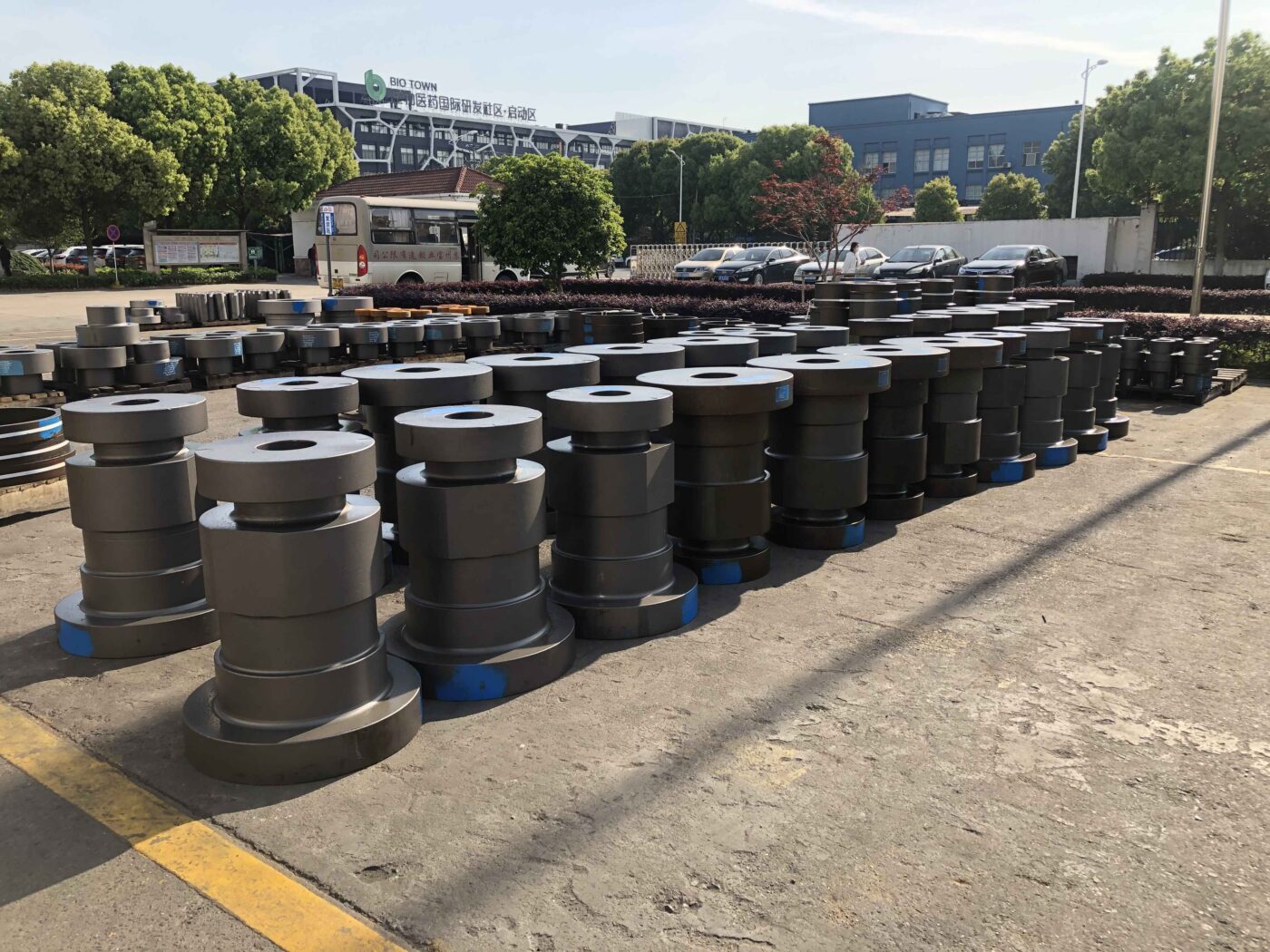
The grade is quenched from about 980 °C and double tempered, which produces a fine distribution of chromium carbides in a tempered martensite matrix. Yield strength is set by the tempering temperature: 95 ksi for the standard condition, 110 ksi for the higher-strength variant used on thicker tree bodies.
The corrosion limit is the whole story. Super 13Cr tolerates up to 1.5 psi H₂S partial pressure at pH 3.5 or above — roughly 10 times what plain 13Cr L80 will take — but it is not a general sour service alloy. Above that, or below pH 3.5, the specification moves to duplex or a nickel alloy.
For forgings the critical variables are section size and cooling rate. A 300 mm valve body quenched in polymer will not match a 100 mm bar in the same heat, so hardness and toughness are verified on a coupon from the thickest section rather than on a separately forged test bar.
13Cr Family Comparison
Three martensitic grades sit close together and are frequently confused on enquiry documents. The table sets out where each one stops in sour service — this is the single most useful distinction when a well’s H₂S content is being finalised.
| Grade | UNS | Composition | NACE MR0175 | Max temp |
| Std. 13Cr L80 | S42000 | 13Cr | Sweet CO₂ only | ≈ 150 °C |
| Modified 13Cr HP1 | proprietary | 13Cr-4Ni | Sweet CO₂ only | ≈ 180 °C |
| Super 13Cr HP2 | S41426 | 13Cr-5Ni-2Mo | Table A.19, H₂S ≤ 1.5 psi | ≈ 180 °C |
Where Super 13Cr Forgings Are Used
Tree valve bodies
Gate and ball valve bodies for 10K and 15K trees in mildly sour gas, forged and quenched as a single piece.
Wellhead outlets and adapters
Studded outlets and spacer spools between the wellhead and the tree.
Tubing hanger bodies
Hangers machined from forged blocks where a bar of the required section is not available.
Choke bodies
Body forgings for adjustable chokes exposed to sand and CO₂.
Flanges and hubs
A182-style flanges matched to S41426 pipe and tubing.
Completion tool bodies
Sleeves and subs requiring 95 ksi in a CO₂-rich environment.
Supply Range and Heat Treatment
Open-die forged blocks and bars from 100 mm to 600 mm section, up to 3,000 kg per piece; near-net valve bodies to drawing. Heat treatment is austenitise at 950–1,000 °C, quench, then double temper at 650–700 °C for the 95 ksi condition or a lower temperature for 110 ksi.
Testing includes chemistry, tensile and yield on a coupon from the thickest section, hardness survey, impact testing at the specified temperature, and NDE to A388 or A745 with agreed acceptance criteria. EN 10204 3.1 certificates with the heat-treatment chart reference.
Mechanical Properties
Values are the API 5CRA requirements for the two standard strength grades. The 110 ksi condition is used on thicker sections where the design pressure cannot be met at 95 ksi.
| Grade | Yield (0.2%) | Tensile | Hardness |
| 95 ksi | ≥ 655 MPa | ≥ 724 MPa | ≤ 27 HRC |
| 110 ksi | ≥ 758 MPa | ≥ 828 MPa | ≤ 32 HRC |
Need Super 13Cr forging stock or finished valve bodies?
Send the drawing or section size, 95 or 110 ksi, quantity and H2S partial pressure — we reply with forge availability, lead time and a priced offer, usually within one working day.