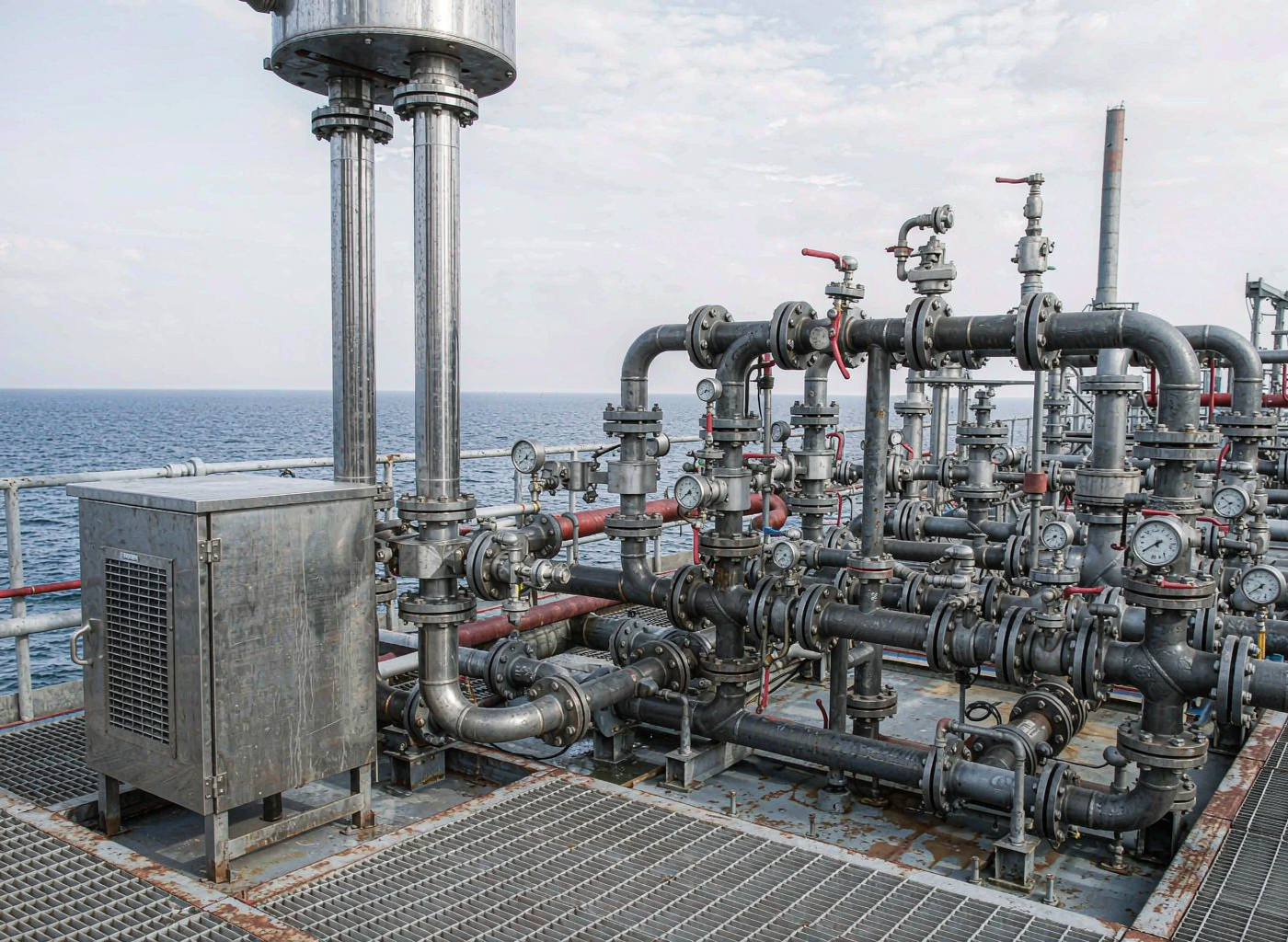
Duplex stainless steels are named for the two distinct microstructural phases that coexist within the same material — austenite and ferrite. The family combines excellent corrosion resistance, high strength and good fabricability in a single class of steel. Their physical properties fall between those of austenitic and ferritic stainless steels, though closer to those of ferritic stainless steels and carbon steel. Resistance to chloride pitting and crevice corrosion depends on chromium, molybdenum, tungsten and nitrogen content, and can range from roughly 316-type performance up to the level of seawater-grade alloys such as 6% Mo austenitic stainless steel. Every duplex grade is markedly more resistant to chloride stress corrosion cracking than 300-series austenitic stainless steels, and its strength is far higher — while still offering good ductility and toughness.
This practical guide covers the classification and chemistry of duplex stainless steels, the role of each alloying element, their metallurgy, corrosion behavior, and mechanical and physical properties. For a focused look at how these grades perform in the energy industry, see our article Duplex Stainless in Oil and Gas.
What Is Duplex Stainless Steel?
The defining feature of duplex stainless steel is its mixed microstructure, in which austenite and ferrite are present in roughly equal proportions. The family has a history of nearly 80 years. The earliest grades were chromium-nickel-molybdenum alloys: the first wrought duplex stainless steels were produced in Sweden in 1930 for the sulfite paper industry, developed to reduce intergranular corrosion problems in early high-carbon austenitic grades. Cast duplex stainless steels were produced in Finland the same year, and the predecessor of Uranus 50 was patented in France in 1936. After the Second World War, AISI 329 became an established grade widely used for heat exchanger tubing in nitric acid plants, and 3RE60 was one of the first grades developed specifically to resist chloride stress corrosion cracking (SCC). Wrought and cast duplex grades subsequently found their way into a wide range of process industry applications, including vessels, heat exchangers and pumps.
The fabrication of duplex stainless steels has much in common with austenitic stainless steels, but there are important differences. The high alloy content and high strength of duplex grades require certain changes in manufacturing practice. Duplex stainless steels are not processed like ordinary stainless steels — but processing them is not difficult either.
These first-generation duplex grades performed well in service but had limitations in the welded condition, which restricted their use mainly to specific non-welded applications. That changed in 1968 with the invention of the argon-oxygen decarburization (AOD) refining process, which made a whole new series of stainless steel grades possible. One of the many advances AOD brought was the deliberate addition of nitrogen. In duplex stainless steels, nitrogen brings the toughness and corrosion resistance of the welded heat-affected zone (HAZ) close to base metal levels; by increasing austenite stability, it also slows the formation of harmful intermetallic phases. Nitrogen-bearing duplex grades are known as second-generation duplex stainless steels. Their commercialization began in the late 1970s and coincided with the development of North Sea offshore oil and gas fields, where the market needed stainless steels with excellent chloride corrosion resistance, good fabricability and high strength. The 2205 grade became the main second-generation duplex stainless steel, widely used for gathering lines and processing facilities on offshore oil platforms. Because of its high strength, pipe wall thickness can be reduced — cutting platform weight, which makes the grade especially attractive offshore.
Current research on duplex stainless steels focuses on further performance gains: microstructure and thermomechanical processing control — including fine-grained and gradient nanostructured duplex steels with improved strength-ductility combinations — welding consumables and procedures that preserve joint corrosion resistance, the mechanisms of selective phase corrosion, and the development of new grades to meet evolving engineering demands.
Classification of Duplex Stainless Steel Grades
Like austenitic stainless steels, duplex stainless steels form a series of grades ranked by corrosion performance, which follows from their alloy content. Duplex grades continue to evolve, and modern grades fall into five groups:
- Molybdenum-free economy (lean) duplex stainless steels, such as 2304;
- Standard duplex stainless steels, such as 2205 — the dominant grade, accounting for more than 80% of duplex usage;
- 25Cr duplex stainless steels, such as Alloy 255, with PREN* below 40;
- Super duplex stainless steels with PREN 40-45, containing 25-26% Cr and higher molybdenum and nitrogen than 25Cr grades — such as 2507;
- Hyper duplex stainless steels — highly alloyed grades with PREN above 45.
*PREN (pitting resistance equivalent number) = %Cr + 3.3(%Mo + 0.5%W) + 16%N
In addition, economy grades such as AL 2003 (a low-nickel duplex stainless steel) serve cost-sensitive applications. The typical property profile of duplex stainless steels — high strength, good corrosion resistance (especially to chloride stress corrosion cracking and pitting), excellent weldability and high toughness — has earned them wide use in marine engineering, chemical processing, pulp and paper, oil and gas, and seawater desalination. In marine engineering, their resistance to seawater corrosion and pitting suits them to offshore platforms, subsea pipelines, drilling rigs and subsea production facilities. Desalination plants in locations with high seawater chloride concentrations, such as those in Saudi Arabia, use duplex stainless steel for the same reason. As materials science advances, the development of new duplex grades continues, and more high-performance or low-cost duplex materials can be expected to meet the needs of different engineering applications.
Chemical Composition and the Role of Alloying Elements
Phase balance is the first consideration in the composition of duplex stainless steels. Sound properties are achieved when ferrite makes up roughly 30-70% of the structure. Commercial duplex grades are usually described as having approximately equal amounts of ferrite and austenite, though in current commercial production the austenite fraction is often kept slightly higher to obtain the best toughness and fabrication characteristics. The interactions among the main alloying elements — especially chromium, molybdenum, nitrogen and nickel — are complex, and each element must be held at an appropriate level to obtain a stable duplex structure that is favorable for processing and fabrication.
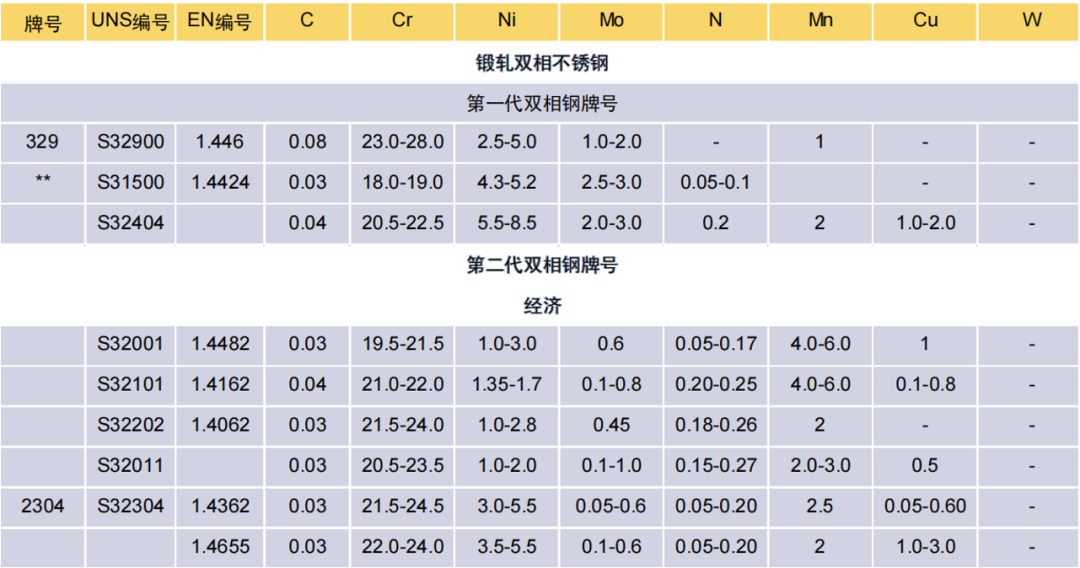
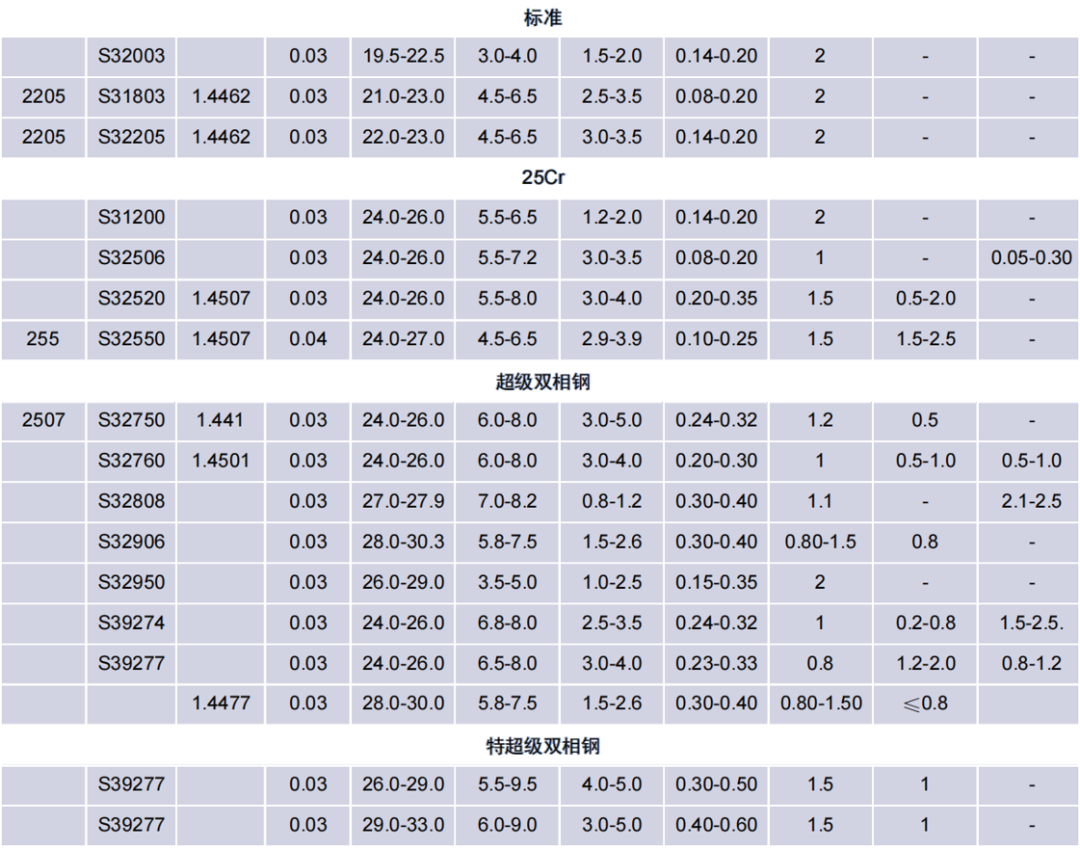
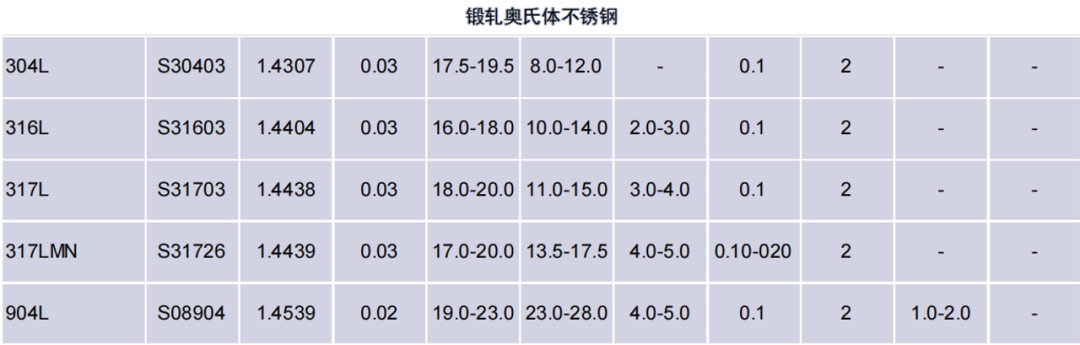
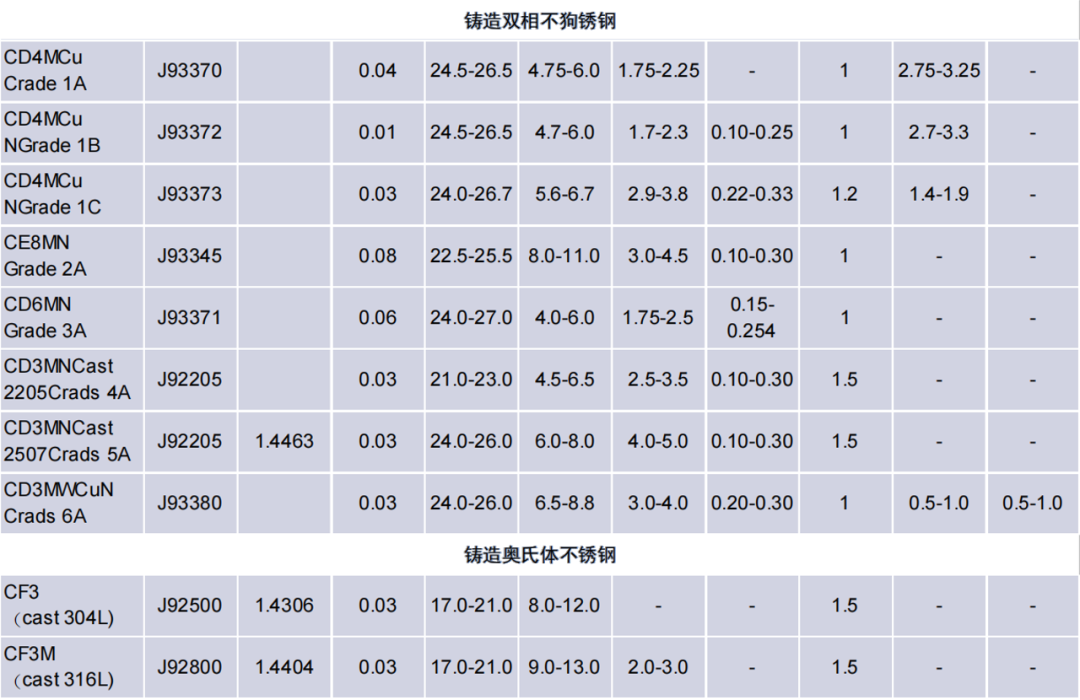
Beyond phase balance, the second major issue in duplex stainless steel chemistry is the formation of harmful intermetallic phases at elevated temperatures. In high-chromium, high-molybdenum grades, sigma (σ) and chi (χ) phases form preferentially within the ferrite phase, and nitrogen additions greatly delay their formation. Maintaining a sufficient amount of nitrogen in solid solution is therefore important. As manufacturing experience with duplex stainless steels has grown, the importance of controlling narrow composition ranges has become increasingly evident. Table 1 shows the chemical composition of wrought and cast duplex stainless steels, with common austenitic grades included for comparison.
Chromium
Chromium content in steel must be at least 10.5% to form a stable chromium-bearing passive film that protects the steel from atmospheric corrosion, and corrosion resistance increases with chromium content. Chromium is a ferrite former: adding chromium promotes the formation of ferrite with its body-centered cubic structure. When chromium content is high, more nickel is needed to form austenite or a duplex (ferrite-austenite) structure, and higher chromium also promotes the formation of intermetallic phases. Austenitic stainless steels contain at least 16% chromium; duplex stainless steels contain at least 20%. Chromium also increases the oxidation resistance of steel at high temperature. This effect matters for the oxide scale — heat tint — that forms during heat treatment or welding and must later be removed: pickling and heat-tint removal are more difficult on duplex stainless steels than on austenitic grades.
Molybdenum
Molybdenum works together with chromium to improve pitting resistance. When the chromium content of stainless steel is at least 18%, molybdenum is about three times as effective as chromium against pitting and crevice corrosion in chloride-bearing environments. Molybdenum is a ferrite former and also increases the tendency to form intermetallic phases. For this reason, molybdenum content is usually kept below about 7.5% in austenitic stainless steels and below 4% in duplex stainless steels.
Nitrogen
Nitrogen increases the pitting and crevice corrosion resistance of austenitic and duplex stainless steels, and significantly raises strength. It is, in fact, the most effective solid-solution strengthening element and a low-cost alloying addition. Improved toughness in nitrogen-bearing duplex stainless steels results from the higher austenite content and reduced intermetallic phase content that nitrogen provides. Nitrogen does not prevent the precipitation of intermetallic phases, but it delays their formation, allowing enough time to process and fabricate duplex stainless steels. Nitrogen is added to highly corrosion-resistant austenitic and duplex grades with high chromium and molybdenum contents to offset their tendency to form sigma phase.
Nitrogen is a strong austenite former and can replace part of the nickel in austenitic stainless steels. It lowers stacking fault energy and increases the work-hardening rate of austenite, and raises its strength through solid-solution strengthening. Duplex stainless steels are generally given nitrogen additions balanced against nickel content to achieve the proper phase balance: the ferrite-forming elements chromium and molybdenum are balanced against the austenite-forming elements nickel and nitrogen to obtain the duplex structure.
Nickel
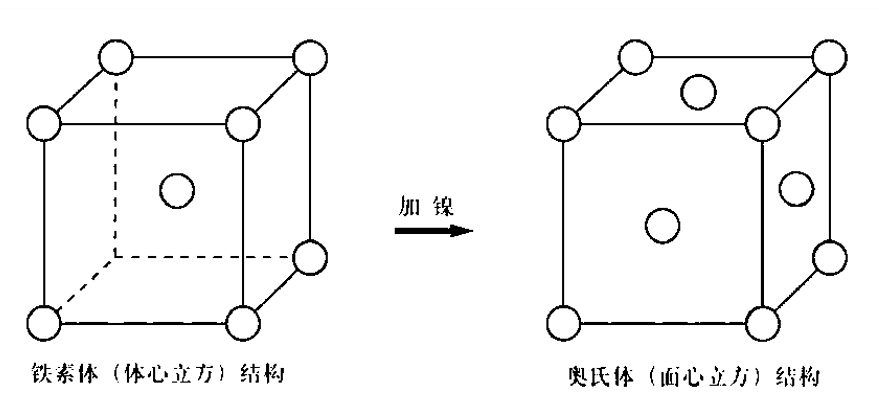
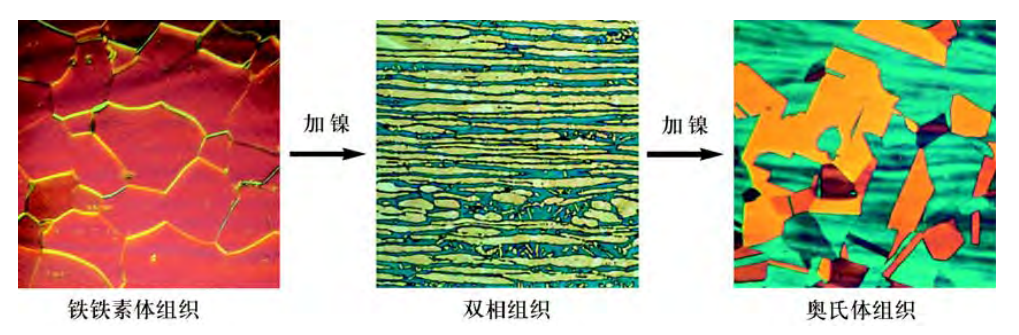
Nickel is an austenite-stabilizing element: it drives the crystal structure of stainless steel from body-centered cubic (ferrite) to face-centered cubic (austenite). Ferritic stainless steels contain very little or no nickel; duplex stainless steels contain low to moderate nickel, about 1.5-7%; and 300-series austenitic stainless steels contain at least 6% nickel (see Figures 1 and 2). Nickel additions delay the formation of harmful intermetallic phases in austenitic stainless steels, but in duplex stainless steels this delaying effect is far less effective than that of nitrogen. The face-centered cubic structure gives austenitic stainless steels outstanding toughness, and since nearly half of the duplex structure is austenite, duplex steels are considerably tougher than ferritic stainless steels.
Metallurgy of Duplex Stainless Steels
The Fe-Cr-Ni ternary phase diagram is the road map for the metallurgical behavior of duplex stainless steels. In the ternary section taken at 68% Fe (Figure 3), these alloys solidify as ferrite (alpha); as the temperature falls to around 1000°C (1832°F), part of the ferrite transforms into austenite (gamma), depending on alloy composition. At lower temperatures under equilibrium conditions, the ferrite and austenite show almost no further change. Figure 3 also shows the effect of nitrogen. From a thermodynamic standpoint, because this austenite forms from ferrite, the alloy cannot skip the austenite equilibrium state. However, on continued cooling to lower temperatures, carbides, nitrides, sigma phase and other intermetallic phases all become possible microstructural constituents. Another important effect of nitrogen is that it raises the temperature at which austenite begins to form from ferrite — and, as Figure 3 shows, increases the fraction of ferrite that transforms. As a result, even under rapid cooling, the austenite content comes close to equilibrium levels. In second-generation duplex stainless steels, this effect reduces the problem of excessive ferrite in the heat-affected zone (HAZ).
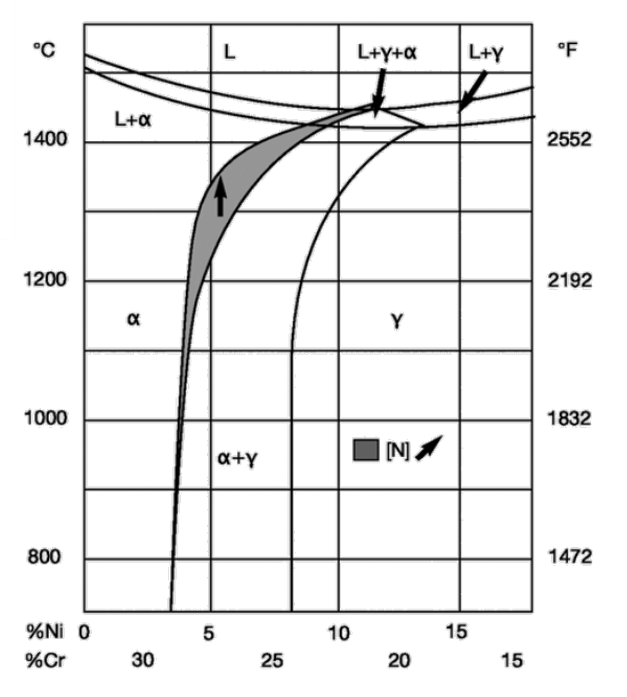
Figure 4 shows the isothermal precipitation diagram for 2205 steel at 1050°C (1920°F), with 2304 and 2507 included for comparison. Chromium carbides and nitrides begin to precipitate relatively slowly — on the order of one to two minutes. Duplex stainless steels precipitate more slowly than ferritic or high-alloy austenitic stainless steels, partly because carbon and nitrogen have high solubility in the low-nickel austenite phase and because nitrogen can delay carbide precipitation. The conclusion: duplex stainless steel grades are relatively resistant to sensitization on cooling. The precipitation kinetics of carbides and nitrides in these grades are influenced to some extent by chromium, molybdenum and nickel contents, so the precipitation behavior of all nitrogen-bearing duplex grades is similar to that of 2205. The σ and χ phases precipitate at slightly higher temperatures, but over roughly the same time scale as the carbides and nitrides. Grades with higher chromium, molybdenum and nickel contents than 2205 form sigma and chi phases faster; leaner grades, more slowly.
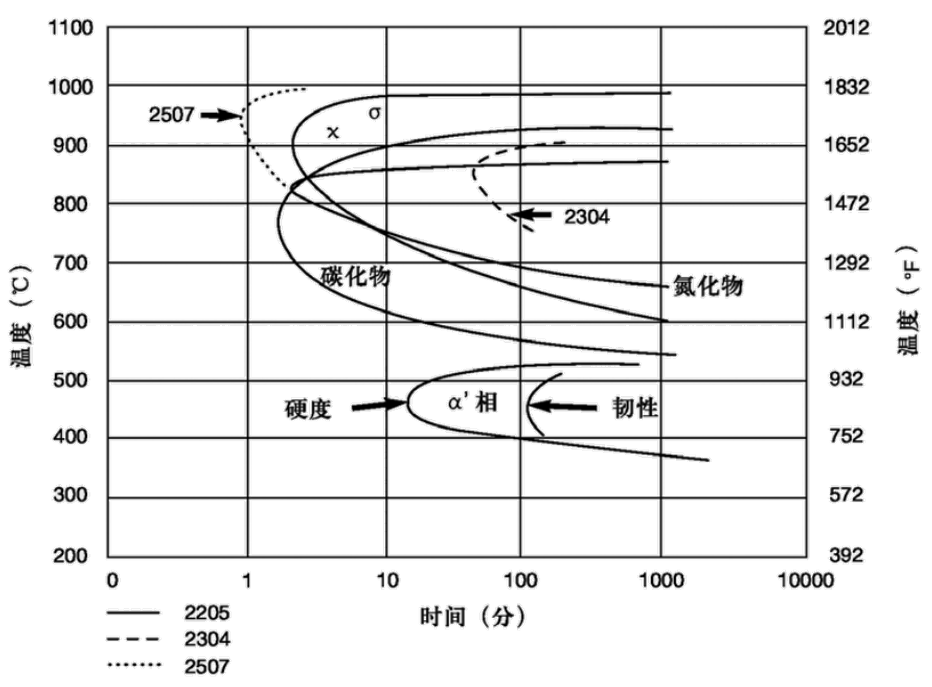
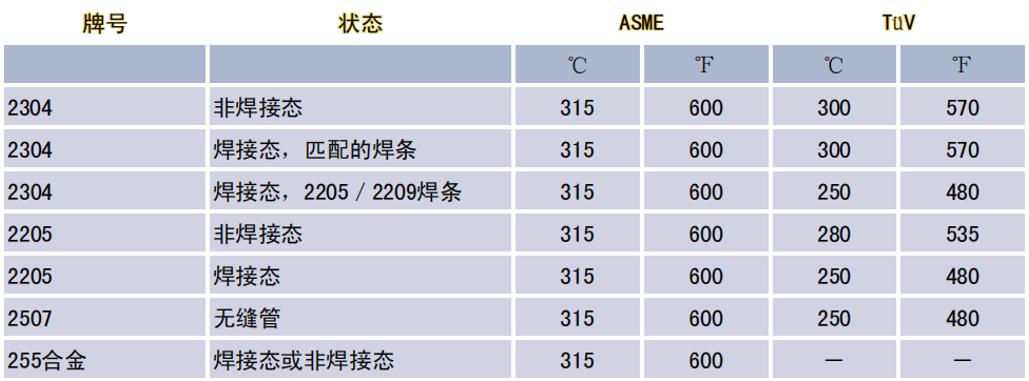
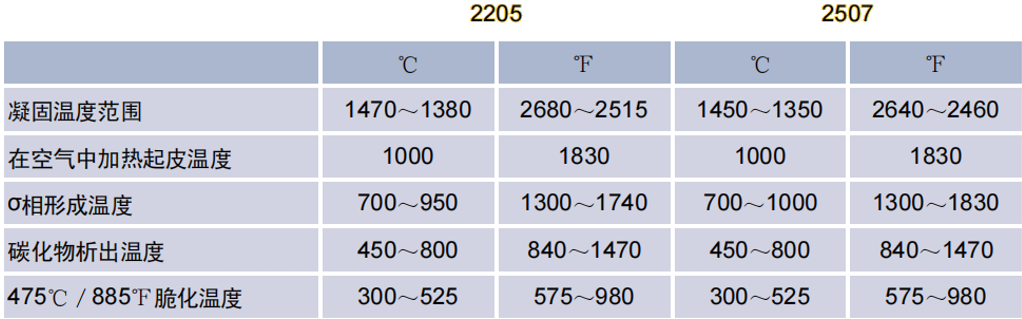
Table 2 lists the temperature limits established for duplex stainless steels in pressure vessel design codes. Table 3 summarizes some important precipitation reactions in duplex stainless steels and their temperature limits.
Corrosion Resistance of Duplex Stainless Steels
Duplex stainless steels show high corrosion resistance in most of the environments where standard austenitic stainless steels are used. Because of their high chromium content they are well suited to oxidizing acids, and their sufficient molybdenum and nickel contents provide resistance to moderately reducing acid media. The relatively high chromium, molybdenum and nitrogen contents also give duplex grades excellent resistance to chloride pitting and crevice corrosion, and their duplex structure is an advantage in environments where chloride stress corrosion cracking may occur: when the microstructure contains at least 25-30% ferrite, resistance to chloride SCC is far better than that of 304 or 316 austenitic stainless steels. One caveat, however: ferrite is susceptible to hydrogen embrittlement, so duplex stainless steels are not a high-corrosion-resistance choice in environments or applications where hydrogen can enter the metal — hydrogen embrittlement can occur.
Acid Corrosion
Figure 5 gives corrosion data for duplex stainless steels in sulfuric acid solutions, covering media ranging from low-concentration weakly reducing conditions through high-concentration oxidizing environments and hot, moderately concentrated, strongly reducing solutions. In solutions with acid concentrations up to about 15%, 2205 and 2507 duplex stainless steels outperform many high-nickel austenitic stainless steels; at acid concentrations of at least 40%, duplex grades outperform 316 or 317 stainless steels. Duplex stainless steels are also useful in oxidizing acids containing chlorides. The nickel content of duplex grades is not sufficient to withstand strongly reducing corrosion in moderate-concentration sulfuric acid solutions or hydrochloric acid. At wet/dry interfaces where acid concentrates, corrosion — especially of the ferrite phase — will begin and progress rapidly. The oxidizing-acid resistance of duplex stainless steels makes them excellent candidates for nitric acid and strong organic acid plants.
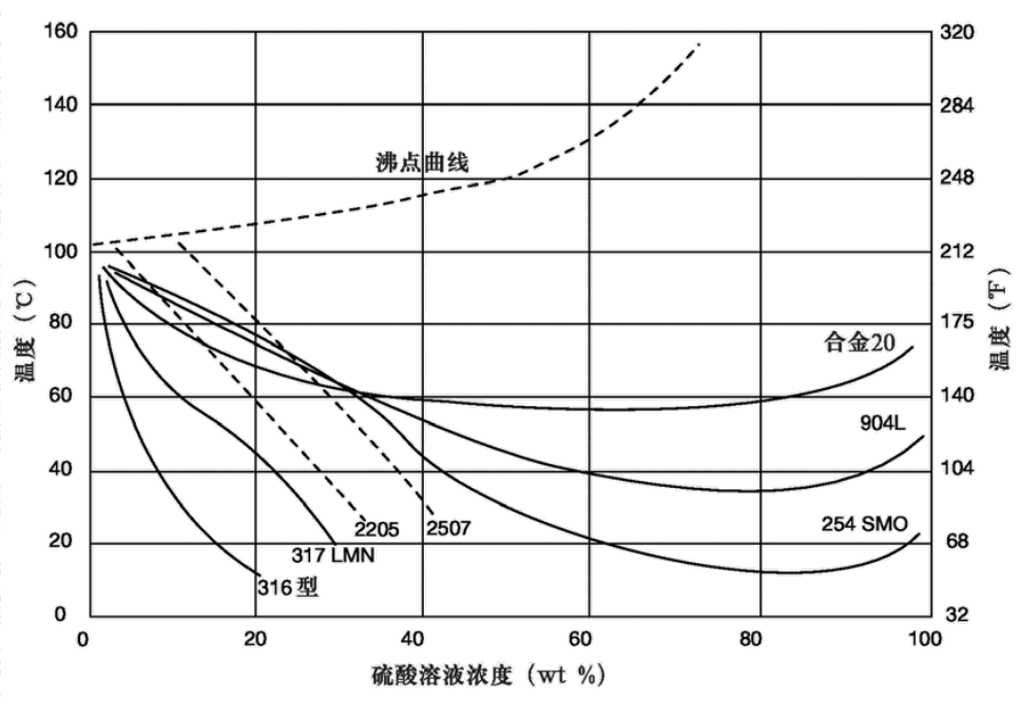
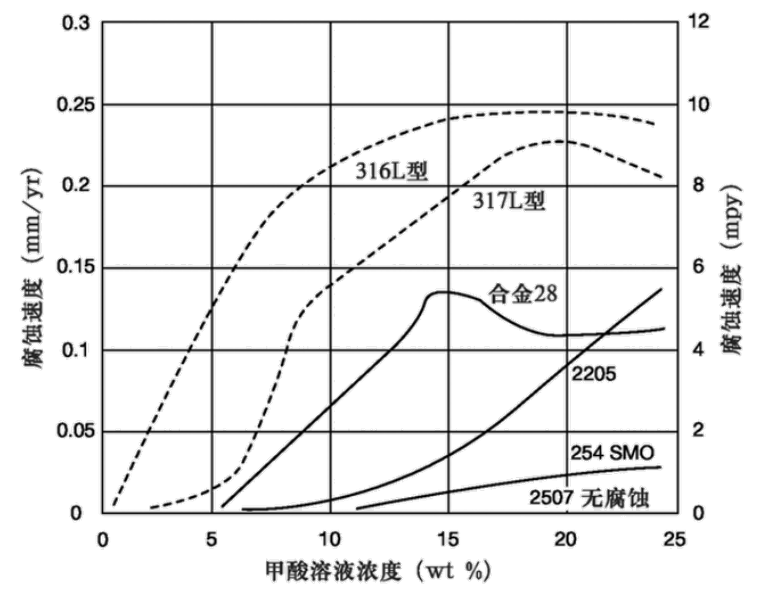
Figure 6 shows the corrosion behavior of duplex and austenitic stainless steels in boiling mixtures of 50% acetic acid with different formic acid contents. Although 304 and 316 stainless steels can be used in strong organic acid media at room and moderate temperatures, 2205 and other duplex stainless steels have the advantage in many processes involving high-temperature organic acid media. Because they also resist pitting and stress corrosion cracking, duplex grades can be used in halogenated hydrocarbon process media as well.
Alkaline Corrosion
The high chromium content and the presence of the ferrite phase give duplex stainless steels good performance in alkaline media. At moderate temperatures, their corrosion rates are lower than those of standard austenitic stainless steels.
Pitting and Crevice Corrosion
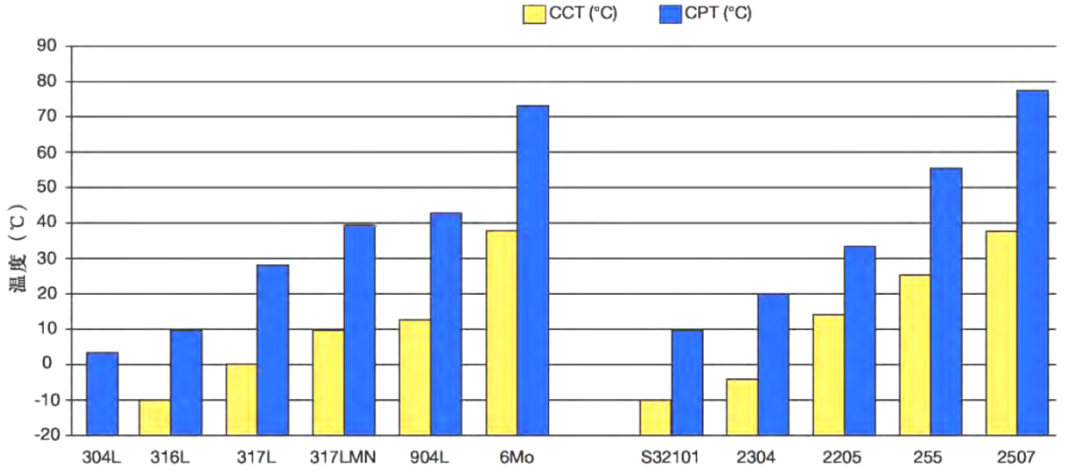
Two concepts need to be understood first. In a given chloride environment, every stainless steel can be characterized by a temperature above which pitting begins and can grow to a visible size within 24 hours, and below which no pitting occurs over an unlimited time. This temperature is the critical pitting temperature (CPT), usually expressed as a temperature range for a given grade. Crevice corrosion has a similar critical temperature, the critical crevice corrosion temperature (CCT), which depends on the specimen, the chloride environment and the characteristics of the crevice (tightness, length, and so on).
The high chromium, molybdenum and nitrogen contents of duplex stainless steels give them very good resistance to localized chloride corrosion in water environments. In this respect, even the most lowly alloyed duplex grades are far superior to 316-type stainless steel; depending on alloy content, some duplex grades rank among high-performance stainless steels. Because duplex grades are relatively high in chromium, that corrosion resistance comes at an attractive cost.
Figure 7 compares the pitting and crevice corrosion resistance of several stainless steels in the solution-annealed condition, measured per ASTM G 48 (6% FeCl3). Critical temperatures for welded material are somewhat lower. A higher critical pitting or crevice corrosion temperature indicates greater resistance to that type of corrosion. The CPT and CCT of 2205 are both well above those of 316-type steel, making 2205 a versatile material — for example, in environments where evaporation concentrates chlorides, such as the steam space of heat exchangers or beneath insulation. The CPT of 2205 also indicates its suitability for alkaline water and deaerated brine. It has also been used successfully in deaerated seawater, in applications where high seawater flow rates or other measures keep deposits off the steel surface. In more severe applications — thin-wall heat exchanger tubes, or surfaces with deposits or crevices — 2205 does not have sufficient crevice corrosion resistance in seawater. However, higher-alloyed duplex stainless steels with higher CCT values than 2205, such as super duplex grades, are already used in many demanding seawater conditions where both strength and chloride resistance are required.
Stress Corrosion Cracking
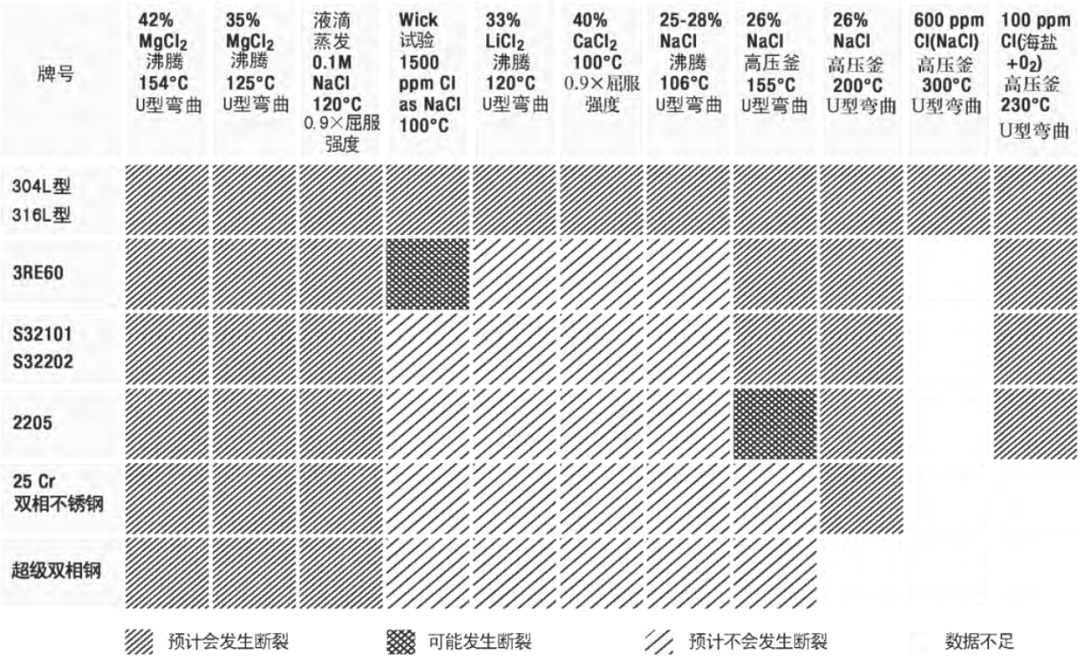
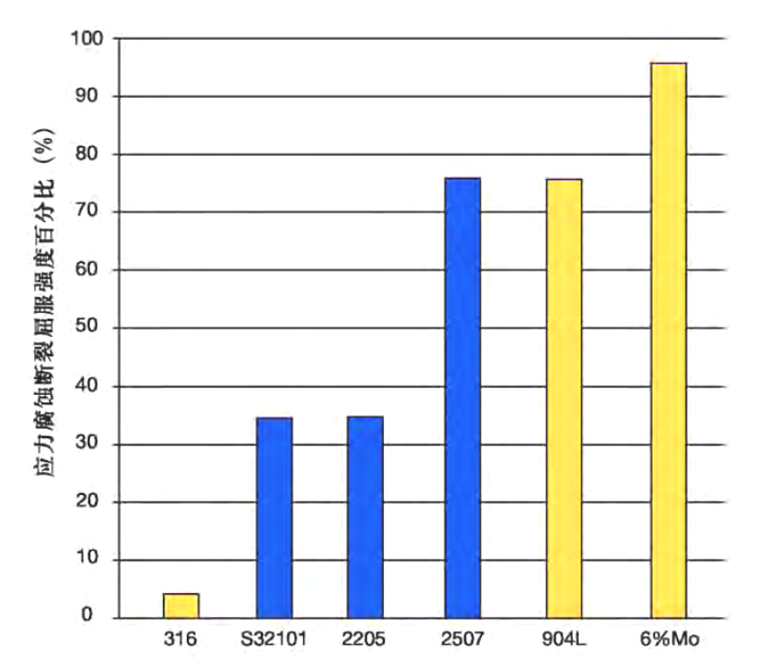
Some of the earliest applications of duplex stainless steels were based on their resistance to chloride stress corrosion cracking (SCC). Compared with austenitic stainless steels of similar pitting and crevice corrosion resistance, duplex grades show clearly superior resistance to stress corrosion cracking, and many chemical process industry applications use duplex stainless steels instead of austenitic grades where there is a significant risk of SCC. Yet, like all materials, duplex stainless steels are susceptible to stress corrosion cracking under specific conditions — for example, in high-temperature, chloride-bearing environments, or where medium conditions promote hydrogen-induced cracking. Environments in which duplex stainless steels may suffer stress corrosion cracking include the boiling 42% magnesium chloride solution test, droplet evaporation tests on metal held at elevated temperature and exposed to pressurized aqueous chloride systems where the temperature may exceed the atmospheric boiling point.
Table 4 summarizes the chloride stress corrosion cracking behavior of several stainless steels in various test media of differing severity. The media on the left and right sides of the table are harsh (acidic salts and high temperature); the media in the middle are less severe. Standard austenitic stainless steels with less than 4% molybdenum suffer chloride SCC under all these conditions, while duplex stainless steels withstand the milder media in the middle range.
Mechanical Properties of Duplex Stainless Steels
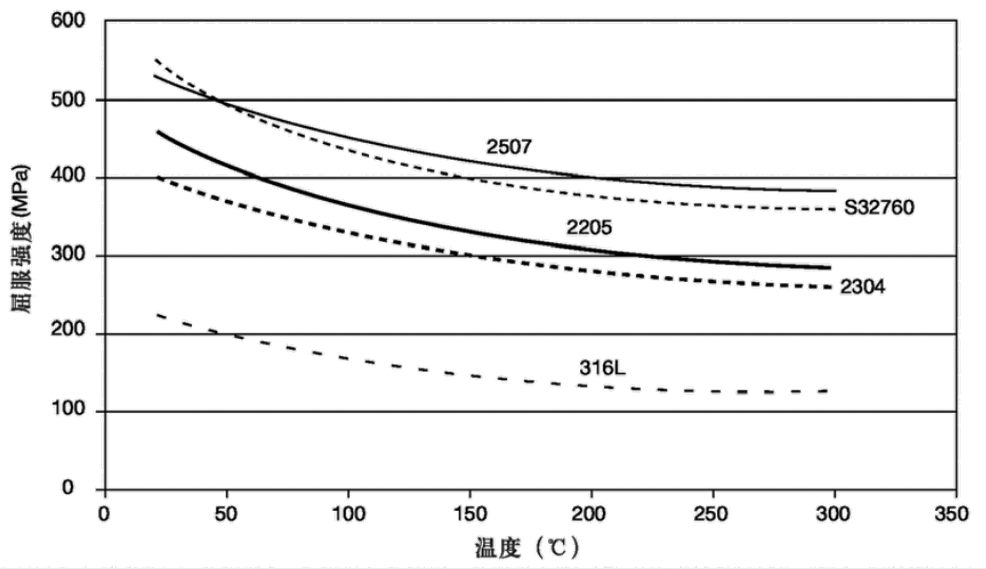
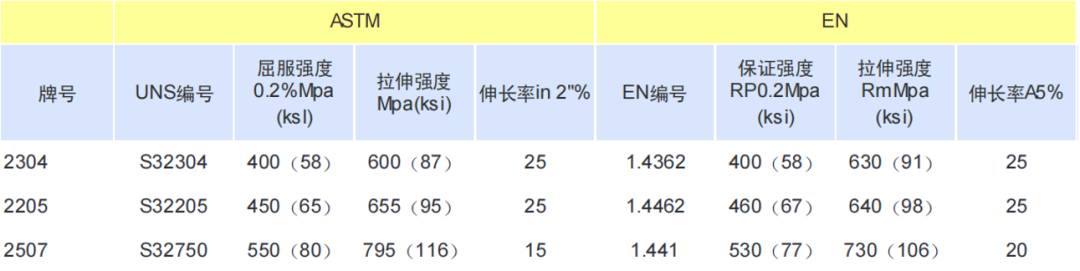
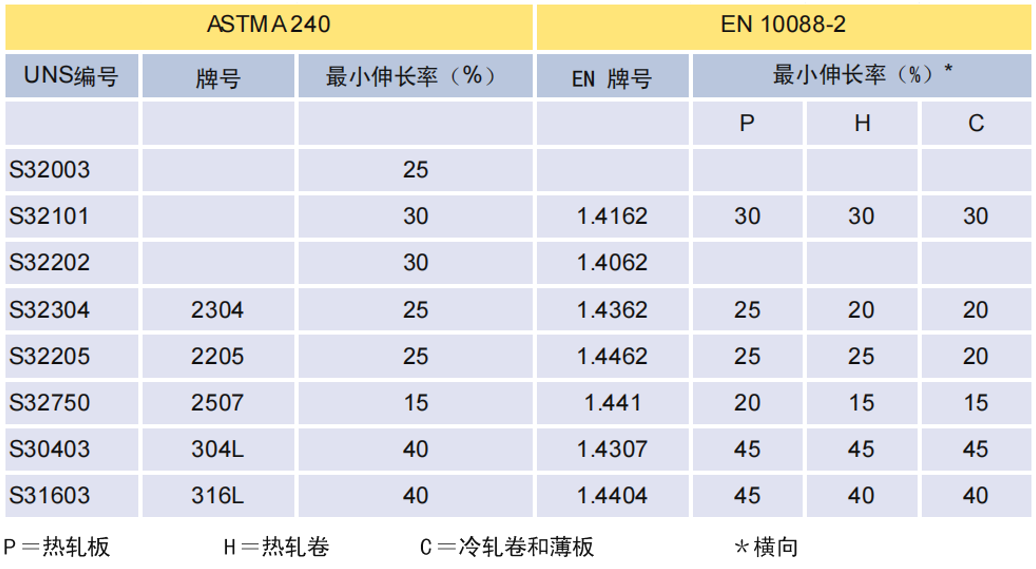
Duplex stainless steels have excellent mechanical properties: in the solution-annealed condition, their room-temperature yield strength is more than twice that of standard austenitic stainless steels without nitrogen additions. Figure 9 compares the typical yield strength of several duplex stainless steels with that of 316L austenitic stainless steel from room temperature to 300°C (572°F). Table 5 gives the minimum mechanical properties of duplex stainless steel plate under ASTM and EN standards, and Table 6 compares the ductility of duplex and austenitic stainless steels per ASTM A240 and EN 10088-2. Despite their high strength, duplex stainless steels show good ductility and toughness. Compared with carbon steel or ferritic stainless steel, their ductile-to-brittle transition is gradual, and they retain good toughness even at low temperatures such as -40°C. That said, the toughness and ductility of duplex grades are generally lower than those of austenitic stainless steels; austenitic grades have no ductile-to-brittle transition and retain excellent toughness down to cryogenic temperatures.
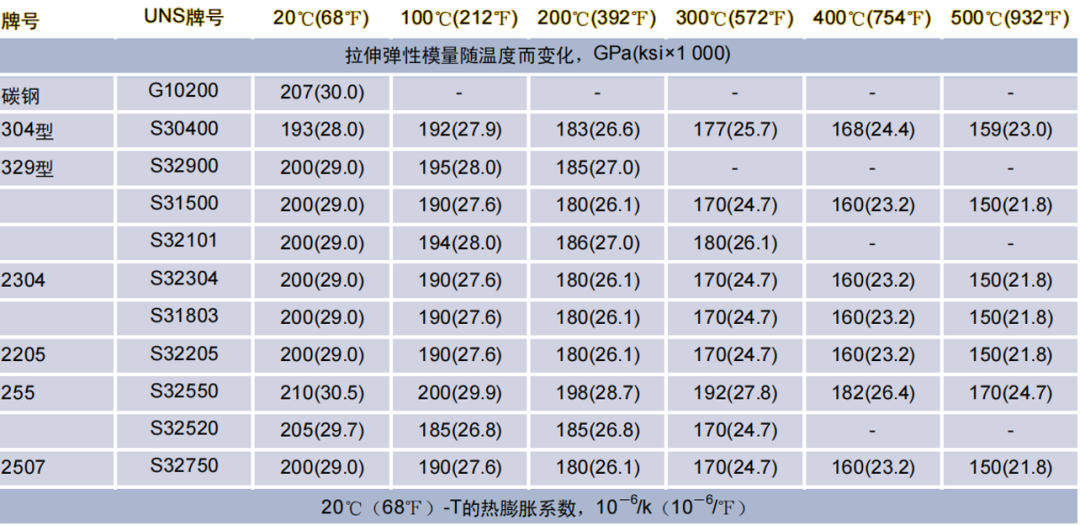
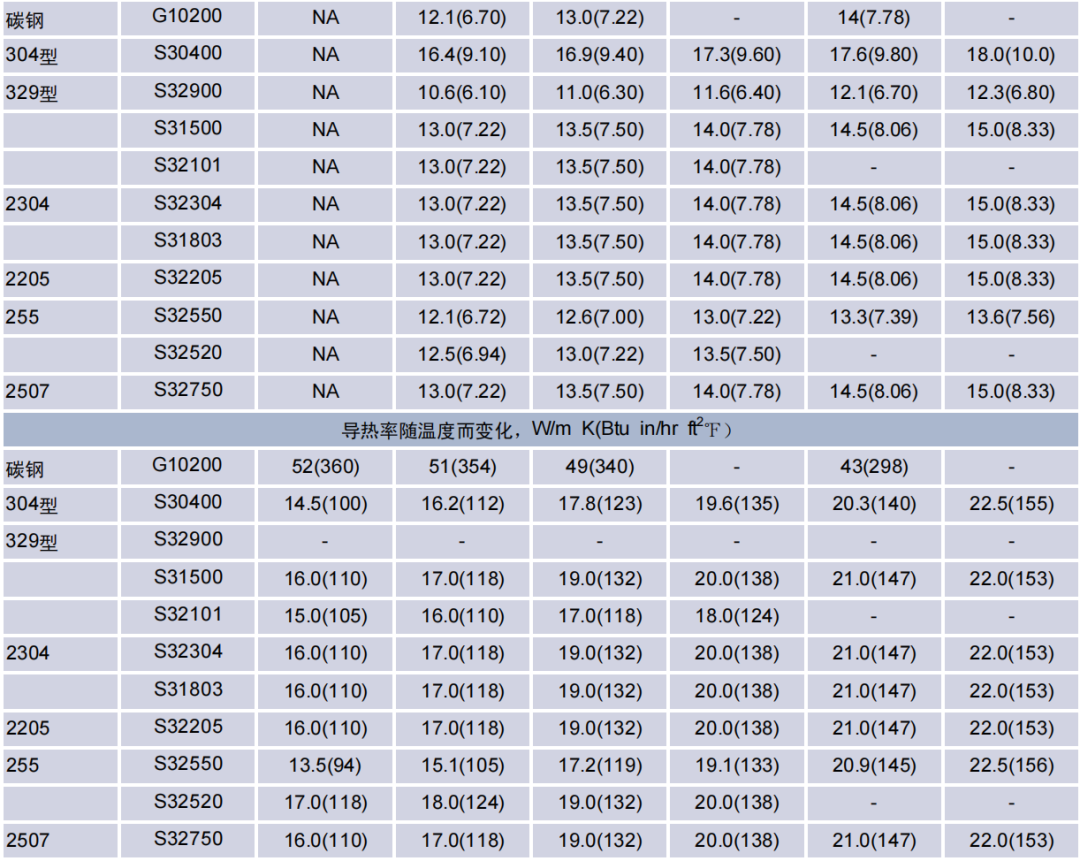
Physical Properties of Duplex Stainless Steels
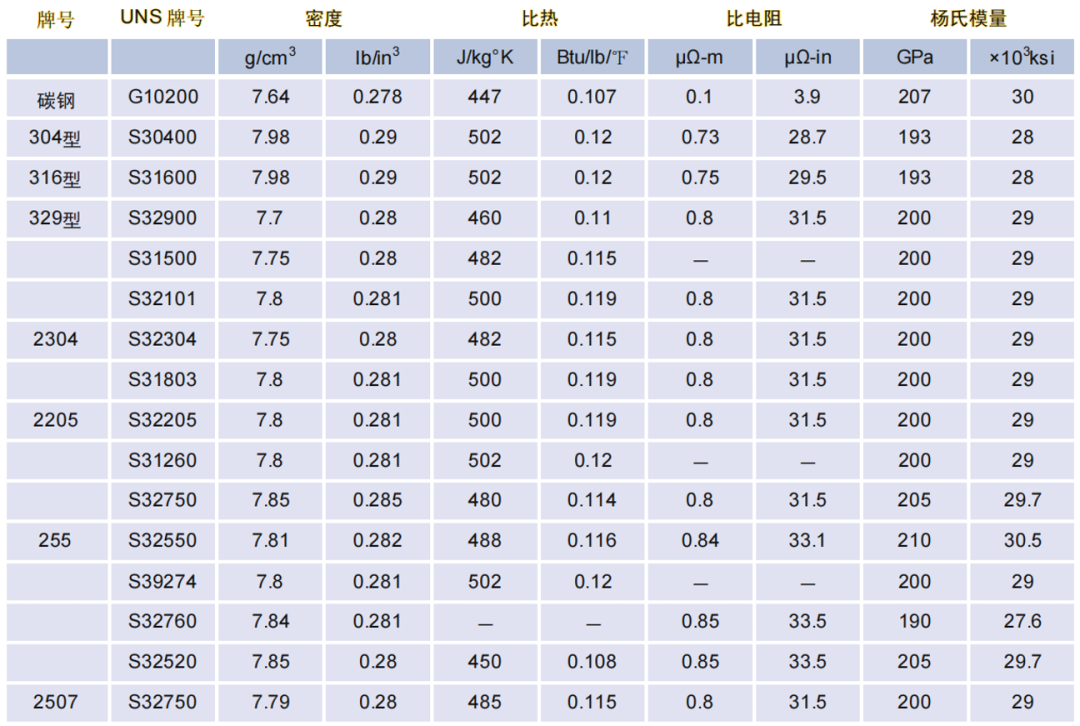
Table 7 gives the physical properties of a group of duplex stainless steels at room temperature, and Table 8 gives properties at elevated temperatures, with carbon steel and austenitic stainless steel data included for comparison. In all cases, the differences in physical properties among duplex stainless steels are very small, likely reflecting differences in test procedures. The physical properties of duplex stainless steels fall between those of austenitic stainless steels and carbon steel, though closer to those of the stainless grades.
Standards for Duplex Stainless Steel
Duplex stainless steels are specified and supplied under a wide range of international standards. Commonly referenced specifications include ASTM/ASME A240 (SA-240) for plate, sheet and strip; ASTM A789/SA-789 and A790/SA-790 for seamless and welded ferritic/austenitic stainless steel tubing and pipe; ASTM A815/SA-815 for fittings; EN 10088 for general delivery conditions; EN 10250 for open-die forgings; EN 12952 for boiler and pressure vessel applications; and ISO 24013. In China, duplex stainless steel seamless tubes for fluid transportation are specified under GB/T 21833.2.
Adapted from the Chinese technical reference 《双相不锈钢制造加工使用指南》(Duplex Stainless Steel — Fabrication, Processing and Application Guide). Shunfu Metal supplies duplex and super duplex stainless steel pipe and tubing — including 2205 and 2507 — for oil and gas, chemical, marine and desalination service.