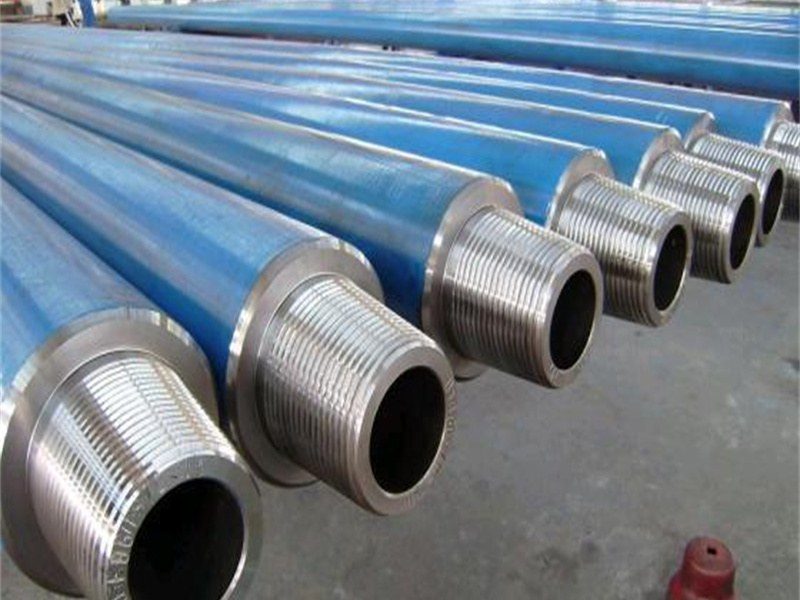
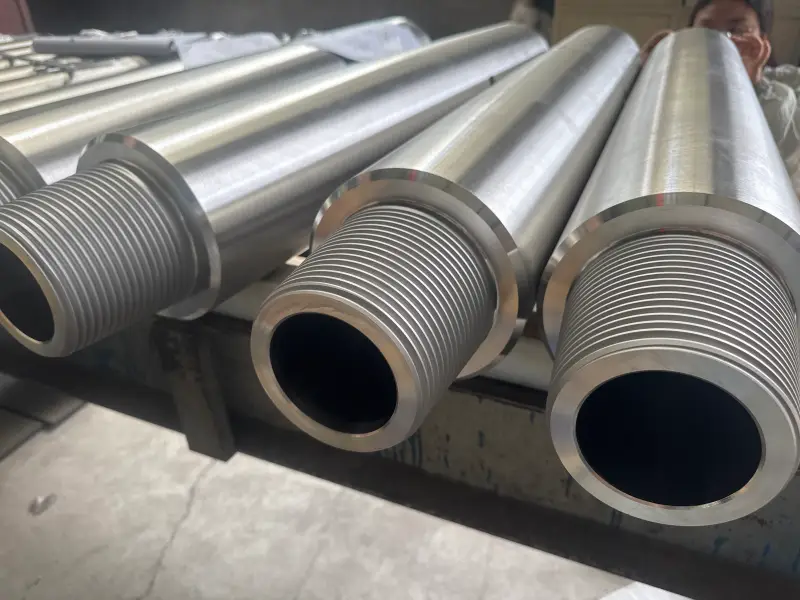
When a drilling engineer writes "non-magnetic" on a material requisition, it describes a property, not an alloy. The property is a relative permeability close enough to 1.000 that an MWD sensor sitting inside the collar can still read the earth's field. The alloys that deliver it are a family of high-manganese austenitic stainless steels with nitrogen added, and the one most enquiries land on is the mid-strength grade: TWZ-3, made by TISCO to works specification Q/TX 038-2012.
This page sets out what TWZ-3 actually is, where its numbers come from, how it differs from the leaner and the more highly alloyed grades in the same family, and what to pin down on the purchase order before anyone cuts steel.
Why manganese and nitrogen, rather than nickel
A 300-series stainless is austenitic because of nickel, usually 8 to 14 percent. Austenite is what makes a steel non-magnetic: the face-centred cubic structure has no ferromagnetic phase to align with a field. The problem is cost, and the second problem is stability. Nickel-stabilised austenite is only metastable. Cold work, machining and drilling transform part of it to strain-induced martensite, and the permeability climbs. A collar that measured 1.005 on the mill certificate can read 1.3 after the bore has been trepanned and the threads rolled.
The manganese-nitrogen family solves both. Manganese extends the austenite field and takes carbon and nitrogen into solid solution; nitrogen does the heavy lifting. It is a strong austenite stabiliser per unit weight, it raises yield strength through interstitial solid solution without a heat treatment, and it suppresses the martensite start temperature so far below ambient that cold work no longer transforms the structure. That is why a TWZ-3 collar stays non-magnetic after machining, and why the permeability can be certified per bar rather than assumed from the grade.
In TWZ-3 the balance is: carbon capped at 0.04 percent so grain boundaries stay free of chromium carbides; manganese 18.0 to 21.0 percent to hold the austenite; chromium 16.0 to 18.0 percent for the passive film; molybdenum 0.40 to 0.80 percent; nitrogen 0.50 to 0.80 percent for strength and structure. Nickel is present but not structural, 0.50 to 1.50 percent.
What the well actually asks of the steel
Four demands arrive at once, and they pull in different directions.
Magnetic transparency. API Spec 7-1 caps relative permeability at 1.010 and the field gradient along the bore at 0.05 microtesla per 100 mm. Production collars are normally certified well inside the cap: TWZ-3 is supplied at 1.005 maximum, with a probe-test printout for every bar.
Strength in a thick section. A collar is a column that has to carry weight on bit without buckling, and it is thick-walled by definition. The amount of cold reduction a mill can put through a 250 mm bar is limited, so the guaranteed yield is quoted by outside-diameter band. TWZ-3 in HS temper is guaranteed at 965 MPa up to 180 mm and 900 MPa from 180 to 280 mm. The LS temper trades strength for ductility: 825 and 770 MPa in the same two bands.
Stress corrosion cracking. Chlorides plus tensile stress plus a sensitised grain boundary is the classic failure path, and a collar sees all three. Two defences are built into the specification: the carbon ceiling, which keeps chromium carbides from forming at the boundary during warm forging, and the quench immediately after forging, which prevents the sensitisation window from being crossed on the way down.
Galling. Austenitic stainless galls against itself. Thread roots are cold-rolled and the connections are phosphated or copper-plated for that reason alone; it is not a cosmetic step.
Corrosion: what the chromium and nitrogen buy
Pitting resistance is normally condensed into a single number, PREN = Cr + 3.3 Mo + 16 N. For TWZ-3 at mid-composition the figure lands in the low thirties, comfortably above 316L and above the leaner Mn-Cr-N grades, which is the practical reason to specify it in chloride-rich mud rather than the standard grade.
Intergranular attack is tested rather than argued about. The usual requirement is ASTM A262 Practice A and E on a sample from each heat, with no intergranular cracks permitted after the bend. Stress corrosion cracking is assessed by ASTM G36 or G38 C-ring testing when the well is sour, and the acceptance criterion should be written into the purchase order rather than assumed.
One point that is often missed: a compressive layer on the bore is worth more than another point of chromium. Hammer peening, roller burnishing or shot peening the internal surface puts the surface in compression, and a crack that would otherwise start under a corrosive film cannot open. It is standard on sour-service collars and it should be on the drawing, not left to the shop.
Grade selection inside the family
Three TISCO grades cover almost every non-magnetic collar enquiry, and the choice is driven by the well rather than by a preference for stronger steel.
TWZ-2 is the standard Mn-Cr-N grade: 758 MPa minimum yield up to 190 mm, 689 MPa above, chromium 16.0 to 18.5 percent, nitrogen 0.48 percent minimum. It suits standard directional wells, MWD and LWD housings, subs and stabiliser mandrels where the mud is not aggressive.
TWZ-3 is the step up: more chromium and a higher nitrogen floor, 965 MPa in HS temper, and enough pitting resistance for chloride-rich and mildly sour service. This is the grade most collars in a modern directional string are made from.
TWZ-4 carries 1.7 to 2.5 percent molybdenum and 3.0 to 4.5 percent nickel. It is not stronger than TWZ-3 in HS temper; both reach 965 MPa. What it buys is corrosion margin in heavy sections and in wells where pitting, not load, sets the service life.
Above this family sits the custom-melt territory: nickel-chromium austenitics at 14 percent nickel and above, where the chemistry is set by the customer's drawing rather than by a mill grade. Those are quoted case by case, not from stock.
Quick reference: TWZ-2, TWZ-3 and TWZ-4
| Property | TWZ-2 | TWZ-3 | TWZ-4 |
|---|---|---|---|
| Works specification | Q/TX 208-2015 | Q/TX 038-2012 | Q/TX 085-2019 |
| Carbon, max. | 0.04 | 0.04 | 0.04 |
| Manganese | 17.50–23.50 | 18.00–21.00 | 20.00–23.50 |
| Chromium | 16.00–18.50 | 16.00–18.00 | 18.00–19.00 |
| Molybdenum | 0.40–0.80 | 0.40–0.80 | 1.70–2.50 |
| Nickel | min. 0.50 | 0.50–1.50 | 3.00–4.50 |
| Nitrogen | min. 0.48 | 0.50–0.80 | 0.55–0.70 |
| Yield, OD ≤ 180 mm | 758 MPa | 965 MPa (HS) / 825 MPa (LS) | 965 MPa (HS) / 900 MPa (LS) |
| Yield, OD > 180 mm | 689 MPa | 900 MPa (HS) / 770 MPa (LS) | 900 MPa |
| Tensile, min. | 827 / 758 MPa | 1035 / 1000 MPa (HS) | 1035 MPa |
| Impact KV, min. | 100 J | 100 J (HS) / 130 J (LS, >180 mm) | 100 J |
| Hardness | ≥ 285 HBW | ≥ 290 HBW / ≥ 277 HBW (LS) | 330–430 HBW surface |
| Relative permeability | ≤ 1.005 | ≤ 1.005 | ≤ 1.005 |
Values are minimum guaranteed figures from the TISCO works specifications named above, not typicals. Where two figures are separated by a slash the first applies to the smaller outside-diameter band and the second to the larger one; the mill certificate quotes the band for the size actually ordered. 1 ksi = 6.895 MPa for buyers who work in ksi.
What to write on the purchase order
Eight lines prevent most of the arguments that follow a delivery:
Grade and works specification (TWZ-3, Q/TX 038-2012); temper, HS or LS and the minimum yield that goes with it; outside diameter, inside diameter and length; the OD band the certificate must meet; permeability ceiling and whether a per-bar probe printout is required; ultrasonic inspection level, at minimum API Spec 7-1 clause 12 over the full volume; corrosion testing (ASTM A262 Practice A and E, plus G36/G38 C-ring if the service is sour); and the certificate type, EN 10204 3.1 as standard, 3.2 with third-party witness on request.
Frequently asked questions
Is TWZ-3 the same steel as the European mill grades sold for this duty?
No, and it is worth being precise about it. Both are austenitic Mn-Cr-N non-magnetic steels aimed at the same duty, but the chemistry limits differ: TWZ-3 runs 16.0 to 18.0 percent chromium and 0.50 to 0.80 percent nitrogen, and the two are not interchangeable on a certificate. If a drawing names a specific mill grade, buy that grade. If it specifies a duty — 965 MPa minimum yield, permeability 1.005 maximum, sour service — TWZ-3 meets it and the certificate will say so.
Why is the guaranteed yield lower above 180 mm?
Because strength in this family comes from cold reduction, and the reduction a mill can put through a large section is limited by the forging and cold-working equipment. The specification recognises that with two diameter bands rather than one number. A 279 mm bar is not a worse bar than a 178 mm bar; it is a bar that cannot carry the same amount of cold work.
Does the collar stay non-magnetic after machining and thread rolling?
Yes, provided the nitrogen is where the specification says. The high nitrogen content suppresses strain-induced martensite, which is the mechanism that makes ordinary 316 turn slightly magnetic after cold work. Verification is by probe testing after final machining, not before, and the printout should travel with the certificate.
When should I specify TWZ-4 instead of TWZ-3?
When pitting, not strength, is the limiting factor: heavy sections, high chloride mud, or a well where TWZ-3 would be working near its corrosion limit. TWZ-4 adds 1.7 to 2.5 percent molybdenum and 3.0 to 4.5 percent nickel for that margin. If the well is benign and the load is ordinary, TWZ-3 does the job at lower alloy cost.
Final thoughts
Non-magnetic collar steel is a compromise between three properties that fight each other: magnetic transparency, strength in a thick section, and corrosion resistance. TWZ-3 sits at the balance point of that compromise for most directional wells, which is why it is the grade we hold in stock and quote by default. The specification work that matters is not choosing the grade — it is writing the diameter band, the temper, the permeability ceiling and the test schedule onto the order so that the certificate you receive matches the analysis you designed against.
Need TWZ-3 collar bars or finished collars?
Send the outside diameter, bore, length, temper and quantity, plus any sour-service or permeability requirement. We reply with mill availability, the certificate scope and a priced offer, usually within one working day.