A Comparative Analysis of Magnetic Drill Collars and Non-Magnetic Drill Collars: Enhancing Drilling Efficiency and Accuracy
Short answer: “non-magnetic” does not mean zero permeability. It means relative permeability
below about 1.01 — low enough that a magnetometer a metre away cannot resolve the difference from air. The grade
is chosen on strength and wear resistance first, because the magnetic specification is a threshold, not a scale.
Why Magnetic Interference Matters
An MWD tool measures azimuth by sensing the earth’s magnetic field, which is roughly 25–65 µT depending on latitude. A steel drill collar directly above the sensor carries an induced field of its own. If that contribution is large, the tool still returns an azimuth — it is just the wrong one, and nothing in the survey record reveals it.
The classic failure is a well that drills smoothly, hits the target depth, and is then found to be several metres off in the horizontal section. By that point the correction is a sidetrack. Because the error is systematic rather than random, it does not average out over multiple surveys; it accumulates with measured depth.
What “Non-Magnetic” Actually Means
Permeability is specified as a relative value and measured to ASTM A342. A value of 1.002 is typical of the Cr-Mn austenitic grades used for collars; 1.01 is the usual acceptance limit for survey-critical components. For context, plain carbon steel sits in the hundreds — three orders of magnitude away.
Two consequences follow that buyers often miss. First, a grade can pass permeability and fail strength; the two properties are traded against each other through nitrogen and cold work. Second, permeability is not a fixed material constant — machining, cold straightening and even heavy handling can raise it locally, which is why the test position and the finished condition both belong on the purchase order.
Magnetic vs Non-Magnetic: The Real Comparison
| Property | 4145H MOD (magnetic) | Cr-Mn non-magnetic (TWZ-3 class) |
|---|---|---|
| Relative permeability | Hundreds | ≈ 1.002 |
| Yield strength | 758–965 MPa | 550–965 MPa depending on grade and condition |
| Wear / galling | Good, can be hard-chromed | Prone to galling; thread treatment essential |
| Cost | 1.0 | 3–6× |
| Where it is used | Whole string by default | Survey-critical interval only |
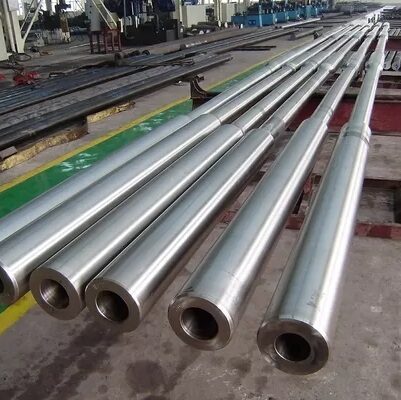
The cost ratio is the reason non-magnetic collars are not used for the whole string. A typical BHA carries two to four non-magnetic collars immediately above the bit and MWD, with 4145H MOD or similar magnetic collars above them. Moving the magnetic material further from the sensor is cheaper than converting more of the string.
Choosing the Grade
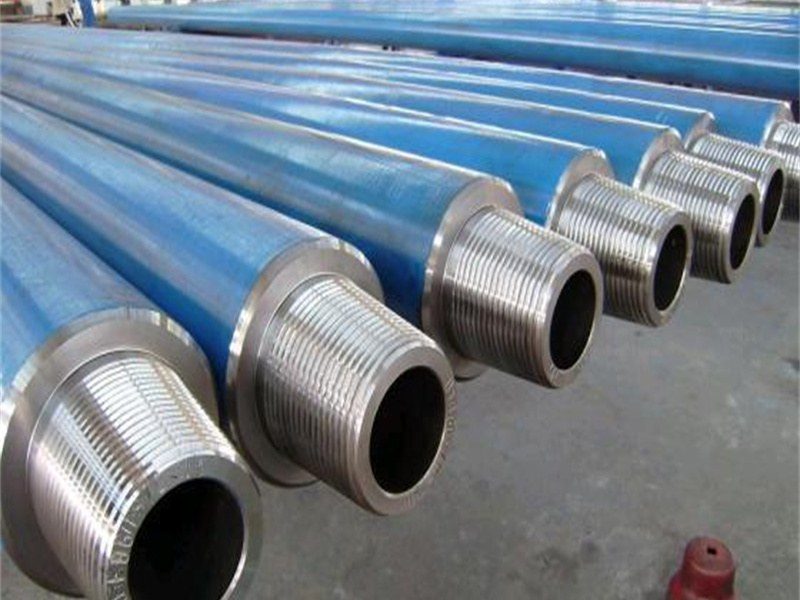
The grades in common use differ mainly in strength and in how they behave in chloride muds. TWZ-2 is the entry grade for moderate loads, at 758 MPa minimum yield; ZYNM7 sits in the same strength class from a second mill; TWZ-3 is the workhorse for deep, high-angle wells and is the grade we stock most; TWZ-4 covers the pitting-critical duty; and 15-15HS Max reaches 1,145 MPa with a PRE above 30 for corrosive, high-load service. We list the mechanical data and permeability for each on the product pages, including TWZ-3 non-magnetic steel and 15-15HS Max bar.
Two selection rules survive contact with real wells. Choose the lowest strength that carries the load, because higher strength means more cold work and a higher risk of permeability drift. And specify the magnetic test on the finished part, at the position that will sit closest to the sensor.
What Goes Wrong in Service
Non-magnetic collars fail in three ways, and only the first is a magnetic problem. Galling on the threads is the most common: austenitic Cr-Mn steel work-hardens and picks up on make-up, so threads need a specified lubricant and a controlled torque sequence. Cracking at the slip area comes second, usually from handling damage that becomes a stress raiser. The third is loss of permeability after repair welding — a collar that is welded without the correct consumable and heat treatment can fail its own acceptance test when it comes back into service.
If a string is being assembled for a survey-critical section, the practical check is the certificate: permeability result, test position, ASTM A342 method, and the finished hardness. Any of those missing turns the specification into an assumption.