
Nitronic 60 (UNS S21800, sometimes Alloy 218) is an austenitic stainless that was designed for a single failure mode: galling. Where 304 or 316 stems seize and tear in a dry metal-to-metal contact, this grade keeps sliding — the 4% silicon and 8% manganese form a surface layer that resists cold welding, without the cobalt that makes Stellite unacceptable in some specifications.
The chemistry is unusual for a stainless: 3.5–4.5% silicon and 7.0–9.0% manganese, with 16–18% chromium, 8–9% nickel and 0.08–0.18% nitrogen. Silicon and manganese raise the stacking fault energy and promote a thin surface film that prevents adhesive wear, while nitrogen keeps the yield strength at roughly twice that of 316L.
The grade is fully austenitic and therefore non-magnetic, which matters for valve trim near instrumentation. Its corrosion resistance is comparable to 316L in most media — not better — so it is specified for wear, not for aggressive chemistry.
Typical use is valve stems, seat and seal rings, pump wear rings, and any joint that is opened and closed repeatedly without lubrication. It can also be used as the softer half of a dissimilar pair, for example against 17-4PH or 410 trim.
Standards and Equivalent Grades
Bar and forging stock are supplied to A276 and A479; the grade also appears in ASTM A193 for bolting (B8S) and in ASME Code Case 2068 for pressure-retaining components. There is no European W.Nr. equivalent — enquiries usually cite the trade name or the UNS number.
| System | Designation |
| UNS | S21800 |
| Trade names | Nitronic 60, Alloy 218, Gall-Tough |
| ASTM A276 / A479 | Bar for machining |
| ASTM A193 B8S | Bolting |
| ASME Code Case | 2068 |
Where Nitronic 60 Is Used
Valve stems and gate seats
Rising stems and seat faces in gate and globe valves that cycle dry, where 316 seizes and 410 corrodes.
Seal rings and back seats
Metal-to-metal sealing elements in wellhead and tree valves, avoiding cobalt-based overlays.
Pump wear rings and bushings
Clearance rings in centrifugal pumps, where a galling pair with the impeller would cause seizure after shutdown.
Pins, linkage and fasteners
Hinge pins, clevis pins and B8S bolting that must be dismantled repeatedly.
Wear plates and guides
Sliding contacts in valves and actuators where lubrication is not maintained.
Non-magnetic trim
Components near MWD or logging tools where ferromagnetic trim would disturb measurement.
Supply Range and Condition
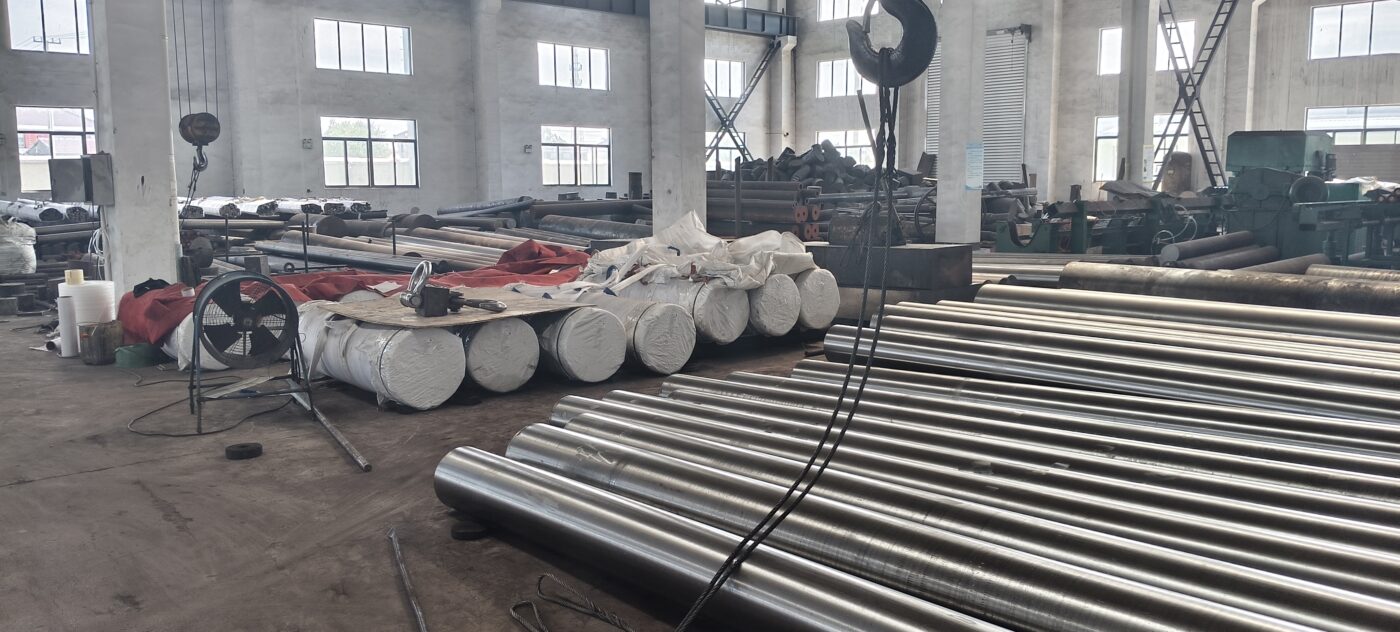
Round bar from 12 mm to 300 mm diameter, peeled, turned or ground; forged blocks to drawing. Standard condition is solution annealed at 1,050–1,120 °C and water quenched, hardness around 95 HRB. Cold-worked and stress-relieved bar is available where higher yield is required.
Testing includes chemistry with silicon and nitrogen reported per heat, tensile and hardness, and PMI on the finished part. EN 10204 3.1 certificates with heat traceability as standard.
Chemical Composition of Nitronic 60 (wt%)
Silicon at 3.5–4.5% is far above normal austenitic practice and is the element responsible for the wear behaviour; manganese at 7.0–9.0% keeps the alloy fully austenitic despite it. Both must be reported on the certificate.
| Element | Min % | Max % |
| Chromium (Cr) | 16.00 | 18.00 |
| Nickel (Ni) | 8.00 | 9.00 |
| Manganese (Mn) | 7.00 | 9.00 |
| Silicon (Si) | 3.50 | 4.50 |
| Nitrogen (N) | 0.08 | 0.18 |
| Carbon (C) | — | 0.10 |
| Phosphorus (P) | — | 0.060 |
| Sulphur (S) | — | 0.030 |
| Iron (Fe) | balance | balance |
Mechanical Properties
Values are typical minima for solution-annealed bar at room temperature. The grade work hardens rapidly, so machined surfaces gain strength while the core stays annealed.
| Property (room temperature) | Typical minimum |
| Tensile strength | ≥ 655 MPa |
| Yield strength (0.2%) | ≥ 345 MPa |
| Elongation in 50 mm | ≥ 35% |
| Hardness | ≈ 95 HRB |
Need Nitronic 60 bar for valve stems or wear rings?
Send the diameter, quantity, condition and the mating material — we reply with mill availability, lead time and a priced offer, usually within one working day.