
MP35N (UNS R30035, W.Nr. 2.4990) is the alloy you reach for when nothing else holds both strength and corrosion resistance in a small section. Cold drawn it reaches 1,900 MPa tensile — roughly four times 316L and double 718 — while remaining non-magnetic and resistant to seawater, chlorides and H2S.
The composition is unusual: 35% cobalt, 35% nickel, 20% chromium and 10% molybdenum, with no deliberate strengthening precipitate. Strength comes from cold work driving a martensitic transformation, which is why the mechanical properties depend entirely on the amount of reduction and the subsequent ageing treatment — the same heat can be supplied at 1,000 MPa or 2,000 MPa.
In oil and gas the alloy appears in wireline and logging tools, pressure housings for gauges, torsion springs, seals and non-magnetic structural parts where a stainless would gall or a nickel alloy would be too weak. It is also one of very few materials that tolerates both high stress and wet CO2 with chlorides.
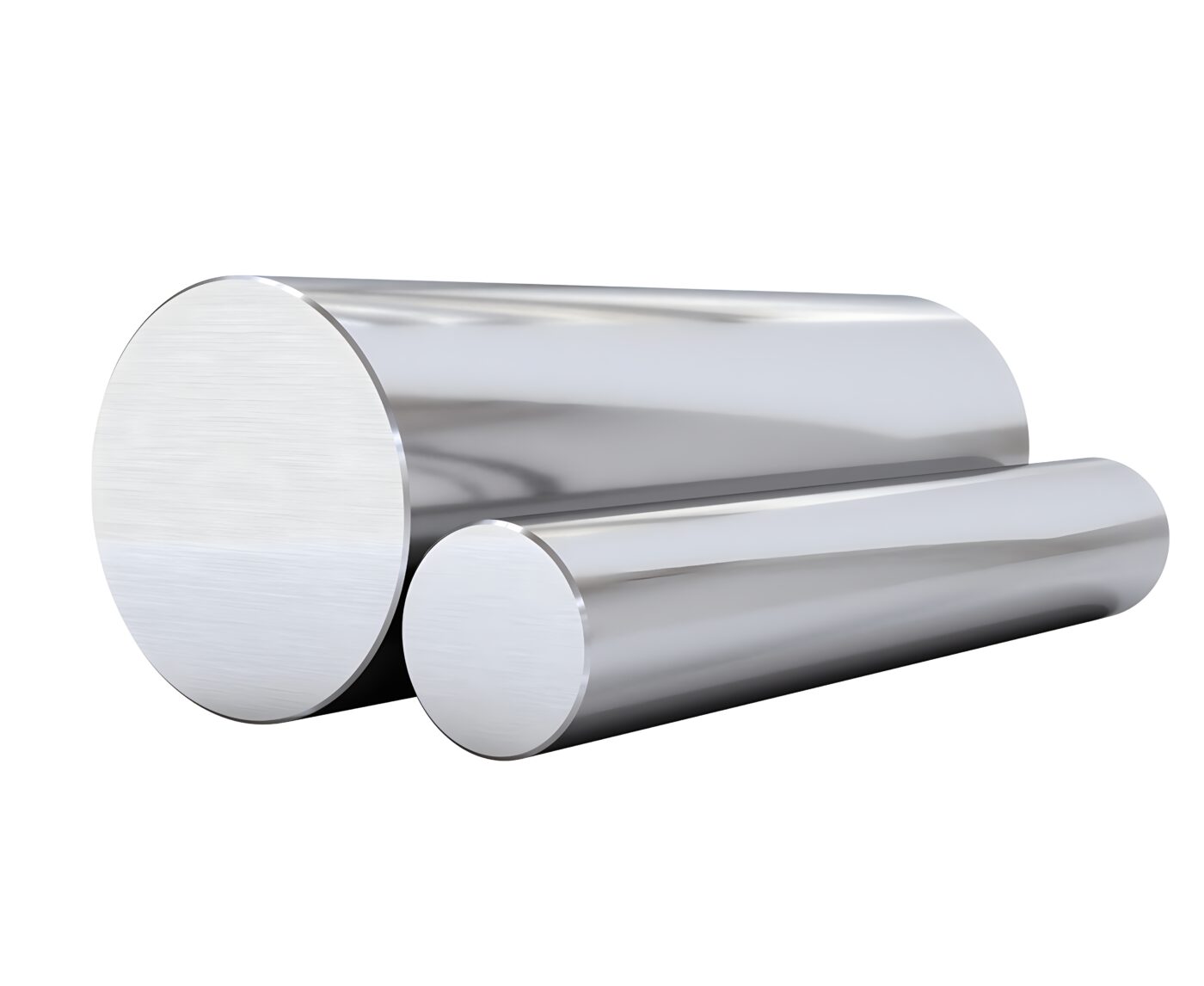
Supply is normally small diameter bar and wire rather than large forgings. We work to the cold-drawn condition specified by the buyer, with tensile and hardness tested on the finished diameter rather than on the input stock.
Standards and Conditions
AMS 5844 covers bar, wire and forgings; ASTM F562 covers the wrought form for surgical implants and is frequently cited by industrial buyers as well. Mechanical properties depend on condition, so the order must state cold reduction or the required strength level — a generic MP35N enquiry cannot be quoted.
| System | Designation |
| UNS | R30035 |
| W.Nr. | 2.4990 |
| AMS 5844 | Bar, wire, forging |
| ASTM F562 | Wrought form, cold worked and aged |
| Trade name | MP35N |
Where MP35N Is Used
Logging and wireline tools
Sonde bodies, spring contacts and load-bearing elements that must be non-magnetic and corrosion resistant.
Downhole pressure housings
Thin-wall gauge carriers for 140 MPa and 200 °C service, where wall thickness must be minimised.
Springs and torsion elements
Valve and instrument springs requiring fatigue strength that 17-7PH cannot deliver in chlorides.
Seals and seal energisers
Metal seals and backup rings in high-pressure completions.
Fasteners and pins
Small high-strength fasteners where a magnetic material would disturb measurement.
Medical and dental instruments
Sold under ASTM F562; the same stock is used for surgical burrs and orthodontic wire.
Supply Range and Condition
Cold-drawn bar from 3 mm to 40 mm diameter; wire from 0.5 mm to 8 mm; small forged components to drawing. Conditions offered are annealed, cold drawn, cold drawn and aged, and spring temper, with strength level stated on the certificate.
Testing includes chemistry, tensile and yield on the finished diameter, hardness, and where specified rotational bend or torsion testing on wire. EN 10204 3.1 certificates with heat traceability.
Chemical Composition of MP35N (wt%)
Cobalt and nickel are both held at 33–37%, giving the alloy its characteristic combination of strength and corrosion resistance. Molybdenum at 9.00–10.50% provides the pitting resistance; titanium is limited to 1.00% and is used to control the ageing response rather than as a strengthening addition.
| Element | Min % | Max % |
| Cobalt (Co) | 33.00 | 37.00 |
| Nickel (Ni) | 33.00 | 37.00 |
| Chromium (Cr) | 19.00 | 21.00 |
| Molybdenum (Mo) | 9.00 | 10.50 |
| Titanium (Ti) | — | 1.00 |
| Iron (Fe) | — | 1.00 |
| Carbon (C) | — | 0.025 |
| Manganese (Mn) | — | 0.15 |
| Silicon (Si) | — | 0.15 |
| Phosphorus (P) | — | 0.015 |
| Sulphur (S) | — | 0.010 |
Mechanical Properties by Condition
Values are typical for annealed and cold-drawn conditions. The dramatic spread is the point: design allowable must be tied to the specific cold reduction and ageing cycle, and the certificate must state which.
| Condition | Tensile strength | Yield (0.2%) | Elongation |
| Annealed | ≈ 930 MPa | ≈ 415 MPa | ≈ 50% |
| Cold drawn 50% | ≈ 1,600 MPa | ≈ 1,450 MPa | ≈ 8% |
| Cold drawn + aged | ≈ 1,900 MPa | ≈ 1,750 MPa | ≈ 6% |
Need MP35N bar or wire to a specific strength level?
Send the diameter, condition, required tensile or hardness, and quantity — we reply with mill availability, lead time and a priced offer, usually within one working day.