
Alloy 2535 (UNS N08535, also sold as SM2535) is a 25Cr-32Ni-3Mo super-austenitic that reaches 110–125 ksi yield without ageing. That combination — high strength, no heat treatment after machining, and a NACE MR0175 Type 4c listing to 149 °C — is why it is specified for completion tool mandrels and valve bodies where 825 is too weak and 718 costs too much.
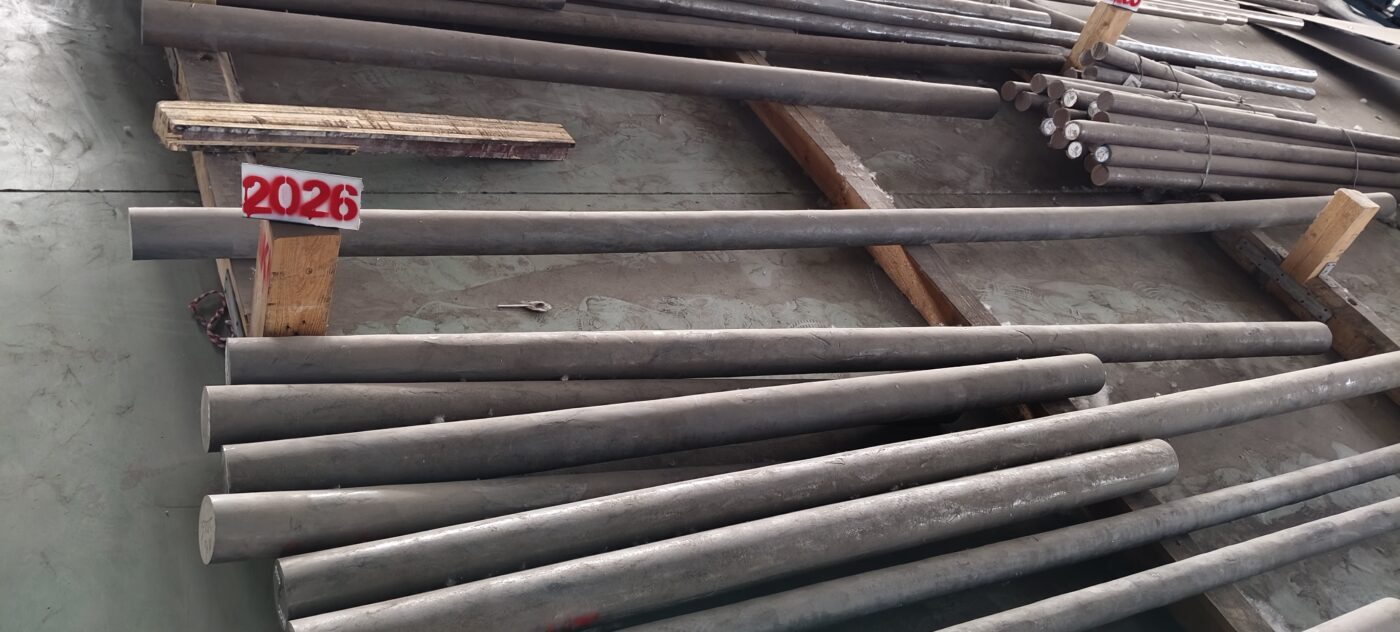
The alloy sits between 028 (Sanicro 28) and 2550 in the cold-worked CRA ladder: 3% molybdenum gives PREN around 40, and the 32% nickel keeps it fully austenitic and tough at that strength level. Because the strength comes from cold work rather than precipitation, there is no ageing step to distort a finished part.
Above 149 °C the grade falls outside its NACE window and the choice moves to Alloy 2550, which is listed to 232 °C. Below 110 ksi, 028 and 825 are cheaper. That narrow band is exactly where most HPHT completion tools live.
Alloy 2535 Standards and Equivalent Grades
Bar and forging stock are covered by API 5CRA / ISO 13680 for oilfield use and by ASTM B581/B564 for general wrought forms. Cold-worked hollow bar for pup joints is ordered to ISO 13680 Category 25-32-3.
| System | Designation |
| UNS | N08535 |
| API 5CRA / ISO 13680 | Group 3, Cat. 25-32-3 |
| ASTM B581 / B564 | Bar & wire / forgings |
| NACE MR0175 | Type 4c, listed to 149 °C |
| W.Nr. | — |
Where Alloy 2535 Bar Is Used
Completion tool mandrels
Setting sleeves, mandrels and shear subs that need 110 ksi in a sour well without a post-machining heat treatment.
Valve bodies and trim
Gate and ball valve internals for wet sour gas where 825 would need a heavier section.
Tubing hangers and adapters
Load-bearing components between the hanger and the tree, machined from cold-worked bar.
Downhole gauge carriers
Thin-wall housings for permanent gauges in CO₂ and H₂S service.
Pup joints and couplings
Hollow bar stock for short tubular joints and premium-thread couplings.
Subsea fasteners
High-strength bolting where 718 would be over-specified.
Supply Range and Condition
Cold-worked and annealed round bar from 25 mm to 400 mm diameter, peeled or ground; hollow bar for pup stock; open-die forged blocks to drawing. Condition is stated per order — cold worked to 110 or 125 ksi, or solution annealed for machining.
Testing includes chemistry, tensile and yield on the finished section, hardness, and NACE compliance documentation. EN 10204 3.1 certificates with heat traceability.
Stock sizes ship from bar; a fresh induction melt starts at 3–5 t, with about 30 days from confirmed order. Cold working to 125 ksi adds a pass and is quoted with the drawing rather than from a table.
Chemical Composition of Alloy 2535 (wt%)
Chromium at 24–27% and nickel at 29.5–36.5% give the grade its pitting resistance and austenitic stability; molybdenum at 2.5–4.0% is the element that separates it from 028. Carbon is capped at 0.03% to keep welded assemblies corrosion resistant without annealing.
| Element | Min % | Max % |
| Cr | 24.00 | 27.00 |
| Ni | 29.50 | 36.50 |
| Mo | 2.50 | 4.00 |
| Cu | — | 1.50 |
| C | — | 0.030 |
| Si | — | 0.50 |
| Mn | — | 1.00 |
| P | — | 0.030 |
| S | — | 0.030 |
| Fe | balance | balance |
Mechanical Properties
Values are the API 5CRA requirements for the cold-worked 110 and 125 ksi conditions at room temperature. Annealed stock is supplied only for parts that will be cold formed or welded.
| Condition | Yield (0.2%) | Tensile | Max service temp |
| Cold worked 110 ksi | ≥ 758 MPa | ≥ 793 MPa | 149 °C |
| Cold worked 125 ksi | ≥ 862 MPa | ≥ 897 MPa | 149 °C |
Before You Specify
Three things go wrong on 2535 orders more often than the grade itself:
- 149 °C is a NACE ceiling, not a working margin. The Type 4c listing stops there for both the 110 ksi and the 125 ksi condition. A well at 155 °C needs Alloy 2550, and ordering 125 ksi does not buy temperature headroom — the ceiling is the same.
- Cold work is the strength mechanism. There is no ageing step, which is the point of the grade, but it also means a finished part cannot be re-heat-treated: solution annealing drops the yield back below 110 ksi. Plan machining around the cold-worked condition, and do not weld or hot-work a part that has already been strengthened.
- Hollow bar for pup joints is not a B581 order. Cold-worked hollow bar is bought to ISO 13680 Category 25-32-3. A purchase order that names ASTM B581 alone is a bar specification and will not be accepted for tubular stock.
Frequently Asked Questions
Should I order the 110 ksi or the 125 ksi condition?
110 ksi covers most completion tool work and machines more easily. 125 ksi is chosen when the wall is thin or the load path cannot grow, and it costs ductility and tool life. The temperature ceiling is 149 °C for both, so the higher strength never buys temperature range — only section.
Can Alloy 2535 replace Alloy 2550?
Only below 149 °C. Both are NACE-listed cold-worked super-austenitics, but 2550 is listed to a higher temperature, so the substitution runs one way: 2535 can replace 2550 in cooler wells, not the other way round. Above 149 °C the 2535 listing no longer applies.
What has to be watched when welding it?
Weld only annealed stock. Cold-worked bar loses its strength in the heat-affected zone and cannot be re-strengthened, because the grade has no ageing treatment. That is why annealed bar is supplied for parts that will be welded or cold formed, and why the finished part is normally machined from cold-worked bar instead.
What is the minimum order and lead time?
Stock sizes ship from bar; a fresh induction melt starts at 3–5 t, with about 30 days from confirmed order. Cold working to 125 ksi adds a pass and is quoted with the drawing rather than from a table.
Need Alloy 2535 bar or forging stock at 110 or 125 ksi?
Send the size, strength level, quantity and NACE requirements — we reply with mill availability, lead time and a priced offer, usually within one working day.