
Project Description
Alloy 2535 (UNS N08535, proprietary trade designations SM2535-110 and SM2535-125 by Nippon Steel, also traded as SB2535, Incoloy 2535, and Nicrofer 3525 Nb, classified under ISO 13680 Group 3 Category 25-32-3) is a cold-worked, solid-solution-strengthened austenitic iron-based nickel alloy CRA pipe purpose-engineered for one of the most demanding applications in the upstream oil and gas industry: highly sour well conditions where CO₂, H₂S, and chloride coexist at elevated temperatures and where conventional corrosion-resistant alloys are either metallurgically insufficient or uneconomically over-specified. Launched in the mid-1980s by Nippon Steel as an innovative response to the escalating demand for CRA tubulars in deep sour gas developments — particularly in the Middle East and the North Sea — SM2535 has since become the reference product for tubing and liner strings permanently exposed to aggressive production fluids at temperatures to 149 °C (300 °F) in the absence of elemental sulfur. Its fundamental metallurgical architecture of ~32% Ni – 25% Cr – 3.2% Mo (nominal) on a sub-0.03% carbon iron base, cold-worked to controlled dislocation densities through precision pilgering of solution-annealed hollows, delivers an intelligently balanced combination of high yield strength (110–145 ksi, 758–1000 MPa), excellent sour-service corrosion resistance, and practical fabricability — all without the precipitation-hardening heat-treatment complexity, weld-HAZ softening susceptibility, and cost premium of fully age-hardenable nickel-base superalloys. The alloy is classified under NACE MR0175 / ISO 15156-3 as a Type 4c material in Table A.14, designated for service in any combination of H₂S, chloride, and CO₂ up to 132 °C (270 °F) without restriction on H₂S partial pressure; Nippon Steel’s proprietary qualification extends this upper envelope to 149 °C (300 °F) based on decades of field-validated slow-strain-rate tensile data. At SHUNFU METAL, we supply Alloy 2535 N08535 CRA pipe manufactured to API 5CT / ISO 11960 and API 5CRA / ISO 13680, in both the 110 ksi and 125 ksi strength levels, with every length receiving full-length ultrasonic testing, eddy-current inspection, positive material identification, and hydrostatic testing to EN 10204 Type 3.1.
Similar Grades — High-Strength Sour-Service CRA OCTG Family
| Alloy / Grade | UNS | ISO 13680 | Key Alloying (Nominal wt%) |
Yield (ksi) |
NACE MR0175 |
Max T (°C) |
|---|---|---|---|---|---|---|
| Alloy 2535 / SM2535 | N08535 | Group 3 Cat. 25-32-3 |
25Cr-32Ni -3.2Mo |
110–125 | Type 4c — listed |
149 |
| Alloy 2550 / SM2550 | N06255 | Group 4 Cat. 25-50-6 |
25Cr-50Ni -6Mo |
110–125 | Type 4d — premium upgrade |
232 |
| Sanicro 28 / 28-110/125 | N08028 | Group 3 Cat. 28-31-3.5 |
27Cr-31Ni -3.5Mo-1Cu |
110–125 | Listed — all conditions |
− |
| Alloy 825 | N08825 | Group 1 Cat. 22-42-3 |
22Cr-42Ni -3Mo-2Cu-Ti |
35–45 | Listed — low strength |
− |
| Alloy G3 | N06985 | Group 3 Cat. 22-44-7 |
22Cr-44Ni -7Mo-Cu-W |
45–50 | Listed — higher Mo |
− |
| Alloy 925 | N09925 | Group 4 Cat. 21-42-3 |
21Cr-42Ni -3Mo-Cu-Ti-Al |
110–125 | Listed — age-hardenable |
− |
Alloy 2535 occupies the performance-and-cost middle ground between solution-annealed general CRA grades (825, G3) and premium nickel-base superalloys (2550, 718, 925). Its 3% Mo content is intentionally balanced: high enough to stabilize the Ni-S / Cr-O / Mo-S passive film against H₂S pitting at practical sour-service temperatures, yet low enough to avoid the steep cost escalation, hot-working difficulty, and intermetallic precipitation risk associated with 6% Mo alloys. When SM2550 or Alloy 925 is genuinely required by reservoir conditions, Alloy 2535 is over-specified — but across thousands of wells worldwide where CO₂ is the primary corrosive agent and H₂S is present at moderate partial pressure, Alloy 2535 is precisely the right alloy at the right price.
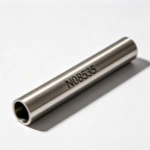
Cold-Worked CRA OCTG Pipe
Oil & Gas & Energy Applications
Sour Gas Production Tubing
Primary application: production tubing strings in deep, high-pressure sour gas wells where produced fluids contain CO₂ + H₂S + chlorides. SM2535-110 and -125 are the industry reference products for tubing in the Middle East (Khuff, Arab formations), Central Asia (Tengiz, Karachaganak), and Southeast Asia sour gas developments.
Sour Gas Injection Tubing
Injection wells in acid-gas re-injection (AGRI) and CO₂ sequestration projects where injected gas streams contain wet CO₂ + H₂S mixtures at wellhead pressures exceeding 5,000 psi. Cold-worked 2535 maintains dimensional stability and corrosion resistance under cyclic pressure-temperature service.
Production Liners
Slotted and perforated liner strings in open-hole completions spanning multiple sour reservoir zones. The 110 ksi minimum yield provides collapse resistance at depth, while the NACE Type 4c qualification covers liner systems exposed to formation fluids containing >1.0 bar H₂S partial pressure.
High-H₂S Condensate Wells
Gas-condensate wells with H₂S partial pressures in the 1–10 bar range and bottomhole temperatures to 149 °C. The Ni-S/Cr-O/Mo-S passive film on Alloy 2535 resists the synergistic pitting attack that pure H₂S exerts on lower-Mo stainless steels in this service window.
Sour Service Line Pipe
Short flowline and gathering-line segments in sour fields connecting wellheads to manifolds and first-stage separators. Alloy 2535 line pipe is supplied in the cold-worked condition to API 5LC / ISO 15590-3 for CRA line pipe with NACE MR0175 qualification.
Deepwater Sour Tie-Back Tubing
Subsea tie-back flowlines and risers in deepwater sour developments where the combination of reservoir pressure, H₂S/CO₂ content, produced-water chlorides, and shut-in cool-down cycles demands a cold-worked CRA with proven resistance to sour environmental cracking under triaxial stress states.
Downhole Completion Components
Pup joints, flow couplings, blast joints, and gauge-mandrel blanks machined from SM2535 bar and hollow-bar stock. The alloy’s cold-worked condition provides the 110–125 ksi strength required for completion-tool cross-sections without the HAZ softening that accompanies weld-repaired precipitation-hardened alloys in this application.
Enhanced Oil Recovery Gas Lift
Gas-lift mandrels and injection valves in CO₂-flood and miscible-gas EOR projects where lift gas composition (recycled produced gas) carries wet CO₂ + H₂S at well temperatures exceeding 100 °C. Alloy 2535’s Mo-stabilized passive film resists the localized depassivation that threatens 13Cr and Modified 13Cr in this service.
Geothermal Sour Brine Production
High-enthalpy geothermal wells in volcanic and tectonically active regions where produced brines contain dissolved CO₂, H₂S, and aggressive chloride levels at temperatures approaching 150 °C. Alloy 2535’s austenitic structure and Mo-stabilized passive film resist both uniform corrosion and SSC in this demanding service envelope.
Supply Range & Dimensions — Alloy 2535 / N08535 OCTG Pipe
Alloy 2535 N08535 OCTG pipe is manufactured by cold pilgering (cold drawing) of solution-annealed hot-formed hollows. The cold-worked condition is the final delivery condition: no subsequent heat treatment is applied, and the cold-worked dislocation substructure is the sole strengthening mechanism. SHUNFU METAL supplies both SM2535-110 (110–140 ksi yield) and SM2535-125 (125–145 ksi yield) strength grades. Ranges exceeding 11 m are available as range-3 OCTG for deep-well completions.
| Product Form | Specification | Grade / Strength | OD Range | WT Range | Length | End Finish |
|---|---|---|---|---|---|---|
| OCTG Tubing | API 5CT / 5CRA ISO 11960 / 13680 |
110 ksi 125 ksi |
2-3/8″–7-5/8″ (60.3–193.7 mm) |
API 5CT weights up to 1.0″ WT |
Range 1, 2, 3 to 14 m |
Upset + VAM / Premium thread |
| OCTG Casing | API 5CRA ISO 13680 |
110 ksi 125 ksi |
4-1/2″–16″ (114.3–406.4 mm) on enquiry |
per API 5CT casing tables |
Range 2, 3 | BTC / VAM TOP / premium |
| Liner | API 5CRA ISO 13680 |
110 ksi | 3-1/2″–9-5/8″ (88.9–244.5 mm) |
per API 5CT liner tables |
Range 2, 3 | Plain end / premium thread |
| Line Pipe | API 5LC ISO 15590-3 |
110 ksi | 3″–12″ (88.9–323.9 mm) |
Schedule 10S–80S | 6–12 m random or fixed length |
Bevel or plain end |
| Hollow Bar / Pup Stock | ISO 13680 Category 25-32-3 |
110&125 ksi | 1-1/2″–12″ (38.1–304.8 mm) |
per OEM machining envelope |
1–6 m | Plain end |
OCTG tubing is supplied with copper-plated premium connections (VAM, VAM TOP, VAM HT, VAM SG, or equivalent licensee series) per VAM Book and API RP 5C1 / ISO 10405. Green/white/orange band color coding differentiates SM2535 strengths on the pipe body and coupling. All pipe is shipped with thread protectors, internal-bore preservation coating, and corrosion-inhibitor wrapping for offshore/desert transit. SHUNFU METAL also supplies integrally forged wellhead pup joints, flow couplings, and blast joints in Alloy 2535 machined from bar stock with full NACE MR0175 documentation.
Chemical Composition — Alloy 2535 (UNS N08535)
| Element | C | Si | Mn | P | S | Cr | Ni | Mo | Cu | Fe |
|---|---|---|---|---|---|---|---|---|---|---|
| API 5CRA / ISO 13680 Specification Range |
≤0.03 | ≤0.50 | ≤1.00 | ≤0.030 | ≤0.030 | 24.0–27.0 | 29.5–36.5 | 2.5–4.0 | ≤1.50 | bal. |
| SHUNFU Internal Control (Typical Aim) |
≤0.015 | ≤0.30 | 0.40–0.70 | ≤0.020 | ≤0.010 | 25.0–26.0 | 31.0–34.0 | 3.0–3.5 | ≤0.80 | bal. |
Metallurgical design commentary. The low-carbon specification (≤0.03%, typically ≤0.015% in SHUNFU-supplied product) is fundamental to the alloy’s SSC resistance: carbon above this threshold promotes chromium carbide precipitation along ferrite stringers formed during hot-working, creating micro-galvanic corrosion sites that act as crack-initiation points in sour H₂S environments. The 25% Cr – 32% Ni – 3% Mo ternary core is the product of systematic optimization: Cr must exceed ~24% to form a Cr₂O₃ passive film foundation that resists general corrosion in hot CO₂/brine; Ni must exceed ~30% to ensure full austenitic phase stability in the cold-worked condition and to suppress sigma-phase formation during GTAW of pup joints and flow couplings; Mo must exceed ~2.5% to stabilize the Ni-S / Mo-S passive overlay that blocks H₂S pitting, yet stay below ~4% to avoid the cost, density, and hot-workability penalties that escalate sharply in the 4–6% Mo range. Copper (≤1.50%) contributes to reducing-acid resistance in the acidic brine envelope; manganese is controlled below 1% to avoid depleting the Cr₂O₃ passive film fidelity in CO₂-saturated brine at the upper end of the service temperature envelope.
Mechanical Properties — SM2535-110
| Property | Metric | Imperial | Notes |
|---|---|---|---|
| Yield Strength Rp0.2, room temp |
758–965 MPa | 110–140 ksi | ISO 13680 / API 5CRA Group 3 minimum |
| Tensile Strength Rm, room temp |
≥793 MPa | ≥115 ksi | Minimum guaranteed |
| Elongation A 4D, room temp |
≥12% | ≥12% | Higher than 125 ksi grade due to lower cold work |
| Hardness | ≤32 HRC | ≤297 HBW | NACE MR0175 Type 4c maximum |
| Density (25 °C) | 8,000 kg/m³ | 0.289 lb/in³ | ≈2% heavier than carbon steel OCTG |
| Young’s Modulus | 193 GPa | 28.0 Msi | At 25 °C; derates to 184 GPa at 250 °C |
| Thermal Conductivity | 9.8 W/m·K | 5.7 Btu/ft·hr·°F | At 25 °C |
| Thermal Expansion 25–100 °C |
12.5 ×10⁻⁶/K | 6.9 ×10⁻⁶/°F | Similar to ferritic stainless; less than 300-series |
| Charpy Impact | ≥60 J (typ. >100 J) | ≥44 ft·lbf | Minimum average at 0 °C per ISO 13680 |
Mechanical Properties — SM2535-125
| Property | Metric | Imperial | Notes |
|---|---|---|---|
| Yield Strength Rp0.2, room temp |
862–1000 MPa | 125–145 ksi | ISO 13680 / API 5CRA Group 3 minimum |
| Tensile Strength Rm, room temp |
≥896 MPa | ≥130 ksi | Minimum guaranteed |
| Elongation A 4D, room temp |
≥10% | ≥10% | Lower ductility reflects higher cold work |
| Hardness | ≤34 HRC | ≤314 HBW | NACE MR0175 Type 4c maximum |
| Density (25 °C) | 8,020 kg/m³ | 0.290 lb/in³ | Marginally higher than 110 ksi due to cold work |
| Young’s Modulus | 190 GPa | 27.6 Msi | At 25 °C |
| Thermal Conductivity | 8.7 W/m·K | 5.0 Btu/ft·hr·°F | At 25 °C |
| Thermal Expansion 25–100 °C |
14.9 ×10⁻⁶/K | 8.3 ×10⁻⁶/°F | Marginally higher than 110 ksi |
| Charpy Impact | ≥60 J (typ. >80 J) | ≥44 ft·lbf | Minimum average at 0 °C per ISO 13680 |
Strength selection guidance. The 110 ksi grade is the established workhorse for the vast majority of sour production tubing applications, offering an optimal balance of design collapse resistance, tensile load capacity at depth, and long-term SSC resistance with a lower cold-work dislocation density. The 125 ksi grade is specified when well depth, tubing-hanger load, or annulus-pressure collapse design demands the extra yield strength — typically in wells deeper than 5,500 m TVD or with shut-in tubinghead pressures exceeding 10,000 psi. Both grades meet NACE MR0175 / ISO 15156 Type 4c requirements. Nippon Steel’s 149 °C extended qualification applies to both strength levels.
NACE MR0175 / ISO 15156 Type 4c Qualification & Manufacturing
Sour-service classification. Alloy 2535 is a NACE MR0175 / ISO 15156-3 Type 4c material listed in Table A.14. The Type 4c classification means the alloy is qualified for service in any combination of H₂S partial pressure, chloride concentration, and CO₂ partial pressure, up to a maximum service temperature of 132 °C (270 °F), without environmental restriction. Nippon Steel’s proprietary SM2535 qualification extends this envelope to 149 °C (300 °F) for fit-for-purpose applications, based on systematic slow-strain-rate tensile (SSRT) testing in 25% NaCl + CH₃COOH with 0.7 MPa (100 psi) H₂S across a range of Mo-bearing austenitic alloys. The alloy is not qualified for service in the presence of elemental sulfur (S⁰), which attacks the Ni-S/Cr-O/Mo-S passive film through a fundamentally different corrosion mechanism.
Manufacturing route. Primary melting is via electric-arc furnace (EAF) followed by vacuum oxygen decarburization (VOD) and/or argon oxygen decarburization (AOD) refining to achieve the sub-0.03% carbon specification and precise Mo/Ni/Cr chemistry control. The cast ingot is hot-worked (typically by extrusion or rotary-piercing into a hollow shell), followed by full solution annealing above 1,050 °C with rapid water quenching to dissolve all secondary phases and homogenize the austenitic grain structure. The solution-annealed hollow is then cold-pilgered or cold-drawn to the final OD, wall thickness, and mechanical properties — the cold-working step is the sole strengthening mechanism: controlled dislocation multiplication and cell-structure formation raise the yield strength from the annealed ∼280–350 MPa to the target 758–1000 MPa range without any precipitation-hardening heat treatment. No subsequent aging, tempering, or stress-relief annealing is applied; the pipe is delivered in the as-cold-worked condition.
SHUNFU quality assurance. Every length of SHUNFU-supplied Alloy 2535 N08535 OCTG pipe receives: (1) full-length automated ultrasonic testing per ASTM E213 / ISO 10893-10 for longitudinal and transverse flaw detection with reference notches of 5% wall depth; (2) full-length eddy-current inspection per ASTM E426 / ISO 10893-1 for surface-breaking and near-surface discontinuity detection; (3) 100% positive material identification by handheld XRF spectroscopy at both pipe ends, verified against the mill certificate; (4) full-length hydrostatic test at 1.5× rated working pressure with a minimum hold time of 15 s per length; (5) dimensional inspection including OD, WT, straightness (≤1:1000 deviation), and out-of-roundness (≤1.5% for OCTG, ≤1.0% for line pipe); (6) through-wall hardness traverse per ASTM E92 / ISO 6507-1 at 1.5 mm from both OD and ID surfaces; (7) Charpy V-notch impact testing per ASTM E23 / ISO 148-1 at 0 °C with minimum average 60 J and single minimum 50 J. All tests are documented on an EN 10204 Type 3.1 material test certificate, with Type 3.2 third-party witnessed certification available upon project request.