Laser quenching of AISI 4130: a double-edged sword
In oilfield service, surface wear is not a detail: it accounts for more than 90 % of component failures. That is why the industry is turning increasingly to laser quenching (LQ) to extend the life of AISI 4130 parts. Data from a recent Chinese study —combining microstructure, corrosion and wear— show that the technique is remarkably effective against wear but not free of charge: the very same martensite and carbides that multiply surface hardness degrade corrosion resistance. Understanding this trade-off is the difference between a sound engineering decision and a costly field failure.
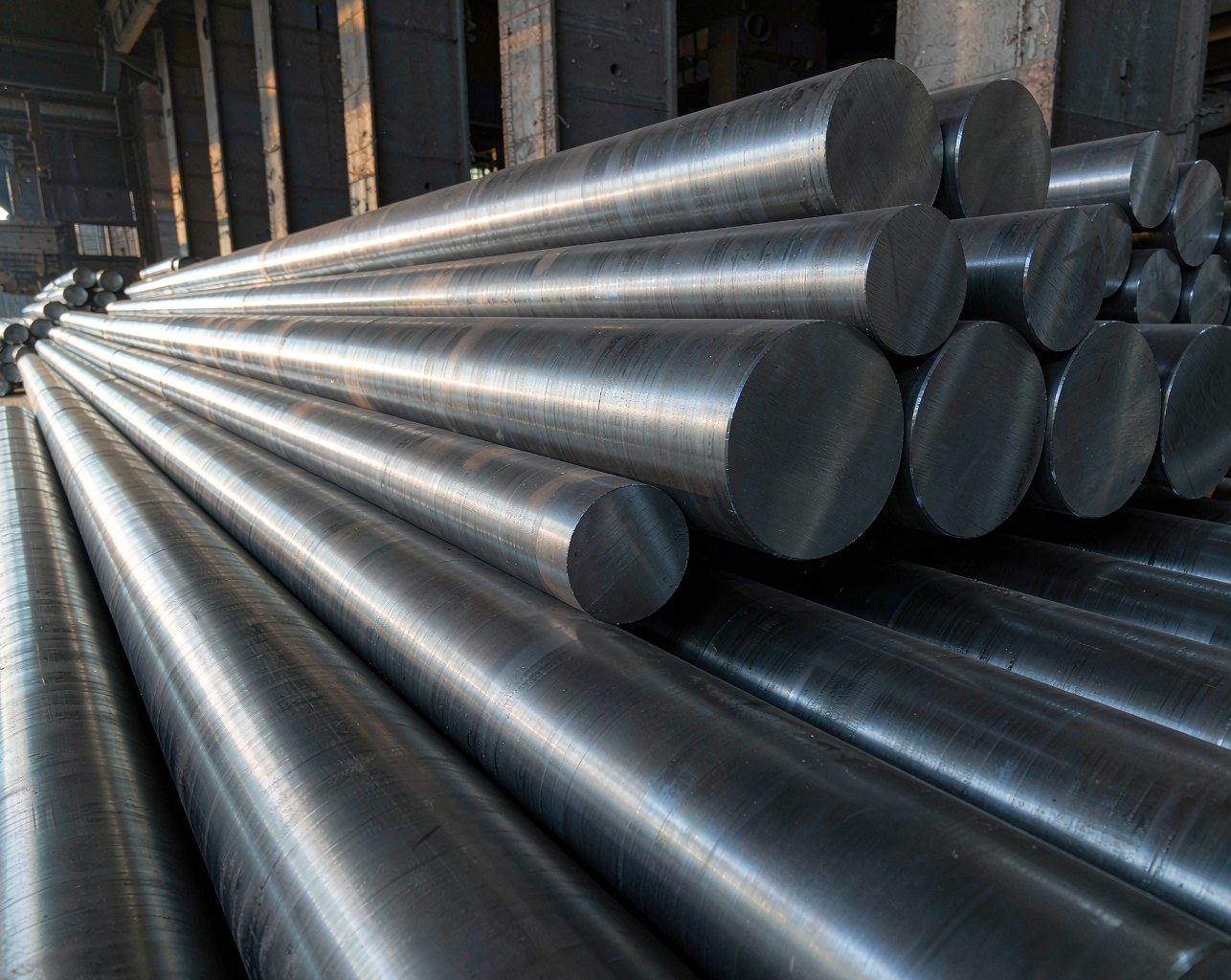
Let us first fix the material and its international nomenclature. AISI 4130 is the chromium-molybdenum steel of the 41xx series —roughly 1 % Cr and 0.2 % Mo— defined in the United States by ASTM A29/A519; in China it corresponds to 35CrMo of GB/T 3077; in Europe, to 25CrMo4 (1.7218) or 30CrMo4 (1.7216) of EN 10083; in Japan, to SCM430 of JIS G4105. The grade is used for forged oilfield valve bodies, connecting rods and drill pipe tool joints, where temperature, corrosive media and severe impacts make the surface the weakest link.
What laser quenching is and why it is gaining ground
The principle is elegant in its simplicity: a high-power laser heats the surface above the transformation temperature within milliseconds; as the beam moves away, the cold mass of the component extracts heat so fast that the surface layer self-quenches, forming a thin case of fine-grained martensite with finely dispersed carbides. Compared with conventional furnace hardening —slow, applied to the whole part, prone to distortion— laser quenching acts locally: it does not change dimensions or surface roughness, leaves a very small HAZ —501.5 µm at 2.0 kW and 553.6 µm at 2.2 kW in the study— and can treat only the working zone, for instance the thread of a drill pipe tool joint. This is why it is already used on crankshafts, gears and cylinders, and in the oil industry on tool joint threads.
The resulting microstructure explains everything: fine-grained tempered martensite, uniformly distributed chromium-rich carbides and, depending on power, secondary martensite and retained austenite. Higher power means more martensite and less retained austenite —and, as we will see, higher hardness, better wear resistance, and worse corrosion.
The victory against wear, in numbers
Reciprocating wear tests (80 N load against an Al2O3 ball) summarize the benefit of laser quenching:
| Indicator | Base (4130) | LQ 2.0 kW | LQ 2.2 kW |
|---|---|---|---|
| Surface hardness increase | — | +85 % | +95 % |
| Average friction coefficient | 0.366 | 0.293 | 0.195 |
| Volumetric wear rate | Reference | −25 % | −36 % |
| Wear resistance improvement | — | +20 % | +47 % |
Surface hardness
+85 / +95 %
Mean friction (COF)
0.366 → 0.195
Wear resistance
+47 %
The mechanism is straightforward: martensite and chromium-rich carbides are extremely hard, preventing the abrasive counterpart from penetrating and plowing the surface; retained austenite adds ductility and cushions impacts; and the more carbides at the surface, the harder it is for the abrasive asperity to cut into the tough phase. The result is a change of regime: the base part suffers adhesive, oxidative and abrasive wear with delamination; the quenched part shows only mild and oxidative wear, with no material spalling.
The price: corrosion gets worse
Here comes the dark side. In 3.5 % NaCl solution, electrochemical measurements show that laser quenching degrades corrosion resistance, and the higher the power, the worse it gets:
| Parameter | Base (4130) | LQ 2.0 kW | LQ 2.2 kW |
|---|---|---|---|
| Passivation current density (µA/cm²) | 60.00 | 102.28 | 108.58 |
| Film resistance Rf (Ω·cm²) | 1124 | 3005 | 1029 |
| Charge transfer resistance Rct (Ω·cm²) | 4738 | 1326 | 2598 |
| Rf + Rct (Ω·cm²) | 5862 | 4331 | 3627 |
The passivation current density of the quenched samples is about 1.7 times that of the base, and the combined resistance Rf + Rct drops from 5862 to 3627 Ω·cm². After 24 h of immersion, the corrosion product film (γ-FeOOH, flower-shaped) is compact on the base but loose and cracked on the quenched samples, which even spall at 2.2 kW.
The cause is metallurgical, not superficial: as chromium-rich carbides precipitate, the surrounding regions become depleted in chromium (Cr-depleted zones) and cannot form a continuous corrosion product film. On that discontinuity, Cl− ions attack and cause pitting. In addition, the multiphase microstructure —ferrite, retained austenite and abundant carbides— creates galvanic couples between phases that accelerate corrosion. Retained austenite, paradoxically, offers some protection: that is why the 2.0 kW sample, with more retained austenite, corrodes somewhat less than the 2.2 kW one.
The engineering decision: where yes, where no
The practical conclusion of the study is that laser quenching is an excellent tool, not a universal solution. Three criteria guide its use:
- Use it where wear rules: drill pipe tool joint threads, crankshafts, gears, stems and bearing surfaces in non-corrosive environments. There, +47 % wear life with the same geometry is a direct saving.
- Do not use it in sour service: the 22 HRC hardness limit of NACE MR0175/ISO 15156 exists to prevent sulfide stress cracking (SSC). A laser-quenched surface exceeds that limit by a wide margin —quenched and tempered 4130 already runs at 30–45 HRC and the LQ case adds another 85–95 %— so in wells with H2S the hardened case would be a cracking hazard.
- Select power according to service: 2.2 kW gives maximum hardness and wear but worse corrosion; 2.0 kW trades some wear for better corrosion resistance. If chlorides or background moisture are present, moderate power is the prudent choice.
Two additional process parameters deserve attention: the overlap ratio between passes (the literature reports that 0 % overlap gives the best wear-corrosion balance, while high overlaps worsen it) and beam stability, because power inhomogeneity translates into irregular hardness across the case.
Conclusion: the surface has to be paid for
Laser quenching of AISI 4130 shows that in oilfield materials there is no free reinforcement: the same case of martensite and carbides that doubles hardness and cuts wear in half also weakens corrosion protection. For anyone specifying or buying laser-treated components, the audit is clear:
- Define the service medium before the hardness: if H2S is present, laser quenching is ruled out by NACE MR0175; if chlorides and humidity are present, ask for an electrochemical verification of the case, not just a hardness value.
- Demand the parameters: power, scan speed, beam size and overlap ratio, because they determine case depth (500–550 µm in the study), martensite fraction and the wear-corrosion balance.
- Remember that the laser treats the surface, not the volume: structural strength still comes from the quenched and tempered core; the LQ case is a metallurgical service coating, not a substitute for the base material.
Buying surface hardness without asking about the service medium is buying blind.
Author: Harris, technical team of SHUNFU METAL. Educational article for customers in the oil and gas drilling and production equipment sector.