By Harris, Technical Team, SHUNFU METAL
One Grade, Four Standard Systems
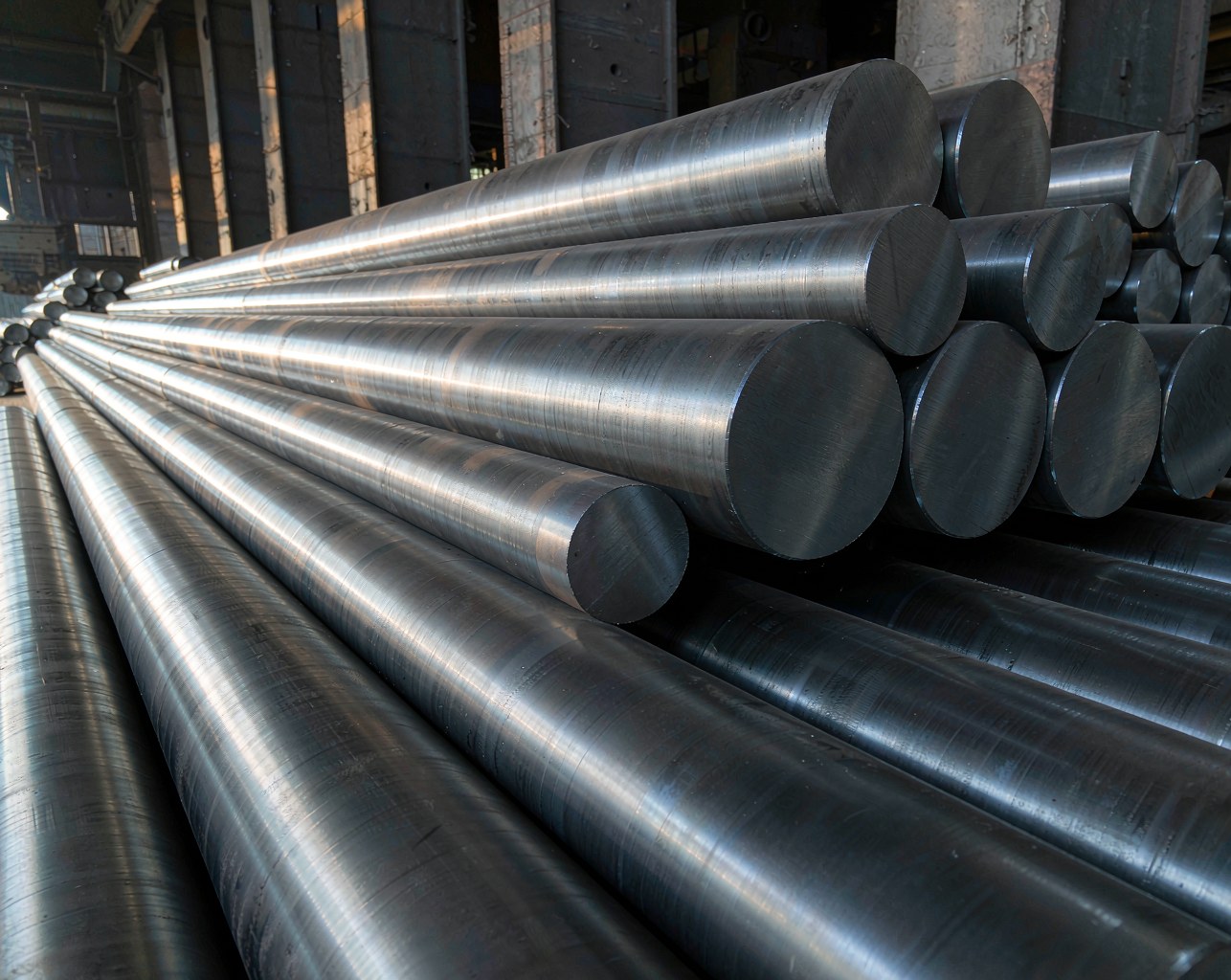
AISI 4140 is the world’s most widely specified chromium-molybdenum alloy steel, yet the same steel travels under different names in different markets: EN 42CrMo4 (1.7225) in Europe, JIS SCM440 in Japan, BS 708M40 in Britain, GOST 40KhM in Russia, and 42CrMo under the Chinese standard GB/T 3077. When a Chinese mill receives a 4140 order, it is simultaneously an AISI export chemistry and a domestic 42CrMo heat. This article shares the production study of large-diameter 4140 hot-rolled bars in quenched and tempered (QT) condition, 254 to 310 mm rounds, that reached a comprehensive yield above 97 percent, and contrasts the process with what international practice usually recommends.
| Standard system | Designation |
|---|---|
| AISI / SAE, USA | 4140 (UNS G41400) |
| EN 10083-3, Europe | 42CrMo4 (1.7225) |
| DIN, Germany | 42CrMo4 / 1.7225 |
| JIS G4053, Japan | SCM440 |
| BS, United Kingdom | 708M40 |
| GOST, Russia | 40KhM |
| ISO 683-1 | 42CrMo4 |
| GB/T 3077, China | 42CrMo |
Rolling Large Diameters Instead of Forging
Most buyers assume a 254-310 mm bar must be forged. Forging delivers superior center consolidation, but at a premium cost and a longer lead time. Rolling delivers better surface quality, tighter dimensional tolerance and lower cost. This study was built on exactly that trade-off: more than 300 tons of 4140 were produced by rolling instead of forging, with every acceptance criterion met. The clear verdict is that rolling large-diameter 4140 is not a downgrade from forging; it is a legitimate economic alternative, provided the mill applies forging-grade discipline to cooling and heat treatment of the largest sections.
The Full Process Route
The production route is: EBT melting, LF refining, ingot teeming, hot charging, soaking, rolling, slow cooling, surface scarfing, quenching, tempering, straightening, then inspection and dispatch. The route looks conventional; the difference is in the numbers.
Chemistry: Specification Range vs Internal Control
The customer’s specification is a window; the mill’s internal control is a much narrower gate. Carbon was locked at 0.42-0.43 percent, manganese at 0.96-1.00 percent, chromium at 1.06-1.10 percent, molybdenum at 0.22-0.25 percent, phosphorus below 0.020 percent, plus a deliberate aluminium addition of 0.015-0.035 percent that the specification never asked for. Tight internal control is the first crack-prevention measure: it stabilizes hardenability and grain behavior before heat treatment even begins. A mill that cannot hold internal windows tighter than the standard will not hold the tempering discipline either.
| Element | Specified | Internal control |
|---|---|---|
| C | 0.40-0.43 | 0.42-0.43 |
| Si | 0.15-0.35 | 0.22-0.35 |
| Mn | 0.75-1.00 | 0.96-1.00 |
| P | ≤0.025 | ≤0.020 |
| S | 0.010-0.025 | — |
| Cr | 0.80-1.10 | 1.06-1.10 |
| Ni | ≤0.25 | — |
| Mo | 0.15-0.25 | 0.22-0.25 |
| Cu | ≤0.35 | — |
| V | ≤0.05 | — |
| Al | — | 0.015-0.035 |
Rolling and Slow Cooling
5.8 t ingots were hot-charged into a soaking pit at 1260°C for 3 h to guarantee full soak-through and uniform deformation on the 825 mm mill, which produced 180-310 mm bars. After rolling, the bars were slow-cooled in pits for 60 h, then scarfed to remove surface defects before heat treatment. That 60 h slow cooling is not optional for 4140: the grade carries enough manganese and sulfur to develop transformation cracking if cooled too fast after rolling. Slow cooling is the quiet half of crack control that never appears on a certificate.
Quenching Windows That Prevent Cracks
International practice for large 42CrMo4 sections is blunt: avoid plain water. Water quenching is routinely described as near-certain cracking for this grade, and premium quenching oil at 40-60°C or polymer quenchants such as PAG at 8-10 percent concentration are the recommended media. The Chinese production study took the opposite route and made it work. Twenty-tonne bundles of 254-310 mm bars were austenitized in a bell furnace at 890±10°C, quenched in water held at 10-40°C, transferred from furnace to tank within 10 minutes, lifted and re-immersed every 2 minutes, with a total immersion time of 30 minutes and extraction at a surface temperature of 200°C or below, later revised to about 250°C.
Three windows explain the success. First, 890±10°C austenitizing sits above the textbook 845-870°C range, ensuring carbide dissolution in the core of a 300 mm section. Second, quench water is held at 10-40°C so cooling power does not drift between batches. Third, and most important, the extraction temperature is never allowed to drop too low. The danger zone in water quenching is not the initial plunge; it is the moment the surface falls below the Ms (martensite-start) temperature, where martensite transformation expands the volume and builds transformation stress while water is still extracting heat.
Tempering: The Second Gate
Quenched bars were charged into the tempering furnace promptly. Tempering ran at 580°C with a 6-8 h hold, followed by rapid water cooling to below 400°C and then air cooling to room temperature. That fast cooling after tempering is deliberate, and it is the part of the process almost never discussed: most longitudinal cracks in the first trial were not found after quenching at all; they appeared after tempering, during surface cleaning. The diagnosis was that rapid cooling during the tempering cycle generated organizational stress that cracked the surface. Controlling tempering cooling, and adding a stress-relief temper below 400°C, closed that failure mode.
Delivered Properties vs Required Properties
Mechanical testing was performed longitudinally at 25.4 mm below the surface, covering RP0.2 (0.2 percent offset proof stress), Rm (ultimate tensile strength), elongation A, reduction of area Z, AKV (Charpy V-notch impact energy) and HBW hardness. Every result exceeded the requirement, not marginally but with comfortable margin.
| Property | Required | Delivered |
|---|---|---|
| RP0.2 (MPa) | ≥760 | 790-920 |
| Rm (MPa) | ≥970 | 980-1060 |
| A (%) | ≥14 | 15-19 |
| Z (%) | ≥45 | 52-58 |
| AKV (J) | ≥30 | 46-48 |
| HBW | 285-341 | 290-336 |
Grain Refinement and Microstructure
The customer required an austenite grain size of 5-8; the mill delivered a stable 7-8. The mechanism is elegant: aluminium wire feeding plus a ferrovanadium addition forms fine, dispersed Al-V compounds that pin grain boundaries and block grain growth during austenitizing. Along the radius, the microstructure is exactly what physics predicts for 254-310 mm rounds: fully hardened tempered sorbite near the surface, mostly sorbite at half radius, and a mixed structure at the core. Full through-hardening of a 300 mm bar is neither achievable nor required; the specification tests 25.4 mm below the surface, and that is where the property gates apply.
Cracking: Root Cause, Real Diagnosis and Fixes
The first trial batch was a harsh teacher: 31 percent longitudinal quench cracks and 37 percent head circumferential cracks. Three root causes were identified. First, water quench cools fast in the high-temperature range and slowly below Ms, so when martensite transformation expands the structure, the stress has nowhere to escape. Second, and counterintuitive, most longitudinal cracks showed up after tempering, during surface cleaning, caused by rapid cooling in the tempering cycle rather than by the quench itself. Third, the head circumferential cracks came from uneven end chamfering: sharp, uneven ends concentrate quench stress.
The fixes were equally specific. Quench immersion time was shortened so bars left the water at about 250°C surface temperature. Tempering cooling was controlled, with rapid water cooling to 450°C, air cooling to room temperature, and a final stress-relief temper below 400°C. End chamfering was standardized at a uniform 45°. Circumferential cracks fell below 3 percent, and the comprehensive yield stabilized above 97 percent across more than 300 tons of production.
What Buyers Should Take Away
Three conclusions are worth carrying into any sourcing decision. First, large-diameter 4140/42CrMo4 QT bars do not require forging; a rolled QT bar can match forging-grade performance at a lower price if the mill treats the largest section size with respect. Second, water quenching is not an automatic rejection criterion. What separates a safe process from a scrap generator is not the quenchant but the temperature discipline around it: austenitizing window, water temperature, extraction temperature and tempering cooling procedure. Third, when evaluating a supplier, ask for the internal control chemistry, the quench extraction temperature, the tempering cooling route and the chamfering practice. Those four details, not the grade name on the certificate, determine whether your bar arrives sound.