The 205 mm Milestone and What It Actually Proves
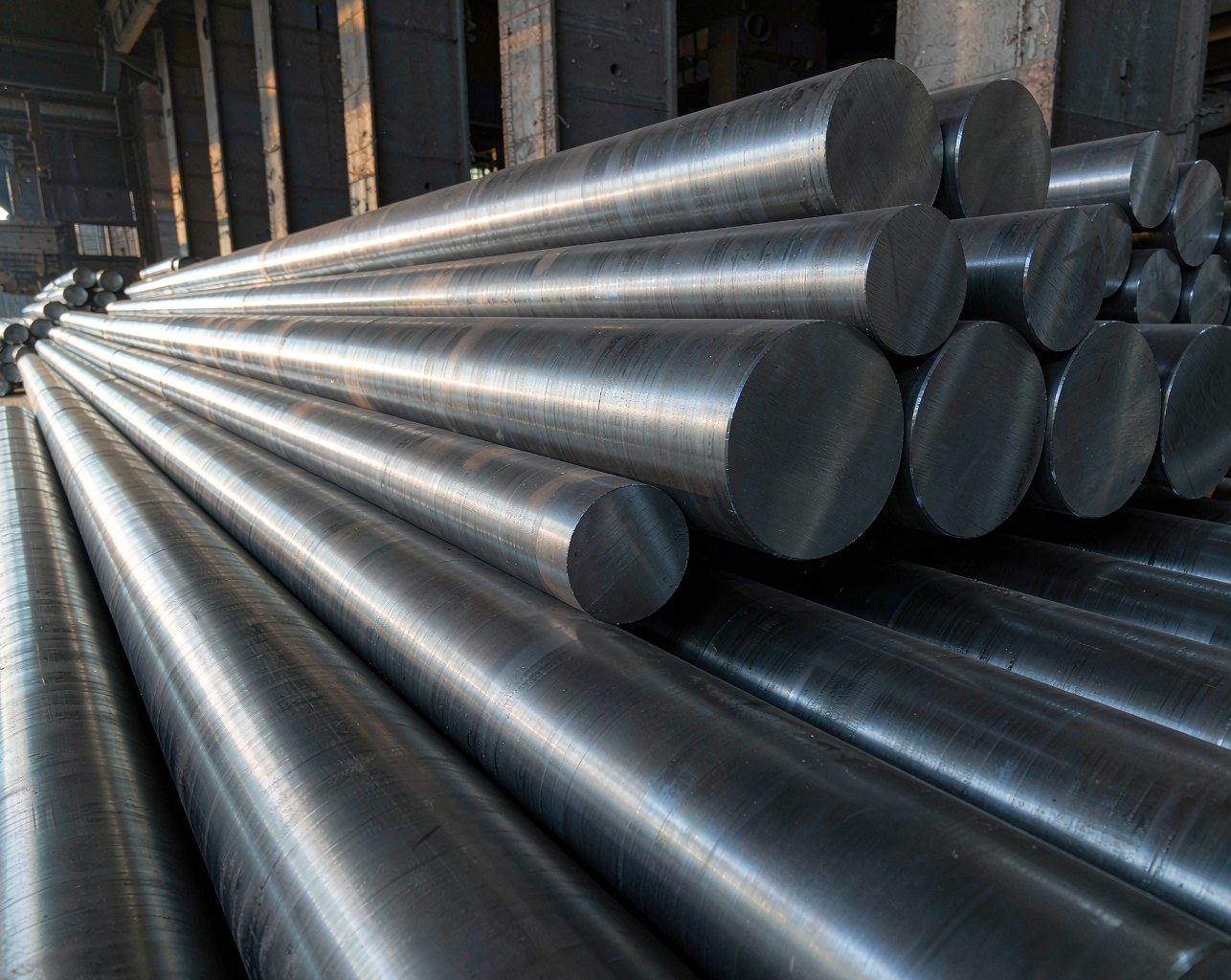
A Chinese mill recently delivered a 205 mm thick plate of SA516Gr70 to an international high-end customer for pressure-vessel shell courses. The press release frames this as filling a domestic gap in extra-thick plate development. That framing is accurate but incomplete. The more honest reading is that thickness is a proxy, not the achievement. What a 205 mm plate actually proves is a mill’s command of through-thickness property — the uniformity of strength, toughness, and soundness from the rolled surface to the centerline — because at this gauge the center of the plate is manufactured under completely different thermodynamics than the surface.
For equipment buyers, the lesson is simple: a certificate that says “SA516Gr70, 205 mm, ASME” tells you the plate exists. It does not tell you whether the center will perform like the surface when the vessel is in service for twenty years. The 205 mm number is the headline; the homogeneity behind it is the product.
SA516Gr70 on the Global Standards Map
ASME SA516Gr70 belongs to the ASTM A516 / ASME SA-516 family of carbon steels for moderate- and lower-temperature pressure-vessel service. It is one of the most specified PV plates in the world, and it has direct cousins under European, Chinese, and Japanese codes. Buyers working across projects should know that “equivalent” is a design-code mapping, not a guarantee of identical properties.
| Standard | Grade | Tensile (MPa) | Min Yield (MPa) | Service Window |
|---|---|---|---|---|
| ASME / ASTM (USA) | SA516Gr70 | 485-620 | 260 | Moderate to low temp |
| EN 10028-2 (Europe) | P355GH | 490-630 | 355 | Room / elevated temp |
| EN 10028-3 (Europe) | P355NL1 | 490-630 | 355 | Low temp (-40°C) |
| GB/T 713 (China) | Q345R / Q355R | 490-620 | 345 | Chinese PV code |
| JIS G3115 (Japan) | SPV355 | 490-620 | 355 | Pressure vessels |
Notice the yield gap: SA516Gr70 is specified at a minimum yield of 260 MPa, while its European and Chinese “equivalents” sit at 345-355 MPa. Designers who swap grades by name alone, without rechecking the allowable stress in their code, are making a structural assumption they cannot defend. The grade name is a starting point, not a substitution rule.
Why Thickness Is the Hardest Test a Mill Faces
Making a 205 mm plate is not the same process as making a 50 mm plate, only longer. The surface of a thick plate cools and deforms under rolling while the center lags by minutes to hours. That lag produces three problems that thin plate never reveals:
- Central segregation. Alloying and impurity elements migrate toward the centerline during solidification, concentrating sulfides and carbides exactly where the stress is highest.
- Strength-toughness balance. A thick section must be hard enough to carry load and soft enough to absorb impact; pushing one usually costs the other.
- Whole-plate uniformity. Properties at the head, tail, surface, and 1/2-thickness positions must all land in spec, not just one coupon.
This is why the mill’s own description of the breakthrough — solving “strength-toughness matching” and “uniform property consistency across the entire plate” — is the real story. Those are the metrics that decide whether a 200 mm shell course survives a hydrostatic test and a decade of thermal cycling. The 205 mm figure is only the envelope those controls had to fit inside.
The Buyer’s Real Checklist: Supplementary Requirements
The customer in this case did not simply order “SA516Gr70, 205 mm.” They attached a set of supplementary requirements that, in practice, are the real purchase specification. Each one controls a failure mode that a base certificate does not address:
| Customer Requirement | Failure Mode It Controls |
|---|---|
| Low carbon equivalent (CE) | Weldability, reduced preheat and heat-affected-zone cracking |
| Low PCM | Cracking risk in thick sections, lower fabrication cost |
| Low surface hardness | HIC and sulfide-stress-cracking resistance in sour service |
| High-temperature tempering | Toughness, internal stress relief, uniform microstructure |
| ASME conformity | Code acceptance and insurability of the finished vessel |
Our view: these supplementary lines are where procurement value is created or lost. A buyer who negotiates only on price per tonne and ignores CE, PCM, hardness, and tempering condition is buying a coupon, not a component.
Through-Thickness Data Tell the Honest Story
Published data from comparable 200 mm-class plates show what disciplined heavy-plate practice delivers. These are the numbers a serious buyer should request alongside the mill certificate:
| Property | What Good Heavy Plate Delivers |
|---|---|
| Z-direction reduction of area | Z25 to Z35 class; research plates reach 35-45% to resist lamellar tearing |
| UT cleanliness | ASME SA-435 Class 1 / EN 10160 S3E3; no lamination above 0.25% thickness |
| Core CVN at 1/2 thickness | ≥100 J at -30°C in qualified heavy plates; surface-to-center spread kept narrow |
| Head-to-tail tensile spread | Within ~15 MPa across X, Y, Z directions after simulated heat cycle |
When a supplier can show you these, the 205 mm claim becomes evidence rather than advertising. When they cannot, the thickness is a number on a brochure.
What This Means for Equipment Buyers
The Chinese industry’s ability to produce 205 mm SA516Gr70 confirms that the old assumption — only Japan or Europe could make heavy, code-grade pressure-vessel plate — is obsolete. Capability has diffused. That is good news for buyers, because it widens the qualified supply base and shortens lead times versus imported thick plate.
But diffusion of capability is not diffusion of discipline. The differentiator between a usable heavy plate and a risky one is no longer whether a mill can reach 200 mm. It is whether that mill controls the centerline, documents the supplementary requirements, and submits to third-party UT and Z-quality verification. Treat thickness as the entrance fee, not the selection criterion.
For your next thick-walled vessel, specify the grade by code, then write the real specification in the supplementary requirements: low CE and PCM, controlled surface hardness, defined tempering condition, Z-quality class, and UT acceptance. Ask for head, tail, surface, and centerline test results in the same certificate. That is how you buy performance instead of a headline.
Written by Harris, technical staff at SHUNFU METAL.