
Super-austenitic nickel-chromium non-magnetic steel, 28% nickel and above, melted to your drawing for heavy sections and chloride-rich wells where an Mn-Cr-N grade runs out of corrosion margin before it runs out of strength.
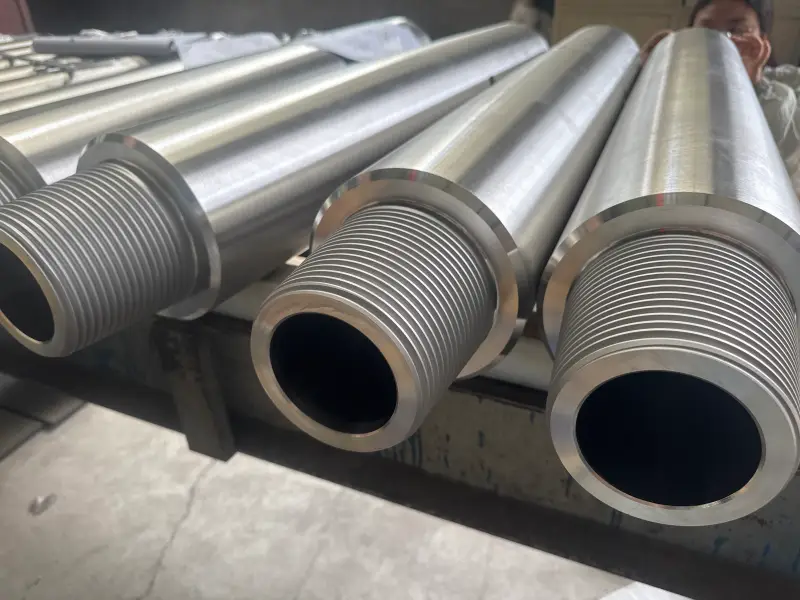
Above roughly 25% nickel the alloy stops being a manganese steel and becomes a nickel-chromium austenitic. The point of that jump is not strength — an Mn-Cr-N grade already reaches 965 MPa — it is pitting and stress-corrosion resistance in heavy sections, where the leaner grades run out of corrosion margin before they run out of strength.
What this page covers
| Item | Detail |
|---|---|
| Alloy family | Super-austenitic Ni-Cr, non-magnetic |
| Nickel | 28% and above, set by the drawing |
| Chromium / molybdenum | High Cr with 2–4% Mo, set by the drawing |
| Supply route | Melted to order, no stock |
| Duty | Heavy sections, hot chloride service, replacement of Ni-based alloys |
No chemistry table here. This family is specified by drawing, and a table lifted from one mill’s datasheet would not describe what you receive.
Temper and strength
The same chemistry can leave the mill in two conditions, and they are not interchangeable on a drawing:
| Condition | How it is reached | What it gives you |
|---|---|---|
| Annealed | Solution anneal and quench | Maximum ductility and corrosion resistance, lowest strength |
| Cold worked (HS) | Full-length cold reduction after annealing | Higher yield at the cost of elongation and some corrosion margin |
State the condition on the enquiry. A collar ordered annealed and a collar ordered cold worked carry the same grade name and different certificates.
What we need to quote
- Chemistry, or the drawing number
- Temper: annealed or cold worked, and the minimum yield that goes with it
- Magnetic: permeability ceiling and field-gradient limit
- NDT: ultrasonic level, MPI, and whether a per-bar permeability printout is required
- Form: OD, ID, length, machining allowance, quantity
- Certification: 3.1, 3.2, or third-party witness
Melting and processing
- Melting: EAF or induction with AOD / VOD; ESR or PESR for cleanliness-critical parts
- Hot working: forged, reduction ratio 6 or better
- Heat treatment: solution anneal and water quench, then cold reduction for HS temper
- Machining: peel, turn, BTA bore, gun-drill, thread and shoulder on request
Inspection and certification
- Chemical analysis and mechanical testing per heat to ASTM A370
- ASTM A262 Practice A and E; ASTM G36 / G38 C-ring on request
- Full-length ultrasonic inspection to API Spec 7-1 clause 12
- Permeability and field gradient per bar, printout supplied
- EN 10204 3.1 standard; 3.2 and SGS / TÜV on request
Need a super-austenitic non-magnetic grade?
Send the size, condition, quantity and any NACE or PMI requirements — we reply with mill availability, lead time and a priced offer, usually within one working day.