
High-nickel austenitic non-magnetic steel, melted to your drawing rather than bought from stock: 14% nickel and above, pitting resistance beyond the Mn-Cr-N collar grades, permeability ceiling set by your MWD requirement.
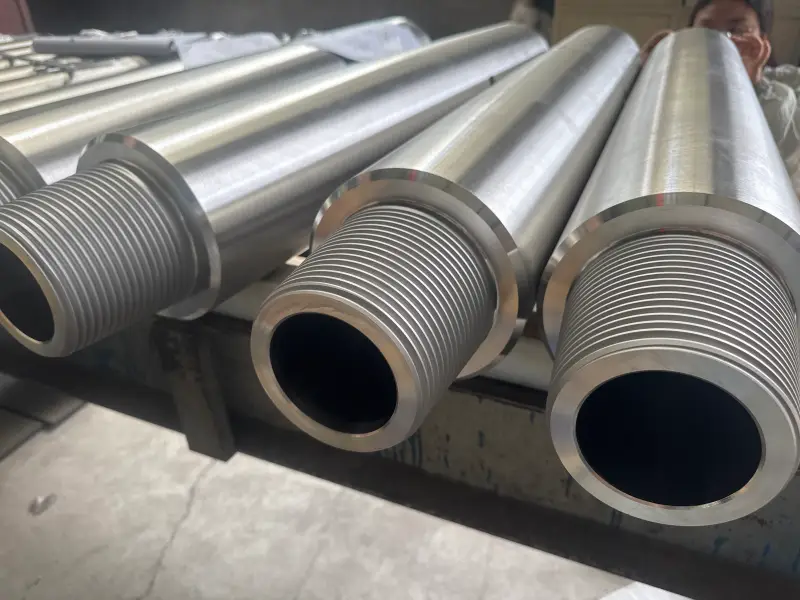
Some drawings do not name a mill grade at all. They specify a non-magnetic austenitic steel with 14% nickel or more, pitting resistance above what an Mn-Cr-N grade can hold, and a permeability ceiling tight enough for an MWD sensor. That is a different alloy family from the collar grades above, and it is not stocked anywhere — it is melted to the drawing.
What this page covers
| Item | Detail |
|---|---|
| Alloy family | High-nickel austenitic, non-magnetic |
| Nickel | 14% and above, set by the drawing |
| Chromium / molybdenum | Set by the drawing; usually well above the Mn-Cr-N grades |
| Supply route | Melted to order, no stock |
| Typical forms | Forged bar, hollow bar, collar blanks |
We do not publish a chemistry table here on purpose. This family is specified by the customer’s drawing, and a table copied from one mill’s datasheet would not describe the steel you actually receive.
Why nickel, and when it costs more than it earns
Nickel does two things in a non-magnetic collar. It stabilises the austenite so the bore stays non-magnetic after cold work, and together with chromium and molybdenum it lifts pitting and stress-corrosion resistance in chloride-rich mud. The price is alloy cost and a narrower processing window.
For most directional wells an Mn-Cr-N grade at 758–965 MPa already does the job at a fraction of the cost. High-nickel only earns its price where the well is hot, the chlorides are aggressive, or the collar section is thick enough that a leaner grade would sit near its pitting limit.
What we need to quote
- Chemistry: either the full specification or the drawing number
- Mechanical: minimum yield and tensile at the service temperature, impact test temperature
- Magnetic: permeability ceiling and field-gradient limit
- NDT: ultrasonic level, whether MPI is required, and whether a permeability printout per bar is needed
- Form: OD, ID, length, machining allowance and quantity
- Certification: 3.1, 3.2, or third-party witness
Send those six items and we come back with a melt route, a lead time and a price. Without them any quotation would be a guess.
Melting and processing
- Melting: EAF or induction, AOD / VOD refining, optional ESR or PESR for cleanliness
- Hot working: forged or rolled, reduction ratio 6 or better
- Heat treatment: solution anneal and quench, parameters fixed once the chemistry is frozen
- Machining: peel, turn, BTA bore, gun-drill, thread on request
Inspection and certification
- Chemical analysis per heat, mechanical testing to ASTM A370
- ASTM A262 Practice A and E, ASTM G36 / G38 C-ring on request
- Ultrasonic inspection to API Spec 7-1 clause 12
- Permeability and field-gradient testing per bar, printout supplied
- EN 10204 3.1 as standard; 3.2 and SGS / TÜV on request
Need a high-nickel non-magnetic grade?
Send the size, condition, quantity and any NACE or PMI requirements — we reply with mill availability, lead time and a priced offer, usually within one working day.