SHUNFU METAL
API 5CT Tubing: Types, Specifications, Steel Grades, and Technical Requirements
Tubing serves as the primary conduit for hydrocarbon extraction in oil and gas wells. Unlike casing, which provides structural integrity to the wellbore, tubing operates as a replaceable production string that directly contacts well fluids under varying pressure and temperature conditions. Understanding tubing classifications, dimensional tolerances, material specifications, and connection types is fundamental for engineers involved in well completion and production operations.
Classification of Oilfield Tubing
API 5CT recognizes three principal tubing configurations, each designed to address specific mechanical loading conditions and installation requirements. The distinction between these types centers on how the pipe ends are prepared for threading and how connections are made.
Non-Upset Tubing (NU)
Non-upset tubing, designated as NU in API nomenclature, maintains uniform wall thickness from end to end. Threads are machined directly into the pipe body without any prior thickening of the tube ends. A separate coupling—a short cylindrical sleeve with internal threads at both ends—joins two lengths of NU tubing. Because threading removes material from the original wall, the threaded section of NU tubing has reduced cross-sectional area compared to the pipe body. This characteristic makes NU tubing more economical to manufacture but limits its application in high-stress environments where the connection must match or exceed pipe body strength.
External Upset Tubing (EU)
External upset tubing addresses the strength limitation inherent in NU design. Before threading, both pipe ends undergo an upsetting process—a hot forging operation that increases the outer diameter and wall thickness over a defined length. This additional material compensates for metal removed during thread cutting, resulting in a threaded connection with tensile capacity approaching or matching that of the pipe body. EU tubing uses a coupling with larger outer diameter than NU couplings to accommodate the upset ends. The manufacturing complexity and added material make EU tubing more expensive than NU, but the improved joint efficiency justifies this cost in deeper wells and applications involving significant axial loading.
Integral Joint Tubing
Integral joint tubing eliminates the separate coupling entirely. One end of the pipe receives an internal upset with female (box) threads machined on the inside, while the opposite end receives an external upset with male (pin) threads on the outside. Adjacent tubing lengths connect directly, pin-to-box, without an intervening coupling. This configuration reduces the maximum outer diameter of the connection, providing greater annular clearance in restricted wellbore geometries. Integral joint designs also reduce the total number of threaded connections in a tubing string, which can improve reliability in corrosive service or high-cycle fatigue applications.
Functional Applications of Tubing
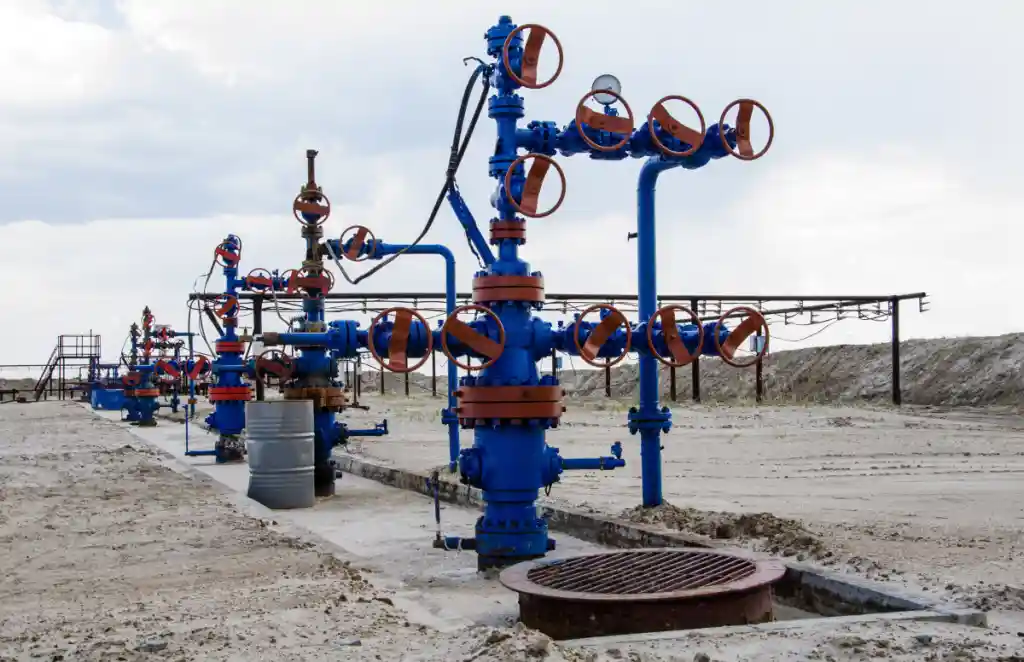
Tubing performs multiple functions across the productive life of a well, extending well beyond simple hydrocarbon transport. After drilling concludes and casing is cemented in place, production tubing is run inside the production casing to create a controlled flow path from the reservoir to surface. This arrangement protects the casing from corrosive well fluids and allows tubing replacement without disturbing the cemented casing.
In wells with insufficient reservoir pressure to lift fluids to surface, tubing provides the conduit for artificial lift methods. Gas lift systems inject gas through the tubing-casing annulus while produced fluids flow up through the tubing. Rod pump installations suspend the sucker rod string inside the tubing, with the downhole pump seated at the tubing bottom.
Water injection wells use tubing to deliver injection water from surface to the target formation, maintaining reservoir pressure in waterflooding operations. The tubing isolates injection water from upper formations and the casing string.
Thermal recovery operations in heavy oil reservoirs require specialized insulated tubing to inject steam at temperatures often exceeding 300°C. Vacuum-insulated tubing or tubing with insulating coatings minimizes heat loss to the surrounding formations, ensuring that steam reaches the reservoir with sufficient enthalpy to reduce oil viscosity.
Well stimulation treatments—including matrix acidizing, fracture acidizing, and hydraulic fracturing—pump treatment fluids through the tubing at high rates and pressures. Acid concentrations, proppant-laden slurries, and elevated pressures during these operations impose severe demands on tubing metallurgy and connection integrity.
Dimensional Specifications
API 5CT standardizes tubing dimensions using size designations that historically derive from nominal outer diameter in inches. Modern specifications express actual dimensions in both imperial and metric units. The following table presents common tubing sizes with their dimensional and weight characteristics.
| Size Designation | Weight Code (NU) | Weight Code (EU) | OD (mm) | Wall (mm) | ID (mm) | Plain End Mass (kg/m) |
|---|---|---|---|---|---|---|
| 1.900 | 2.75 | 2.90 | 48.26 | 3.68 | 40.9 | 4.05 |
| 2-3/8 | 4.60 | 4.70 | 60.32 | 4.83 | 50.66 | 6.61 |
| 2-7/8 | 6.40 | 6.50 | 73.02 | 5.51 | 62.00 | 9.17 |
| 2-7/8 | 8.60 | 8.70 | 73.02 | 7.82 | 57.38 | 12.57 |
| 3-1/2 | 9.20 | 9.30 | 88.90 | 6.45 | 76.00 | 13.12 |
| 3-1/2 | 12.70 | 12.95 | 88.90 | 9.52 | 69.86 | 18.64 |
| 4 | 10.70 | 11.00 | 101.60 | 6.65 | 88.30 | 15.57 |
| 4-1/2 | 12.60 | 12.75 | 114.30 | 6.88 | 100.54 | 18.23 |
The weight codes shown represent the approximate mass per unit length in pounds per foot, a convention retained from imperial origins. Two weight options exist for the 2-7/8 and 3-1/2 sizes, allowing engineers to select heavier walls for higher collapse or burst pressure requirements. The heavier 2-7/8 option, for example, increases wall thickness from 5.51 mm to 7.82 mm, raising the plain-end mass from 9.17 kg/m to 12.57 kg/m.
External Upset End Geometry
The upset end on EU tubing follows a defined geometric profile that transitions smoothly from the enlarged diameter at the pipe end to the nominal pipe body diameter. This transition zone distributes stress concentration and prevents fatigue cracking at the upset terminus. Four critical dimensions define the upset geometry: the upset outer diameter (D4), the length from pipe end to where wall thickness begins tapering (Leu), the length to where taper ends (La), and the maximum length to where upset fully disappears into the pipe body (Lb).
| Size | Weight Code | OD (mm) | Wall (mm) | Upset OD D4 (mm) | Leu (mm) | La (mm) | Lb (mm) |
|---|---|---|---|---|---|---|---|
| 1.900 | 2.90 | 48.26 | 3.68 | 53.19 | 68.26 | — | — |
| 2-3/8 | 4.70 | 60.32 | 4.83 | 65.89 | 101.60 | 152.40 | 254.00 |
| 2-7/8 | 6.50 | 73.02 | 5.51 | 78.59 | 107.95 | 158.75 | 260.36 |
| 2-7/8 | 8.70 | 73.02 | 7.82 | 78.59 | 107.95 | 158.75 | 260.36 |
| 3-1/2 | 9.30 | 88.90 | 6.45 | 95.25 | 114.30 | 165.10 | 266.70 |
| 3-1/2 | 12.95 | 88.90 | 9.52 | 95.25 | 114.30 | 165.10 | 266.70 |
| 4 | 11.00 | 101.60 | 6.65 | 107.95 | 114.30 | 165.10 | 266.70 |
| 4-1/2 | 12.75 | 114.30 | 6.88 | 120.65 | 120.65 | 171.45 | 273.05 |
The upset outer diameter D4 exceeds the nominal pipe OD by approximately 5 to 6 mm depending on size. For the 2-7/8 size, the upset increases OD from 73.02 mm to 78.59 mm. The taper zone extends over a significant length—for most sizes, the Lb dimension reaches approximately 260 to 270 mm, meaning the transition from full upset to nominal body occurs gradually over more than a quarter meter. This extended taper minimizes stress risers that could initiate fatigue cracks under cyclic loading from pressure fluctuations or tubing movement.
Coupling Dimensions
Couplings for NU and EU tubing differ in both outer diameter and length to accommodate the respective thread configurations. Coupling selection must match both the tubing type and size. The following tables detail coupling dimensions and recommended coupling stock sizes for manufacturing.
Non-Upset (NU) Tubing Couplings
| Size | Tubing OD (mm) | Coupling OD (mm) | Min Length (mm) | Unit Mass (kg) | Coupling Stock OD × Wall (mm) |
|---|---|---|---|---|---|
| 1.900 | 48.26 | 55.88 | 95.25 | 0.56 | 55.9 × 8 |
| 2-3/8 | 60.32 | 73.02 | 107.95 | 1.28 | 73 × 11 |
| 2-7/8 | 73.02 | 88.90 | 130.18 | 2.34 | 88.9 × 12.5 |
| 3-1/2 | 88.90 | 107.95 | 142.88 | 3.71 | 108 × 15 |
| 4 | 101.60 | 120.65 | 146.05 | 4.35 | 120.7 × 15.5 |
| 4-1/2 | 114.30 | 132.08 | 155.58 | 4.89 | 132 × 15 |
External Upset (EU) Tubing Couplings
| Size | Tubing OD (mm) | Coupling OD (mm) | Min Length (mm) | Unit Mass (kg) | Coupling Stock OD × Wall (mm) |
|---|---|---|---|---|---|
| 1.900 | 48.26 | 63.50 | 98.42 | 0.84 | 63.5 × 9.5 |
| 2-3/8 | 60.32 | 77.80 | 123.82 | 1.55 | 77.8 × 11.5 |
| 2-7/8 | 73.02 | 93.17 | 133.35 | 2.40 | 93.17 × 13 |
| 3-1/2 | 88.90 | 114.30 | 146.05 | 4.10 | 114.3 × 15.5 |
| 4 | 101.60 | 127.00 | 152.40 | 4.82 | 127 × 16 |
| 4-1/2 | 114.30 | 141.30 | 158.75 | 6.02 | 141.3 × 17 |
Comparing equivalent sizes between NU and EU couplings reveals the dimensional differences required to accommodate upset ends. For 2-7/8 tubing, NU couplings have an OD of 88.90 mm while EU couplings require 93.17 mm. This 4.27 mm difference becomes significant when calculating running clearances in restricted wellbore sections. EU couplings are also longer and heavier—the 2-7/8 EU coupling weighs 2.40 kg versus 2.34 kg for NU, despite both connecting the same nominal pipe size.
Length Ranges
API 5CT specifies three length ranges for tubing, designated R1, R2, and R3. Range 2 is most common for production tubing, and within this range, domestic Chinese practice often specifies delivery lengths between 9.4 m and 9.6 m. Excessive length variation within a shipment creates operational difficulties during running and pulling operations, as crews must adjust handling procedures for significantly different joint lengths.
| Parameter | Range 1 (R1) | Range 2 (R2) | Range 3 (R3) |
|---|---|---|---|
| Total Length Range (m) | 6.10 – 7.32 | 8.53 – 9.75 | 11.58 – 12.80 |
| Max Length Variation per Truckload (m) | 0.61 | 0.61 | 0.61 |
Steel Grades and Their Variants
API 5CT defines tubing steel grades that span a wide strength range: H40, J55, N80, L80, C90, T95, and P110. Each grade designation indicates approximate minimum yield strength in thousands of pounds per square inch—J55 has a minimum yield of 55,000 psi (379 MPa), while P110 starts at 110,000 psi (758 MPa). Several grades include variants that share tensile properties but differ in processing, toughness requirements, or corrosion resistance.
N80-1 versus N80Q
Both N80 variants meet identical tensile requirements, with yield strength between 552 MPa and 758 MPa and minimum tensile strength of 689 MPa. The distinction lies in heat treatment and quality verification. N80-1 may be delivered in normalized condition, or in as-rolled condition when the final rolling temperature exceeds the Ar3 transformation temperature and the pipe is air-cooled after stretch-reducing. N80-1 has no mandatory impact testing or nondestructive examination requirements. N80Q, by contrast, must be quenched and tempered (the “Q” designates this requirement), must meet specified Charpy impact values per API 5CT, and must undergo nondestructive inspection. N80Q is selected for applications requiring verified toughness, such as sour service environments or cyclic loading conditions.
L80 Variants
The L80 grade family includes L80-1, L80-9Cr, and L80-13Cr, all sharing the same mechanical property requirements: yield strength of 552 to 655 MPa, minimum tensile strength of 655 MPa, and maximum hardness of 23 HRC (241 HBW). L80-1 is a carbon-manganese steel for general sour service applications where hydrogen sulfide is present at levels requiring sulfide stress cracking resistance. L80-9Cr contains nominally 9% chromium and provides enhanced resistance to carbon dioxide corrosion. L80-13Cr, with approximately 13% chromium, offers still greater corrosion resistance and is used in wells with high CO2 partial pressures and elevated temperatures. The chromium-alloyed variants are substantially more expensive to produce and are reserved for severely corrosive conditions where carbon steel would suffer unacceptable metal loss.
C90 and T95 Types
C90 and T95 each divide into Type 1 and Type 2, designated C90-1, C90-2, T95-1, and T95-2. These are high-strength sour service grades used in challenging downhole environments. The type distinction relates to chemistry and manufacturing requirements specified in API 5CT, with Type 2 grades having somewhat broader compositional allowances. Both C90 types require yield strength of 621 to 724 MPa; both T95 types require 655 to 758 MPa. Maximum hardness for both grades is 25.4 HRC (255 HBW).
Chemical Composition Requirements
API 5CT takes a deliberately flexible approach to chemistry for many grades. J55, N80, and P110 specify only maximum sulfur and phosphorus contents—0.030% for each element—leaving carbon, manganese, and other alloying elements to the manufacturer’s discretion based on achieving required mechanical properties. This allows mills to optimize compositions for their specific production capabilities.
L80, C90, and T95 grades have more defined chemistry requirements because their sour service ratings depend on controlled composition. L80-1 limits carbon to 0.43% maximum, permits up to 1.90% manganese, restricts nickel to 0.25% maximum, and requires low sulfur (0.030% max) and phosphorus (0.030% max). The chromium-bearing L80 variants have tight chromium ranges: L80-9Cr requires 8.0 to 10.0% Cr, while L80-13Cr requires 12.0 to 14.0% Cr. Both chromium grades also restrict carbon more severely (0.15% max for 9Cr, 0.15-0.22% for 13Cr) and impose lower limits on sulfur (0.010% max) and phosphorus (0.020% max) to support corrosion resistance and weldability.
Manufacturing Practice and Delivery Condition
The relationship between steel grade, proprietary mill designation, and delivery condition reflects each manufacturer’s approach to meeting API requirements. Different mills use different alloy designs and processing routes to achieve the same API grade specifications.
For J55 tubing, a typical mill practice uses a 37Mn5 alloy (approximately 0.37% carbon, 1.2-1.5% manganese). NU tubing in this grade may be delivered in hot-rolled condition when the rolling parameters satisfy normalizing equivalence—meaning the finishing temperature exceeds Ar3 and air cooling follows. EU tubing requires full-length normalizing after the upset forging operation to restore uniform properties throughout the modified end sections.
N80-1 tubing from one major producer uses a 36Mn2V composition (0.36% carbon, dual manganese levels, vanadium addition), with NU product delivered in hot-rolled condition and EU product normalized after upsetting. N80Q tubing requires a different alloy approach—30Mn5 in one mill’s practice—with mandatory quenching and tempering of the entire tube length.
L80-1 and P110 both require full-length quench and temper treatment. L80-1 may use the same 30Mn5 base alloy as N80Q, relying on precise heat treatment to achieve the lower maximum hardness required for sour service. P110, with its higher strength requirement, typically uses a chrome-molybdenum alloy such as 25CrMnMo to develop the necessary 758-965 MPa yield range.
Coupling manufacture follows similar principles. J55 couplings may use 37Mn5 alloy with in-line normalizing during hot rolling. Higher grades like N80, L80-1, and P110 typically use alloys such as 28MnTiB or 25CrMnMo with full quench and temper treatment.
Mechanical Property Requirements
The following table consolidates yield strength, tensile strength, and hardness limits for tubing steel grades. Understanding these limits is essential for matching tubing selection to wellbore loading conditions.
| Grade | Yield Strength (MPa) | Min Tensile (MPa) | Max Hardness (HRC) | Max Hardness (HBW) |
|---|---|---|---|---|
| J55 | 379 – 552 | 517 | — | — |
| N80-1 / N80Q | 552 – 758 | 689 | — | — |
| L80-1 / L80-9Cr / L80-13Cr | 552 – 655 | 655 | 23 | 241 |
| C90-1 / C90-2 | 621 – 724 | 689 | 25.4 | 255 |
| T95-1 / T95-2 | 655 – 758 | 724 | 25.4 | 255 |
| P110 | 758 – 965 | 862 | — | — |
The hardness limits for L80, C90, and T95 reflect sour service requirements. Excessive hardness increases susceptibility to sulfide stress cracking in hydrogen sulfide environments. The 23 HRC maximum for L80 and 25.4 HRC maximum for C90/T95 represent thresholds established through industry experience and laboratory testing to prevent SSC in typical sour well conditions.
Color Coding and Identification
API 5CT mandates color coding on both tubing and couplings to enable rapid visual identification of steel grade. Color bands on the pipe body are applied at least 600 mm from either end. Couplings receive overall surface coloring plus additional bands where specified. This standardized system prevents inadvertent mixing of grades during handling and installation.
| Grade | Pipe Color Band(s) | Coupling Base Color | Coupling Band(s) |
|---|---|---|---|
| H40 | Optional / Black | None | Same as pipe |
| J55 (Tubing) | One bright green | Bright green | None |
| J55 (Casing) | One bright green | Bright green | One white |
| K55 | Two bright green | Bright green | None |
| N80-1 | One red | Red | None |
| N80Q | One red + one bright green | Red | Green |
| L80-1 | One red + one brown | Red | One brown |
| L80-9Cr | One red + one brown + two yellow | Red | Two yellow |
| L80-13Cr | One red + one brown + one yellow | Red | One yellow |
| C90-1 | One purple | Purple | None |
| C90-2 | One purple + one yellow | Purple | One yellow |
| T95-1 | One silver | Silver | None |
| T95-2 | One silver + one yellow | Silver | One yellow |
| P110 | One white | White | None |
| Q125-1 | One orange | Orange | None |
The color system follows logical patterns: the L80 family always includes red (the N80 base color) plus brown to indicate the controlled-hardness L80 series, with yellow bands added to distinguish chromium variants. Yellow universally indicates a Type 2 variant for grades with type distinctions. These conventions enable field personnel to verify correct grade selection without consulting documentation.
Connection Configurations
The three tubing types employ distinct connection geometries. NU tubing uses an externally threaded pin on the pipe body mating with an internally threaded coupling. Thread engagement occurs over a tapered region, with the coupling positioned symmetrically to join two tube ends. The resulting connection has a maximum OD equal to the coupling outer diameter.
EU tubing connections function similarly but with larger couplings to accommodate the upset ends. The upset provides additional material for thread cutting, and the coupling inner diameter matches the enlarged upset OD rather than the nominal pipe diameter. This arrangement produces a structurally stronger connection, with the trade-off being larger maximum OD.
Integral joint connections eliminate the coupling entirely. Each joint has an externally upset pin end with external threads and an internally upset box end with internal threads. The pin of one joint threads directly into the box of the adjacent joint. Maximum OD occurs at the box end, which must be externally upset to provide sufficient wall thickness for internal threading. This design minimizes overall connection OD and reduces the number of potential leak paths, as no coupling-to-pipe interface exists.
The specifications presented here reflect API 5CT requirements and common industry practice. Actual product specifications should be verified against current edition standards and manufacturer documentation for specific applications.