P530 Nonmagnetic Steel Drill Collar Specification & Field Performance
Directional drilling operations rely heavily on accurate survey data. Yet, material mismatches frequently compromise magnetic surveys, leading to costly sidetracking operations. When a standard high-alloy drill collar interferes with MWD tool magnetometers, the resulting trajectory drift forces unnecessary trips out of the hole. The P530 nonmagnetic steel drill collar specification was engineered precisely to eliminate this risk.
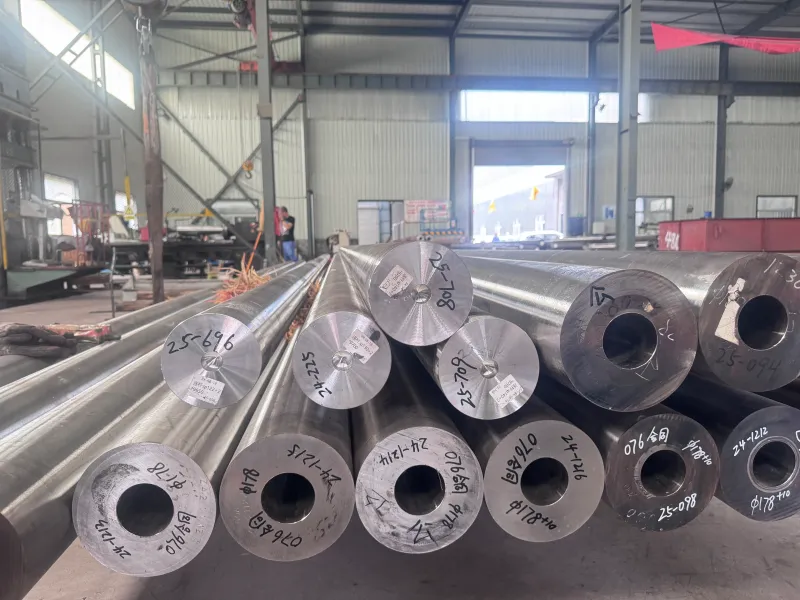
Rather than relying on expensive nickel-heavy alloys, P530 utilizes a tightly controlled austenitic manganese-chromium-nitrogen (Mn-Cr-N) matrix that deliberately locks nickel content at ≤2%. By completely blocking ferrite phase shifts during downhole thermal cycling, relative permeability consistently stays below 1.005. In MWD and LWD environments, where every micro-gauss dictates trajectory accuracy, that magnetic neutrality is the definitive line between optimal pay zone placement and expensive wellbore correction.
The Mn-Cr-N Metallurgical Advantage
True non-magnetic behavior is not a surface coating or a marketing designation; it is a crystallographic state. Traditional austenitic steels depend heavily on nickel to stabilize their face-centered cubic (FCC) lattice. When nickel fluctuates, phase transformation into ferromagnetic α'-martensite can occur under stress or cooling.
SHUNFU METAL nonmagnetic drill collars leverage nitrogen and manganese as primary austenite stabilizers. This metallurgical shift delivers identical crystal alignment to 316L or Incoloy 718 without exposing operators to nickel surcharges or supply chain bottlenecks. When running tools through magnetically noisy fault zones, the P530 lattice simply ignores external interference, yielding cleaner azimuth readings and fewer trajectory recalibrations.
Mechanical Strength & Hardness Specifications
Datasheet tensile numbers mean little if the string fractures during heavy torque-up. P530 operates in a deliberate mechanical sweet spot optimized for bottom-hole assemblies:
- Ultimate Tensile Strength
- ≥700 MPa
- Yield Strength (0.2% offset)
- ≥380 MPa
- Hardness Window
- 260–350 HB (Brinell)
The P530 nonmagnetic steel hardness 260–350 HB specification is strictly maintained. Exceeding 350 HB invites brittle fracture during hammer-through operations or heavy make-up cycles. Dropping below 260 HB accelerates pin/box thread galling against standard API-spec drill pipe components. That narrow hardness band is where abrasion resistance and impact toughness achieve equilibrium.
Practical Takeaway: For well profiles involving high shock loads or severe doglegs, target the 300–320 HB sub-range. This maximizes fatigue cycle endurance without sacrificing thread engagement life.
P530 vs P550 Nonmagnetic Steel Comparison
Over-specifying alloy grades feels like risk mitigation but frequently inflates drilling budgets. The P530 vs P550 nonmagnetic steel decision should hinge strictly on well geometry and formation chemistry.
| Property | P530 (Mn-Cr-N Austenitic) | P550 (High-Alloy Dual-Phase) |
|---|---|---|
| Nickel Content | ≤2.0% | Typically 8–10%+ |
| Yield / Tensile Strength | ≥380 / ≥700 MPa | ≥450 / ≥800 MPa |
| Optimal Application | Standard deviated wells, mid-depth, routine MWD runs | Ultra-deep (>6,000m TVD), sour H2S environments, extreme torque |
| Cost Stability | High (minimal Ni/Mo exposure) | Volatile (subject to LME nickel & molybdenum premiums) |
Unless your true vertical depth exceeds 6,000 meters or formation chemistry introduces aggressive hydrogen sulfide, P550 is structurally unnecessary. P530 maintains phase stability across standard oilfield mud systems and protects project margins from commodity price spikes.
Sourcing Protocols & Quality Assurance
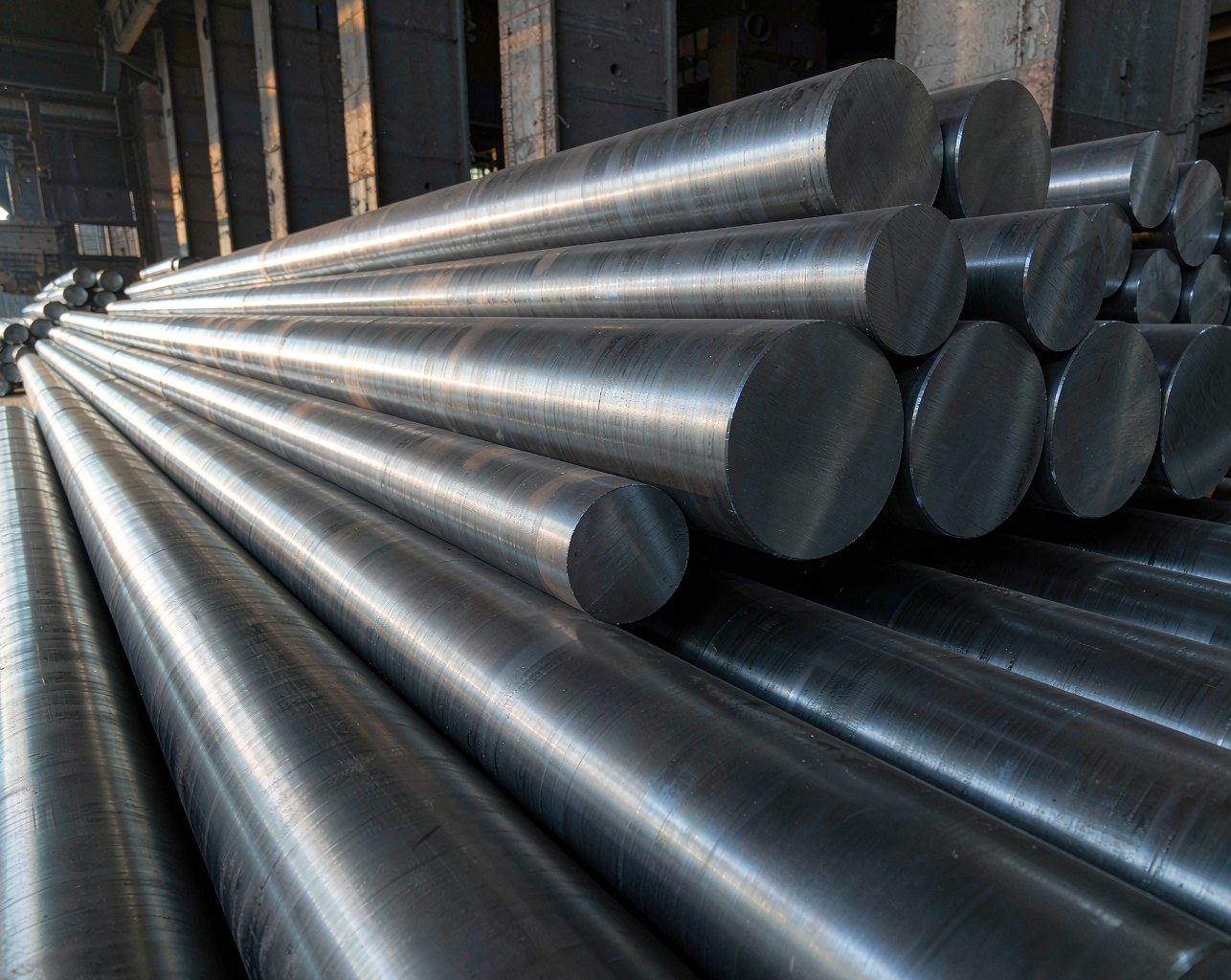
The P530 nonmagnetic steel price per kg is never a single flat rate. Transparent procurement accounts for base bar stock, machining allowances (typically 12–15% for drill collars), anti-corrosion export packaging, and certified freight logistics.
Procurement teams must enforce a strict validation checklist:
- Full Mill Test Certificate (MTC) cross-referenced against active ISO 9001 audit trails.
- Independent Optical Emission Spectrometry (OES) prior to dispatch, verifying Mn/Cr ratios and confirming Ni strictly ≤2.0%.
- Certified μ-value permeability test report from an accredited laboratory.
As a direct exporter serving operators across 52+ countries, SHUNFU METAL's manufacturing operations operate under API Q1 and ISO 9001 frameworks. Every batch of alloy steel, nickel-based alloy, and stainless steel product undergoes traceable heat treatment logging and third-party dimensional inspection before leaving the facility.
Frequently Asked Questions
Why does nickel content matter for survey accuracy?
Nickel stabilizes austenite but does not guarantee non-magnetic behavior under mechanical stress. P530 replaces excess nickel with nitrogen and manganese, locking the crystal structure against martensitic transformation while keeping relative permeability consistently below 1.005.
Can P530 be welded to standard API drill pipe?
Yes. P530's 260–350 HB hardness window and ductile austenitic matrix ensure compatibility with standard casing and tubing connection protocols. Proper preheat and interpass temperature control during field welding preserve phase stability.
What documentation is required for export clearance?
Every international shipment includes a compliant MTC, OES analysis report, magnetic permeability certification, and third-party dimensional inspection sheets aligned with ASTM and API 7-1 standards.
Request Your Customized Technical Package
P530 nonmagnetic steel is engineered for predictability, not promotional claims. It delivers clean magnetic baselines for directional surveys, sufficient ductility to survive brutal make-up cycles, and a transparent cost structure that preserves well economics.
Stop gambling your wellbore trajectory on ambiguous material grades. Contact our engineering team with your target operating region, planned true vertical depth, and mud environment specifications. We will return a complete P530 chemical composition dossier alongside a firm regional quote within 24 hours.
📩 Contact Engineering: info@shunfusteel.com
Get the right metal in the string. Keep your trajectory clean.