Exporting 150 Tons of Precision Alloy Steel to German Manufacturing Hubs
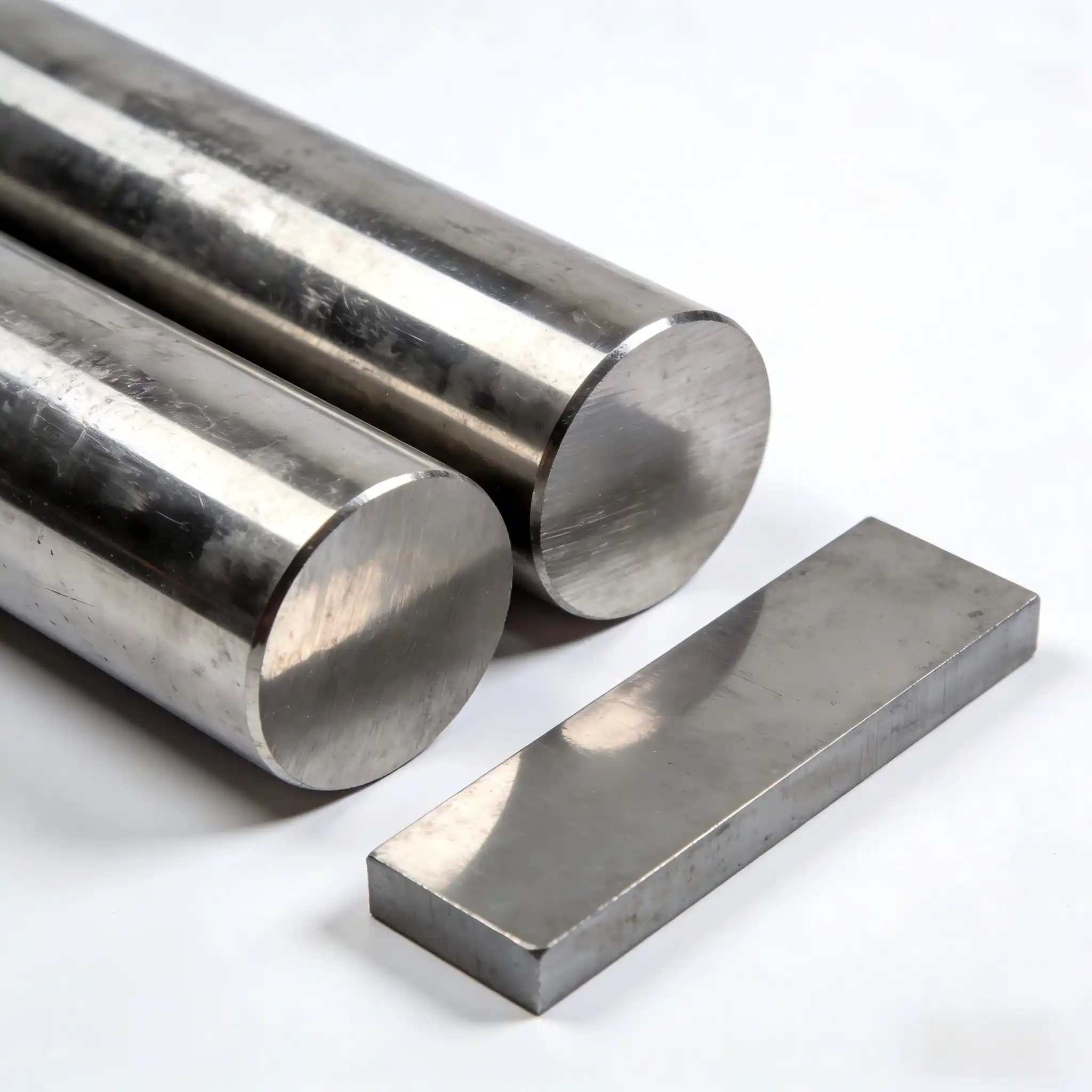
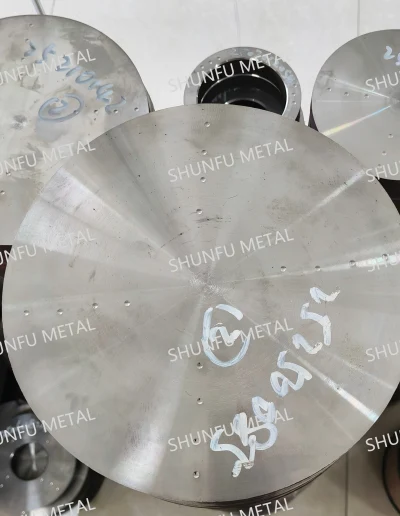
In a recent milestone for our European supply chain, SHUNFU METAL successfully coordinated the packaging, certification, and international transit of 150 metric tons of high-grade AISI alloy steel bars to a long-standing precision engineering partner in Germany. This shipment primarily features Cr-Mo alloys in the 4130, 4140, and 4145H Mod specifications, engineered specifically for heavy-load rotating components, high-pressure fluid handling systems, and rugged mining equipment.
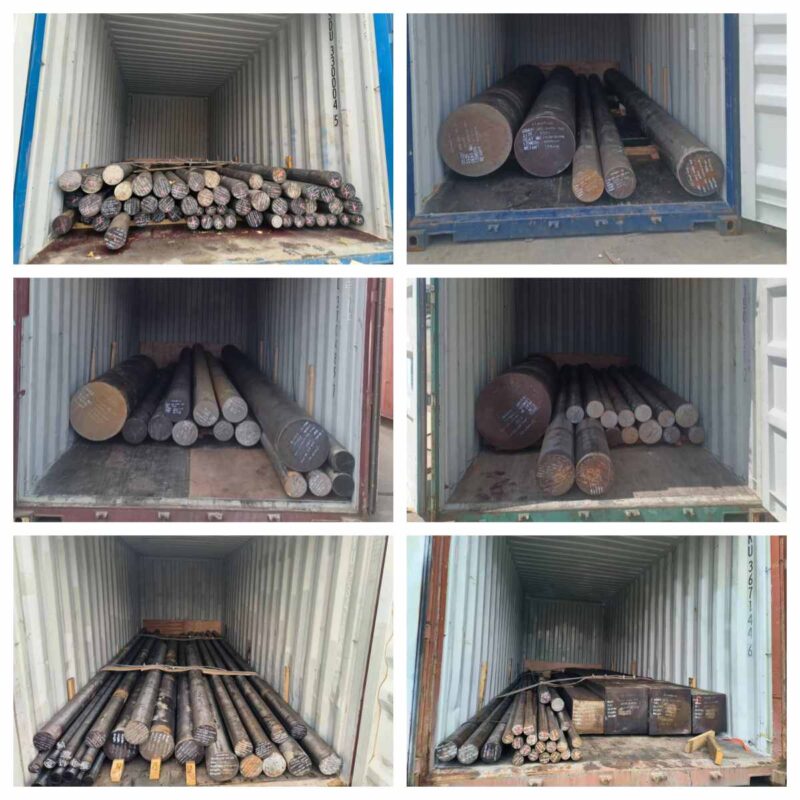
As a direct manufacturer operating from advanced rolling and forging facilities, we maintain complete traceability from raw billet procurement to final surface finishing. This project underscores our commitment to bridging Asian production efficiency with European precision standards, ensuring every delivered ton meets the rigorous mechanical property thresholds demanded by DIN and ASTM frameworks.
Metallurgical Profiles and Application Suitability
The successful execution of this contract required careful segregation and customized heat treatment for each alloy grade. Chromium-molybdenum steels are selected for their exceptional core toughness, fatigue life, and predictable hardenability. Below is a technical breakdown of the three principal grades featured in this export batch:
AISI 4130 (Low-Carbon Cr-Mo Alloy)
Characterized by approximately 0.28–0.33% carbon, 0.80–1.10% chromium, and 0.15–0.25% molybdenum, 4130 delivers outstanding weldability and machinability without sacrificing tensile strength. It is widely deployed in structural brackets, hydraulic piston rods, and aerospace landing gear components where impact resistance is critical. For customized dimensional tolerances and normalized conditions, our team offers specialized AISI 4130 75K PX alloy steel bar solutions tailored for high-cycle fatigue environments.
AISI 4140 (Medium-Carbon Cr-Mo Alloy)
Elevating the carbon content to 0.38–0.43%, 4140 steel achieves superior hardenability and higher yield strength. Through oil quenching and tempering, manufacturers can achieve hardness levels ranging from HRC 25 to 32, making it the industry benchmark for heavy gears, crankshafts, and large-diameter drilling collars. Explore our comprehensive AISI 4140 L80 alloy steel bar range designed for extreme downhole conditions to understand our proprietary tempering cycles.
AISI 4145H Mod (Enhanced Drill Collar Alloy)
The "H" designation guarantees strict hardenability requirements, while the modified chemistry typically incorporates tighter controls on sulfur, phosphorus, and trace vanadium to improve grain refinement. This grade is engineered for high-torque drill string components and premium rotary shouldered connections. The AISI 4145H Mod alloy steel bar production line maintains rigorous inclusion control to prevent non-metallic defect propagation during ultra-deep drilling operations.
| Element | AISI 4130 | AISI 4140 | AISI 4145H Mod |
|---|---|---|---|
| Carbon (C) | 0.28 – 0.33 | 0.38 – 0.43 | 0.43 – 0.48 |
| Manganese (Mn) | 0.40 – 0.60 | 0.75 – 1.00 | 0.85 – 1.10 |
| Chromium (Cr) | 0.80 – 1.10 | 0.80 – 1.10 | 0.95 – 1.25 |
| Molybdenum (Mo) | 0.15 – 0.25 | 0.15 – 0.25 | 0.20 – 0.30 |
| Phosphorus (P) max | 0.035 | 0.035 | 0.025 |
| Sulfur (S) max | 0.040 | 0.040 | 0.030 |
All chemical verification is conducted using optical emission spectrometry (OES), with results cross-referenced against SAE J414 standards prior to rolling authorization.
Quality Assurance and International Certification Protocols
Delivering metallurgical consistency to European regulatory bodies demands more than routine batch testing. It requires a systematically controlled production ecosystem. Our facility operates under an integrated management framework certified to API Spec Q1 and ISO 9001:2015 standards. Every ton of steel produced undergoes a minimum of five distinct verification checkpoints before release.
- Billet Inspection: Ultrasonic testing of raw cast billets to verify central segregation levels and eliminate internal pipe defects.
- Thermal Processing: Continuous monitoring of heating, soaking, and rolling temperatures to ensure optimal austenitic grain size.
- Mechanical Testing: Standard tensile, Charpy V-notch impact (at -40°C and ambient), and hardness profiling per heat lot.
- Dimensional Verification: Laser scanning and micrometric checks to guarantee straightness, roundness, and length tolerances within ±0.5mm.
- Surface Treatment: Shot blasting and protective oil coating application to prevent transit oxidation and ensure weld-ready surfaces.
The documentation package accompanying this 150-ton consignment includes EN 10204 3.1 Mill Test Certificates, independent third-party inspection reports, and complete material traceability logs. By adhering strictly to ISO, API, and ASME guidelines, we guarantee that SHUNFU METAL products perform reliably in environments ranging from North Sea offshore platforms to subterranean hard-rock excavation sites.
International Freight Coordination and Packaging Standards
Safeguarding 150 tons of precision-machined bars across thousands of nautical miles requires specialized stowage engineering and weatherproof packaging. For this German delivery, our logistics team implemented a multi-tiered securing methodology designed to withstand heavy ocean swells, salt-air exposure, and port handling stresses.
Long-length bars were bundled using tensioned steel strapping and fitted with heavy-duty wooden dunnage to prevent point-load deformation during crane lifts. VCI (Volatile Corrosion Inhibitor) stretch film was wrapped tightly around each bundle, creating a microenvironment that actively neutralizes moisture-induced oxidation. The containers and breakbulk vessels utilized were surveyed prior to loading to confirm seaworthiness and ventilation integrity.
With established trade lanes extending to 52+ countries and territories across Europe, the Americas, Southeast Asia, and the Middle East, our direct export model eliminates intermediary markups while accelerating transit timelines. Customers receive real-time GPS tracking updates, pre-arrival customs clearance documentation, and on-site technical support for material acceptance. This streamlined approach transforms complex metallurgical procurement into a predictable, auditable supply chain process.
Frequently Asked Questions Regarding Alloy Steel Procurement
What heat treatment conditions are typically applied to the exported 4130 and 4140 bars?
The standard delivery condition for these grades is either Annealed (A) or Normalized & Tempered (N&T), depending on end-user machining requirements. Annealing maximizes machinability and stress relief, while N&T optimizes the balance between tensile strength and ductility. Specialized quench-and-temper cycles can be engineered upon request to achieve specific hardness bands up to HRC 35.
Can SHUNFU METAL supply alloy steel that complies with both ASTM and DIN/EN standards?
Yes. Our metallurgical engineering team routinely cross-references chemical and mechanical requirements between DIN 34CrMo4 / 42CrMo4 and their ASTM/AISI equivalents (4130/4140). Dual-certified material shipments include comparative compliance sheets, ensuring seamless integration into European manufacturing workflows without requalification delays.
How is ultrasonic testing implemented on heavy-section alloy bars?
We utilize automated phased-array ultrasonic equipment calibrated to ASTM A388/A388M standards for heavy-section forgings and rolled bars. Testing probes scan the entire cross-sectional length at a 100mm pitch, automatically flagging any discontinuities exceeding the specified equivalent flat-bottom hole reference. Rejected sections are segregated and recycled, ensuring zero defect risk reaches the final shipment manifest.