
Project Description
AISI 4317H Alloy Steel Bar for High-Performance Case Hardening
AISI 4317H alloy steel is a premium nickel-chromium-molybdenum low-alloy case hardening material engineered for superior hardenability and exceptional core toughness. Supplied in a strictly controlled annealed condition with hardness capped at ≤HB 229, this AISI 4317H alloy steel formulation is optimized specifically for carburizing processes. These treatments produce a highly wear-resistant surface reaching up to Rc 62 while preserving a robust, impact-absorbing core. The carefully calibrated balance of carbon and alloying elements ensures excellent fatigue resistance, dimensional stability under heavy cyclic loads, and superior machinability prior to final heat treatment.
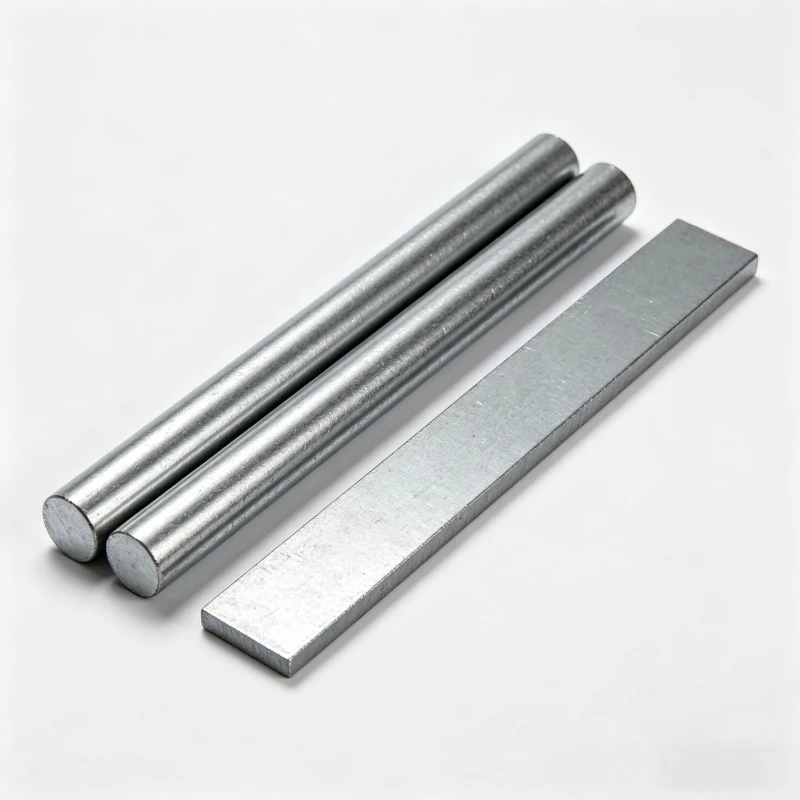
Beyond traditional case hardening applications, this grade performs reliably as a high-tensile structural component when quenched and tempered. Our metallurgical team guarantees consistent grain refinement and microstructural homogeneity across all heats. Whether your project demands heavy-duty drivetrain components or severe-service downhole tooling, this material delivers predictable mechanical behavior. For detailed facility capabilities, visit our company overview page to learn how our integrated production lines support complex engineering specifications.
Engineering Applications & Industry Deployments
The unique microstructural characteristics of this low-alloy grade make it indispensable across high-stress industrial environments. It is routinely specified for critical components requiring both surface hardness and deep-core ductility. Common deployments include heavy-duty gears, pinion shafts, and transmission assemblies for oilfield top drives. The material also serves as the standard for high-pressure compressor bolts and pump drive shafts in demanding mud pumping systems.
Downhole applications heavily utilize this steel for drill collar stabilizers, rotary drilling joints, and downhole tool mandrels that endure severe torsion and axial shock. Mining and bulk handling equipment relies on 4317H for cam followers, tappets, and wear pins operating within crushers and conveyor systems. We also supply the raw stock for clutch dogs, extractor sleeves, and coupling hubs essential to directional drilling rigs. Sprockets and heavy-duty bushings for wireline hoisting benefit equally from its fatigue endurance.
Bearing & Shaft Compatibility
Bearing races and high-torque fan shafts frequently require a wear-resistant exterior paired with a shock-absorbing interior. This specific alloy profile eliminates premature spalling and catastrophic shear failures. Engineers selecting this material gain access to a proven track record in both static and dynamic loading scenarios. Our inventory programs ensure rapid fulfillment for maintenance, repair, and operational upgrades.
Global Standards & Equivalent Grades
International procurement requires strict cross-referencing of regional material designations. The following table maps the unified SAE/AISI specification against major European, British, and Australian standards to streamline sourcing and documentation compliance. All grades maintain identical chemical baselines and heat treatment response curves.
| Region / Standard | Grade Designation |
|---|---|
| USA (SAE / AISI) | SAE 4317 / AISI 4317H |
| Germany (DIN / EN) | W.Nr 1.6587 / 18CrNiMo7-6 / 17CrNiMo6 |
| Great Britain (BS) | BS 970 Pt.3: 820M17 / 822M17 |
| Australia (AS) | AS 1444: 1996 4317H |
Applicable Manufacturing Specifications
- SAE/AISI 4317H – Alloy Steel Rolled & Forged Round/Flat Bars
- DIN EN 10084 (18CrNiMo7-6) – Case-Hardening Steels for Bars, Billets & Forgings
- BS 970 Part 3 – Engineering Steel Bars & Forged Products
- AS 1444 – Australian Steel Bars & Billet Specifications
- API 6A / 6C1 Compatible – Drilling & Production Equipment Components
Chemical Composition & Mechanical Properties
Strict adherence to tight compositional tolerances guarantees repeatable heat treatment results. Our induction furnaces and electric arc routes continuously monitor alloy addition rates to maintain batch consistency. The optimized chromium and molybdenum ratios enhance depth-hardening response without compromising weldability or machinability.
| Element | Min. (%) | Max. (%) |
|---|---|---|
| Carbon | 0.15 | 0.21 |
| Silicon | — | 0.40 |
| Manganese | 0.50 | 0.90 |
| Nickel | 1.40 | 1.70 |
| Chromium | 1.50 | 1.80 |
| Molybdenum | 0.25 | 0.35 |
| Phosphorus | — | 0.035 |
| Sulfur | — | 0.035 |
Mechanical performance in the as-supplied annealed state ensures excellent baseline formability. The tensile and yield characteristics provide ample working window for turning, milling, and pre-machining operations before final carburizing.
| State | Tensile Strength | Yield Strength | Elongation (5.65√S₀) | Hardness |
|---|---|---|---|---|
| Annealed (As-Supplied) | 700 MPa | 520 MPa | ≥ 23% | 200 HB / Rc 15 |
Melting Routes, Heat Treatment & Precision Machining
We offer multiple primary melting configurations tailored to specific purity and fatigue life requirements. Standard production utilizes Electric Arc Furnace (EAF) + Ladle Furnace (LF) + Vacuum Degassing (VD). For ultra-high cleanliness applications demanding exceptional inclusion control, we deploy Electroslag Remelting (ESR/PESR) or premium Vacuum Induction Melting (VIM) combined with Vacuum Arc Remelting (VAR).
Optimized Thermal Processing Cycle
Proper thermal cycling unlocks the full potential of this hollow bar material. The table below outlines industry-standard temperature bands. Our certified metallurgists provide custom thermal profiles to match your exact cross-sectional geometry and required case depth.
| Process | Temperature Range | Holding Guideline | Cooling Method |
|---|---|---|---|
| Annealing | 830–850°C | Until uniform | Furnace cool |
| Normalizing | 860–900°C | 10–15 min | Still air |
| Carburizing | 900–930°C | Per case depth | Follow by quench & temper |
| Core Refining | 840–870°C | Until uniform | Quench (oil/water/salt) |
| Stress Relieving | 630–650°C | 1 hr per 25mm | Still air |
| Tempering | 150–200°C | 1–2 hrs per 25mm | Still air |
Surface Finish & Secondary Machining
Post-casting and forging operations include precision turning achieving Ra 1.6–3.2μm with ±0.05mm tolerances. CNC milling and centerless grinding refine critical diameters to Ra 0.4–0.8μm and ±0.01mm accuracy. BTA deep-hole drilling and long gunhole drilling capabilities maintain exceptional straightness over extended lengths. Optional roller burnishing and shot peening further enhance compressive residual stresses.
Quality Assurance, Packaging & Global Logistics
End-to-end quality control begins with raw material validation and continues through in-process 100% ultrasonic testing compliant with AMS 2710. Full chemical analysis, mechanical testing, dimensional verification, and metallographic grain sizing accompany every shipment. EN 10204 3.1/3.2 certificates are standard, and we routinely welcome third-party SGS/TÜV audits. Our facility operates under API Q1 and ISO 9001 frameworks.
Delivery preparation matches the component's precision level. Black bar stock is securely bundled with heavy-gauge steel strapping and timber-blocked to eliminate transit shifting. Machined, ground, and custom-drilled parts receive multi-layer protection using moisture-barrier VCI paper, reinforced plywood cases, and shock-absorbing foam. Every export consignment receives marine-grade anti-rust oil treatment prior to loading. We support FOB, CIF, and EXW terms with comprehensive customs documentation and real-time freight tracking.
- Ready Stock MOQ
- 1 Piece (~7 day dispatch)
- Custom Forging MOQ
- 3 Metric Tons (~30 day lead time)
- Size Availability
- Rolled Ø50–200mm / Forged Ø80–600mm
- Delivery Terms
- FOB, CIF, EXW
Frequently Asked Procurement Questions
Can this material be certified strictly to API or oilfield standards?
Yes. While classified as a standard SAE/AISI grade, all heats are produced under API Q1 quality management protocols. We provide full heat traceability, NDE reports, and compliance documentation suitable for critical drilling tools and high-pressure transmission parts.
What are the minimum order quantities and production lead times?
Standard rolled diameters between Ø50mm and Ø200mm are maintained in ready inventory. These carry a one-piece minimum and typically ship within seven working days. Custom forgings or specialized cross-sections require a 3-ton minimum with an approximate 30-day manufacturing cycle.
Is the steel suitable for welding or nitriding after rough machining?
It welds reliably in the annealed condition using low-hydrogen electrodes, though immediate post-weld stress relieving at 630–650°C is mandatory. Gas or pack carburizing is strongly preferred over nitriding due to the alloy's low carbon profile and optimal carburizing response curve.
Do you supply pre-drilled hollow components or custom mandrels?
Absolutely. Our drilling division specializes in BTA-drilled hollow bars and extended-length gunhole components. We maintain strict concentricity tolerances and fabricate custom mandrels, heavy gear blanks, and specialized cross-sections directly from your CAD data.
Secure Your Material Allocation Today
Global supply chains demand reliable metallurgical partners. Contact our technical sales engineering team to discuss your exact dimensional requirements, thermal processing needs, or bulk procurement strategy.