Horizontal drilling is the established method for high-productivity coalbed methane (CBM) development, but the efficiency of a CBM horizontal well ultimately comes down to one thing: how much of the horizontal section stays inside the coal seam. A well that drifts into the mudstone above or the mudstone below the target seam is not producing gas from that interval. Geosteering — continuously adjusting the wellbore trajectory based on real-time formation data — is what keeps the bit in the pay zone, and azimuthal gamma-while-drilling (AGWD) is the primary sensor technology that makes geosteering possible in coal seam environments. Choosing the right type of AGWD tool, however, is not straightforward. Three architecturally distinct designs exist: the probe-type tool, the distal drill collar-type tool, and the near-bit tool. Each makes different engineering trade-offs between measurement quality, cost, and operational risk. This article examines those trade-offs with particular attention to the distal drill collar-type design, explains the critical role of the non-magnetic drill collar body in AGWD sensor performance, and presents field data from a deep CBM horizontal well in Shanxi's Jinxi block where the distal drill collar-type tool achieved a 95%+ reservoir encounter rate at more than 50% lower tool cost than the near-bit alternative.
Three AGWD Architectures: How Sensor Position Determines Performance
All three AGWD tool types share the same fundamental measurement concept: a gamma-ray sensor with directional shielding segments its 360-degree field of view into four or eight azimuthal sectors. As the drill string rotates, the tool records gamma counts sector by sector, builds an azimuthal gamma image of the surrounding formation, and transmits the upward-facing and downward-facing gamma values to surface via mud pulse in near-real time. The upper and lower gamma values are the primary geosteering output — their relative magnitudes tell the directional driller and geologist whether the bit is approaching a formation boundary from above or below, and how quickly. Where the three architectures diverge fundamentally is in where the sensor sits relative to the drill string cross-section, and that placement governs everything else: signal quality, formation detection depth, measurement zero length, and cost.
Probe-Type (探管式): Simple, Low Cost, Signal-Compromised
The probe-type tool adds an azimuthal gamma sub to a conventional MWD instrument string. The sensor is housed inside the bore of a non-magnetic drill collar — that is, in the central water channel through which drilling fluid circulates. This placement is structurally simple and inexpensive, but it creates a signal attenuation problem that is difficult to engineer around. Gamma radiation from the surrounding formation must pass inward through the drill collar wall, through the annular drilling fluid column, and through the inner bore fluid before reaching the sensor. Each of these materials absorbs gamma photons progressively. The result is a significantly reduced count rate at the sensor, which directly reduces measurement sensitivity and increases uncertainty in formation boundary identification. Formation detection depth is limited to approximately 0.1–0.2 m from the borehole wall. Measurement zero length (the distance from the drill bit to the measurement point) is 10–12 m. At approximately 10,000 CNY/day, it is the most economical option.
Distal Drill Collar-Type (远端钻铤式): Balanced Performance and Cost
The distal drill collar-type tool resolves the signal attenuation problem at its source by relocating the gamma sensor from inside the drill collar bore to the outer surface of the drill collar body. The sensor is installed in a precision-machined slot on the non-magnetic collar exterior, with directional shielding integrated into the slot geometry. In this position, the sensor faces the formation directly, with only a minimal material path between the detector and the formation. The drill collar wall and bore fluid are no longer in the signal path. The result is a substantially higher count rate than the probe-type design under identical formation conditions, with formation detection depth improved to 0.2–0.3 m. Measurement zero length remains 10–12 m — equivalent to the probe-type — because the sensor position in the BHA string is similar. The tool operates as a standalone unit paired with a standard MWD pulser, with internal data storage for post-run verification. The cover-plate structural design accommodates significant axial, torsional, and bending loads, extending tool service life and simplifying field maintenance. Battery life exceeds 200 hours, meeting the operational demands of deep CBM and tight sandstone gas programmes. Daily rate is approximately 15,000 CNY — 50% of the near-bit alternative.
Near-Bit Type (近钻头式): Maximum Responsiveness, Highest Cost, Elevated Risk
The near-bit tool places the sensor within 0.6–1.0 m of the drill bit, eliminating the 10–12 m lag that characterises the other two designs. For thin coal seams (under 1.3 m) and medium-thickness seams (1.3–3.5 m), this near-zero zero length is the key enabler — the tool detects a boundary change almost simultaneously with the bit crossing it, allowing the directional driller to adjust trajectory before the bit has drilled significantly outside the target interval. Formation detection depth is similar to the distal drill collar-type at 0.2–0.3 m. The near-bit tool comes with two significant practical disadvantages in addition to its higher cost (approximately 30,000 CNY/day). First, it mounts below the bent motor housing, meaning the tool body is eccentric relative to the wellbore axis during rotary composite drilling. This eccentricity introduces geometric error into quantitative upper/lower gamma interpretation of boundary crossing events. Second, its downhole location increases the risk of the sub becoming stuck, particularly in the friable, washout-prone coal formations common in deep CBM environments.
Tool Selection by Coal Seam Thickness: A Decision Framework
| Seam Thickness Category | Thickness Range | Recommended Tool Type | Primary Rationale |
|---|---|---|---|
| Thin Coal Seam | <1.3 m | Near-Bit Type | Near-zero zero length essential to detect and respond to boundary crossing before significant out-of-zone footage accumulates |
| Medium Coal Seam | 1.3–3.5 m | Near-Bit Type (preferred); distal drill collar-type where formation is well-characterised from offset wells | Short response lag still important; where geology is known, distal drill collar-type provides cost saving with acceptable trajectory risk |
| Thick Coal Seam | 3.5–8.0 m | Distal Drill Collar-Type (preferred) or Probe-Type | Adequate seam thickness buffers 10–12 m zero length lag; improved sensor response of drill collar-type outweighs probe-type at manageable incremental cost |
| Extra-Thick Coal Seam | >8.0 m | Distal Drill Collar-Type or Probe-Type | Thick target margin makes near-bit tool unnecessary; cost efficiency of distal collar-type or probe-type strongly favoured |
China's domestic CBM reserves are concentrated predominantly in thick and extra-thick seam categories — the bulk of productive coal formations fall within the 3.5 m and above classification. This is the market segment where the distal drill collar-type tool has the strongest economic and technical justification.
Why the Non-Magnetic Drill Collar Body is the Foundation of AGWD Tool Performance
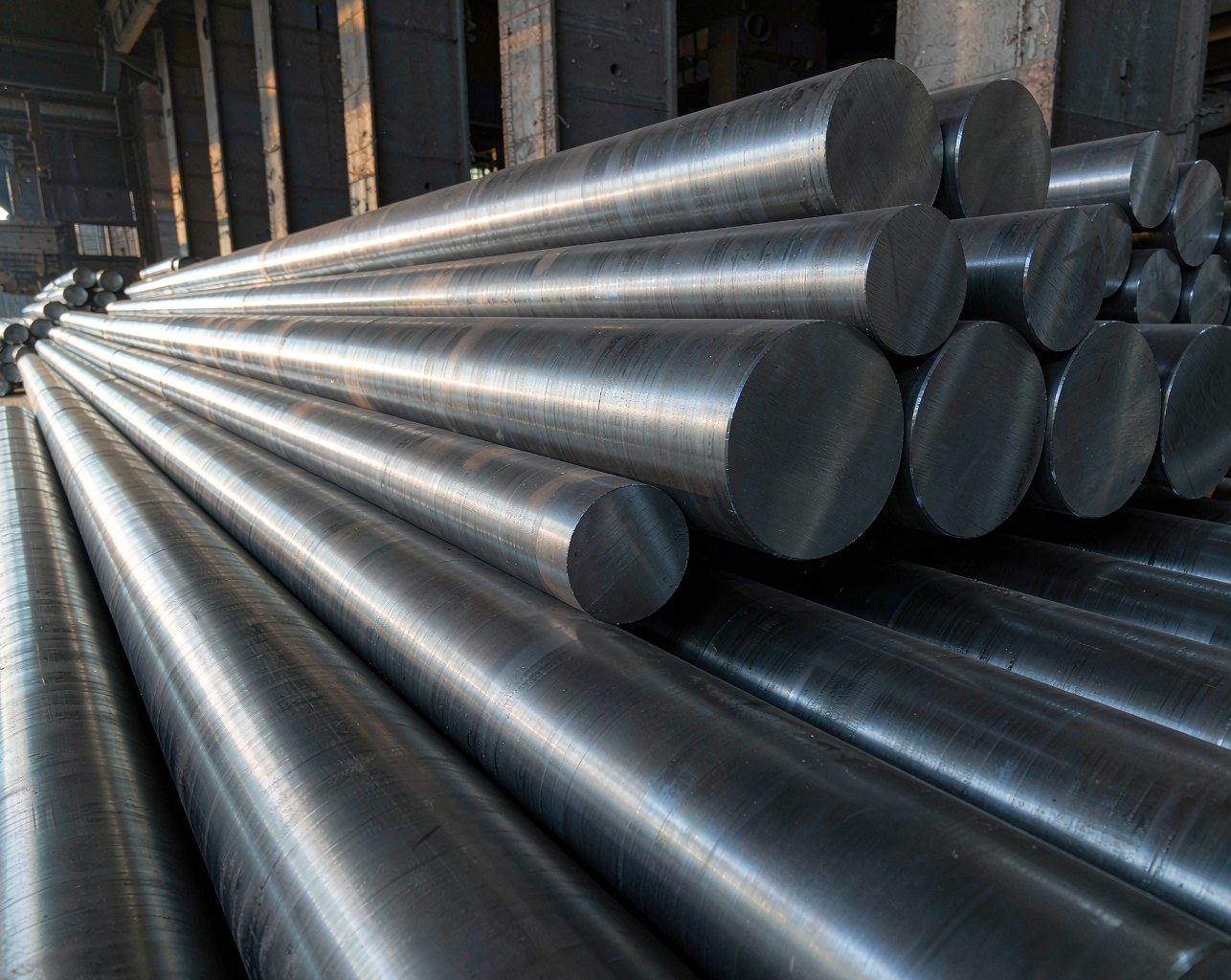
The distal drill collar-type tool's performance advantage is inseparable from the properties of the non-magnetic drill collar body that hosts it. Three material characteristics are critical. First, magnetic permeability must be at or near unity (typically specified at ≤1.010 relative permeability for P550 grade). Any ferromagnetism in the collar body would distort the MWD directional survey data that defines tool face orientation — the reference against which upper and lower gamma sectors are assigned. An incorrect tool face reference means that what the system reports as "upper gamma" may in reality be measuring in a different direction, corrupting the geosteering interpretation entirely. Second, the surface slot geometry that positions the sensor must be machined to tight dimensional tolerances. The sensor's directional shielding depends on precise angular alignment within the slot; any positional deviation reduces the azimuthal discrimination between opposing sectors. Third, the collar must provide structural integrity under the combined axial, torsional, and bending loading of a deep horizontal BHA, while the sensor slot and cover plate assembly maintain their geometry throughout the run. P550 and P650 grade Cr-Mn-N austenitic steels, which are standard non-magnetic drill collar materials for this application, achieve this combination of properties through their high-nitrogen microstructure, which simultaneously delivers non-magnetic austenitic phase stability and high yield strength.
The deep CBM environment introduces additional material demands. The Shanxi Jinxi block target formation sits at 1,900–2,100 m true vertical depth, with coal seam characteristics of fragility, high washout tendency, and susceptibility to collapse. At these depths and in these formation types, collar OD and ID tolerances, surface finish, and connection make-up quality directly affect the probability of a stuck-in-hole event. The distal drill collar-type tool's structural superiority over the near-bit configuration — specifically its central position in the wellbore and absence of bent-housing eccentricity — is only realised if the collar body itself is manufactured to specification.
Real-Time Formation Apparent Dip Angle Calculation from Upper/Lower Gamma Curves
One of the less-discussed but practically significant capabilities of the distal drill collar-type AGWD tool is its ability to provide a real-time estimate of formation apparent dip angle from a single formation crossing event, rather than requiring the formation to be crossed twice (as with conventional LWD gamma methods) or the dip to be assumed from prior knowledge. The calculation uses the separation and convergence points of the upper and lower gamma curves as the formation boundary is approached from one side.
θ ≈ arctan(D / ΔL) + α − 90°
Where: θ = formation apparent dip angle (degrees); D = wellbore diameter (m); ΔL = measured depth between the upper/lower gamma curve separation point and convergence point — i.e., the projected distance along the wellbore axis between the formation intersection points at the upper and lower borehole walls (m); α = borehole inclination angle (degrees).
In practice, the sensor is embedded in the non-magnetic collar shell, and the tool's own formation detection depth must be accounted for: when the upper and lower curves first begin to diverge, the sensor has already detected a lithological change beyond the borehole wall. The value of D in the formula should therefore be taken as the sum of the tool OD and the sensor detection depth. For rapid field calculation, using the nominal borehole diameter for D provides a close approximation of the apparent dip angle, allowing geosteering personnel to update their formation dip model in real time and anticipate trajectory correction requirements before the bit reaches the boundary.
Interpreting Upper and Lower Gamma Curves: The Four Key Geosteering Patterns
Coal seams have a characteristic natural gamma signature of 20–80 API — substantially lower than the surrounding mudstones and siltstones, which typically read 80–150 API or higher. This contrast is what makes gamma the primary formation-identification sensor in CBM geosteering. The four operationally critical upper/lower gamma patterns are as follows.
Gamma Curve Pattern Reference Guide
Key rule: The gamma sensor that rises first identifies the boundary being approached. The magnitude of the divergence between upper and lower curves indicates proximity to and rate of approach to the boundary. When both curves are equal and stable at coal-seam API values, the bit is centred in the seam.
Field Case Study: LXX-1H Well, Shanxi Jinxi CBM Block
The Jinxi block in western Shanxi is a mature CBM development area where coal seams are concentrated at 1,900–2,100 m TVD with seam thickness generally between 6 m and 8 m — well within the thick seam category suited to the distal drill collar-type tool. Prior development wells in this block had used near-bit azimuthal gamma tools with technically sound results, but the daily instrument cost was driving up per-well drilling expenditure. With the block geology now well-characterised from multiple offset wells, the operator made the decision to switch to the distal drill collar-type tool for the LXX-1H well.
The well was designed with a 3,500 m total depth, 1,050 m horizontal section, and Target A at 2,448 m measured depth (1,930 m TVD), with Target B at 1,923 m TVD. The results validated the tool selection decision. Reservoir encounter rate exceeded 95%. Both targets were hit within design tolerances. Three specific geosteering events during the horizontal section illustrate how the upper/lower gamma interpretation scheme worked in practice.
Event 1: Target Formation Identification at 2,436–2,448 m
As the well approached the design Target A depth of 2,390 m (with 13 m zero-length offset meaning the sensor reached this point when the bit was at 2,403 m), both upper and lower gamma values were reading approximately 100 API — consistent with fine sandstone, not coal. Surface cuttings showed fine sandstone, ROP was 4.5 m/h, and total hydrocarbon gas reading was 1.2%. The tool confirmed the bit had not yet entered the target. Continuing to drill with inclination increasing, at 2,436 m the lower gamma began to drop ahead of the upper gamma — the Pattern ① entry signature. By 2,449 m, both curves had stabilised at 40–50 API, coal cuttings were returning to surface at volume, ROP had increased to 15–20 m/h, and total hydrocarbon gas had risen to 72%. The actual Target A depth was confirmed at 2,448 m — 58 m deeper than the original design depth — a structural variation that the distal collar-type tool detected and communicated clearly enough for the geosteering team to confirm in real time.
Event 2: Seam Floor Exit and Re-Entry at 2,903–2,912 m
At 2,903 m with wellbore inclination at 90.5°, total hydrocarbon gas began declining from 74% toward 2.3%, ROP dropped, drilling time increased from 3–4 min/m to 10–12 min/m, and fine sandstone content in cuttings increased. At this point the zero-length lag meant the upper/lower gamma curves had not yet responded, but the geosteering team correctly identified seam floor exit from the drilling parameter changes alone and adjusted BHA attitude. When the gamma data eventually resolved to the 2,903 m depth, it confirmed the Pattern ② signature: lower gamma rising first from 58 API to 141 API ahead of the upper gamma, both values converging at elevated levels consistent with the underlying mudstone. By 2,912 m, Pattern ③ re-entry was confirmed: upper gamma dropping first, both values converging back to approximately 60 API in-seam, consistent with the trajectory correction successfully returning the bit to within the seam.
Event 3: Seam Roof Exit and Re-Entry at 2,955–2,964 m
At 2,955 m, the Pattern ④ roof-exit signature appeared: upper gamma rising first from 60 API to 122 API, ahead of the lower gamma, both curves converging at elevated values. Drilling time had simultaneously begun increasing from 3–4 min/m to 11–13 min/m, total gas had dropped to 1.6%, and muddy siltstone content in cuttings was rising. Comparison with offset well data confirmed that the local formation was dipping upward, which had caused the wellbore trajectory to intersect the seam roof. Following trajectory adjustment, at 2,964 m the Pattern ③ re-entry signature appeared — lower gamma dropping first and falling below upper gamma, both curves converging downward to approximately 45 API — confirming successful re-entry through the seam roof.
Probe-Type vs. Distal Drill Collar-Type: Quantified Sensor Response Comparison
A direct comparison between the two architectures was performed using data from adjacent offset wells in the same block, examining the formation boundary response at a horizontal section exit event with equivalent borehole geometry: wellbore inclination approximately 89.6–89.8°, formation dipping at 0.6–0.8° upward, resulting in a trajectory-to-formation angle of approximately 1°. Both wells used the same 216 mm horizontal section borehole diameter and 13 m zero-length tool positioning.
For the probe-type tool, the sensor first detected the formation change when the perpendicular distance between the tool and the formation boundary was approximately 0.19 m. At that point, the bit had already drilled approximately 2 m beyond the seam boundary — meaning the alarm came after the fact, requiring retrospective correction and generating 2 m of out-of-zone drilling footage that contributed nothing to gas production.
For the distal drill collar-type tool, the sensor first detected the formation change when the perpendicular distance to the boundary was approximately 0.30 m. Because the sensor is mounted on the collar exterior, it resolves this slightly larger detection distance while the bit was still 4.2 m from the boundary — providing advance warning rather than retrospective confirmation. The geosteering team could initiate a trajectory correction before the bit crossed the boundary, avoiding out-of-zone drilling entirely at this location.
Horizontal Section Drilling Efficiency and Cost: Field Comparison Data
Three horizontal development wells drilled with the distal drill collar-type tool (1#: 800 m horizontal section; 2#: 1,000 m; 3#: 1,100 m) were compared against three wells drilled with near-bit azimuthal gamma tools (4#: 1,000 m; 5#: 1,000 m; 6#: 1,050 m) in the same block, under equivalent geological and operational conditions. Pure drilling ROP in the horizontal section — excluding non-drilling time such as surveys, reaming, mud conditioning, and geological circulation — was essentially identical across both tool types: the distal collar-type wells averaged 12.1–12.7 m/h and the near-bit wells averaged 12.0–12.3 m/h. The difference is within normal operational variability and cannot be attributed to the tool type. Since ROP is equivalent, the only meaningful cost difference is the daily instrument rental rate — 15,000 CNY/day for the distal collar-type versus 30,000 CNY/day for the near-bit type. For a 1,000 m horizontal section drilled at approximately 12 m/h, this represents a tool cost saving of more than 50% per well.
Frequently Asked Questions
Q: Why does mounting the gamma sensor on the outside of the non-magnetic drill collar improve measurement performance compared to the probe-type design?
In a probe-type tool, the sensor sits inside the central bore of the non-magnetic drill collar. Gamma radiation from the formation must pass through the annular drilling fluid column, through the drill collar wall, and through the bore fluid before reaching the sensor. Each layer absorbs gamma photons, progressively reducing the count rate at the detector. The distal drill collar-type tool removes the drill collar wall and bore fluid from the signal path by positioning the sensor in a slot on the collar's outer surface. With only the minimal slot cover material between the detector and the formation, count rate is substantially higher, and the ability to resolve formation boundaries at greater perpendicular distances from the borehole wall is correspondingly improved. Formation detection depth increases from approximately 0.1–0.2 m for probe-type to 0.2–0.3 m for the drill collar-type.
Q: What non-magnetic drill collar material specifications are required for a distal drill collar-type azimuthal gamma tool?
The non-magnetic drill collar hosting an AGWD sensor must satisfy at least four critical requirements. Magnetic permeability must be at or very close to unity — typically specified as relative permeability ≤1.010 for Cr-Mn-N austenitic grades such as P550 and P650 — to avoid corrupting the MWD directional survey that defines tool face orientation and hence sector assignment. Mechanical properties (yield strength, tensile strength, impact energy) must be sufficient for the combined axial, torsional, and bending loading of the target well depth and trajectory. Dimensional tolerances on the sensor slot geometry must be tight enough to maintain the precise angular alignment of the directional shield throughout the run. And the cover plate retention system must be robust enough to survive the shock and vibration environment of a CBM horizontal section without allowing the sensor to shift position or become exposed to formation damage.
Q: How do upper and lower gamma curves indicate whether the horizontal well bit has exited through the top or bottom of a coal seam?
The rule is straightforward: the gamma curve that rises first and reaches the higher value identifies which boundary the bit is approaching. If the upper gamma rises ahead of the lower gamma and to a higher value, the bit is approaching or has crossed the seam roof — the tool is detecting the overlying high-gamma mudstone on the upper side first. If the lower gamma rises ahead of and above the upper gamma, the bit is approaching or has crossed the seam floor. The magnitude of the divergence between upper and lower curves, combined with the rate of change, gives the geosteering geologist a sense of how rapidly the wellbore is approaching the boundary, allowing trajectory adjustment to be timed to keep the bit within the productive seam interval.
Q: Can the distal drill collar-type and near-bit azimuthal gamma tools be used simultaneously in the same BHA?
Yes, and the paper's authors recommend this approach specifically for wells where calibration of the distal collar-type measurement is desirable. When both tools are deployed together, the near-bit tool's gamma readings — which are acquired very close to the bit and therefore represent a near-real-time formation response — can be used to validate and calibrate the upper/lower gamma values reported by the distal collar-type tool. This is particularly useful early in a programme when the geology is not yet fully characterised, or when the operator wants to cross-check the formation apparent dip angle calculation. In routine operation once the block geology is well-established, the distal collar-type tool alone is sufficient, and the near-bit tool can be removed from the BHA to reduce cost and stuck-pipe risk.
Conclusion
The distal drill collar-type azimuthal gamma tool occupies a well-defined niche in the CBM tool selection matrix: thick coal seams, blocks where formation geology is established from offset wells, and development programmes where drilling economics are under pressure. Its performance advantage over the probe-type is structural — sensor placement on the non-magnetic collar exterior removes the attenuating drill collar wall and bore fluid from the gamma signal path, improving detection depth and boundary response speed in a way that directly translates to higher reservoir encounter rate. Its cost advantage over the near-bit tool exceeds 50% per day at equivalent horizontal section ROP, making it a straightforward economic choice for thick-seam programmes. The engineering foundation of both advantages is the non-magnetic drill collar body itself: a collar that meets the magnetic permeability, mechanical property, and dimensional tolerance requirements of an AGWD tool host is a precision component, not a commodity. If you are specifying non-magnetic drill collars for MWD/LWD tool string applications — whether for azimuthal gamma sensor hosting, standard MWD survey collar positioning, or BHA structural requirements — we welcome the opportunity to discuss grade selection and dimensional specifications. Visit gaslinepipe.com to explore our non-magnetic drill collar product range or contact our technical team directly.