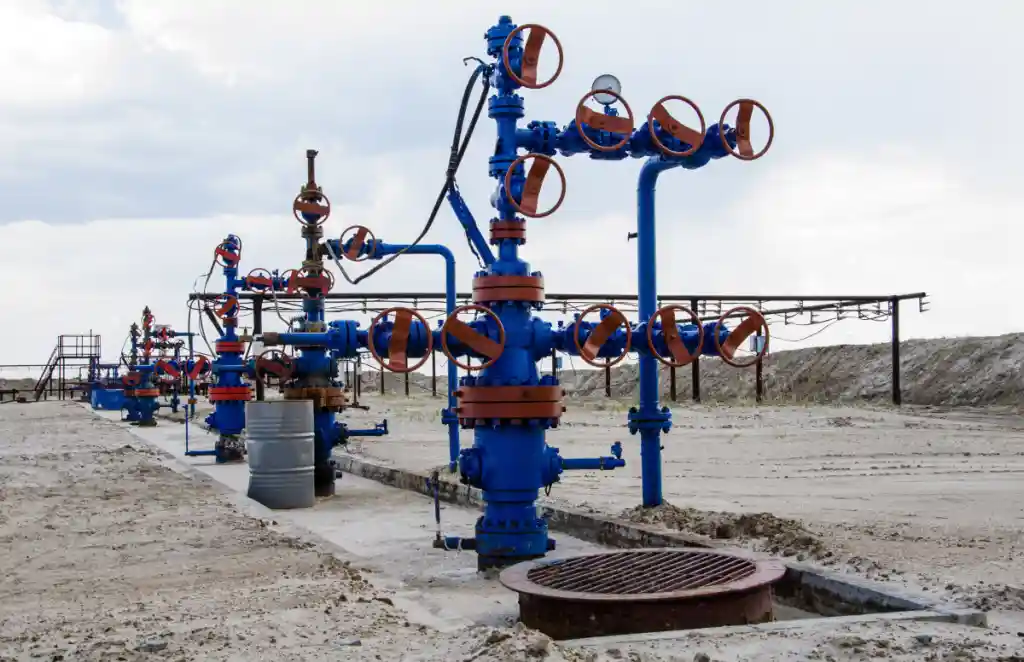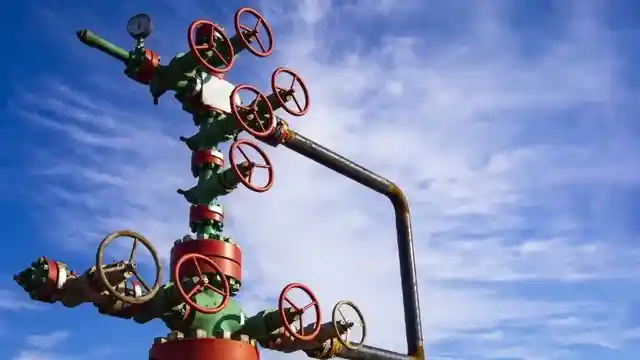
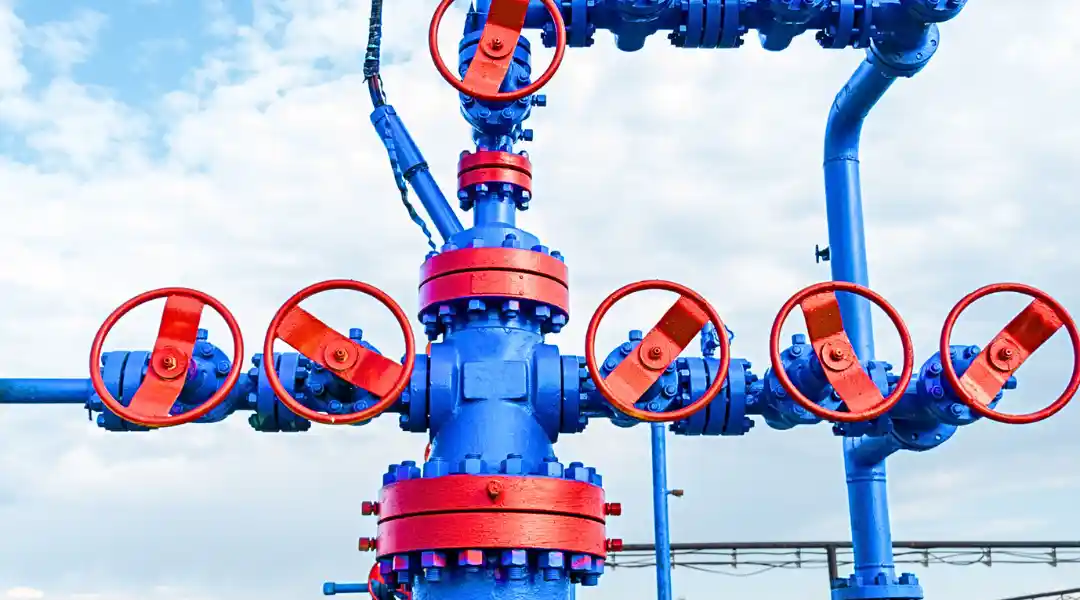
Wellhead equipment engineering hit a benchmark few oilfield professionals expected this decade: a bimetallic dual-metal seal assembly sustaining 45,000 psi under simulated extreme-wellbore conditions — more than double the 20,000 psi industry average for comparable seal configurations. That result didn’t come from one single invention. It came from structural topology work, five-axis precision machining, and hydraulic control refinement all converging on the same assembly. For drilling engineers, procurement staff, and equipment maintenance technicians evaluating deepwater, HPHT, or sour-service wellheads, understanding the engineering behind these gains has real practical weight — it directly shapes the specifications you write and the supplier audits you conduct. This article walks through the mechanics in detail.
Wellhead Equipment Engineering and Structural Mechanics
Traditional wellhead bodies were built with generous safety margins, wich often meant heavy assemblies that made offshore logistics expensive. Genetic algorithm-based topology optimization changes that equation directly. By redistributing material to high-stress load paths and removing it from low-stress regions, engineers now cut wellhead assembly weight by roughly 40% while raising compressive strength by 25%. As a result, the sea freight cost of a 140 MPa fracturing wellhead and fracturing tree assembly dropped from approximately $180,000 to $100,000 per unit — purely from the mass reduction.
Biomimetic design is gaining traction alongside topology work. A research team from a major petroleum university developed an erosion-resistant valve plate modeled on the layered micro-architecture of mollusk shells. Deployed in a high-temperature, high-pressure gas field in the South China Sea, that valve plate ran 800 consecutive days without failure — a documented record for that specific operating environment. The bionic approach addresses erosion failure modes that purely metallurgical solutions still struggle to handle economically.
ANSYS finite element simulations on multi-cell lattice structures show fatigue life improvements of up to 300% versus conventional solid-body designs. These numbers are beginning to show up in actual product qualification test reports, not just academic papers. In wellhead equipment engineering, the gap between simulation and production hardware is closing faster than most teams expect.
| Parameter | Conventional Design | Advanced Design | Improvement |
|---|---|---|---|
| Seal pressure rating | ~20,000 psi | 45,000 psi | +125% |
| Assembly weight (relative) | 100% baseline | ~60% | −40% |
| Valve seat hardness | HRC 55–58 | HRC 65 | +12–18 HRC points |
| Servo valve response | ~200 ms | 15 ms | −92.5% |
| Sealing face flatness | 0.02–0.05 mm | 0.005 mm | 4–10× tighter |
| Sour-service life (HH class) | ~5 years | 30 years | ×6 |
Precision Manufacturing: Micron Tolerances Under Pressure
Five-axis machining centers now hold flatness tolerances of 0.005 mm on critical sealing faces of dual-bore production trees — roughly one-fifteenth the diameter of a human hair. At that level of precision, metal-to-metal seals function reliably at rated pressure without needing elastomer backup elements. That matters in high-H₂S wells or HPHT completions, where elastomers degrade faster than maintenance schedules can accommodate.
Laser cladding has largely replaced thermal spray for valve seat and disc sealing surfaces. The result is surface hardness reaching HRC 65, with a service life roughly five times longer than conventional hard-facing. In our workshop, we usually see this difference show up most clearly in sour gas well maintenance logs — the shift alone can push a planned workover schedule back two to three years. That’s real money for operators.
One domestic manufacturer’s intelligent assembly line, integrating robotic arms with machine vision, compressed the production cycle for gate valve bodies, seats, and stems from 28 days down to 7 days. For buyers managing multi-well project schedules, that throughput compression has a direct commercial impact on lead-time commitments.
- Topology Optimization
- A mathematical method that redistributes material within a design space to maximize structural performance for given loads and constraints. In wellhead engineering, it typically uses finite element solvers with genetic or gradient-based algorithms.
- HRC (Rockwell C Hardness)
- A standardized surface-hardness scale per ASTM E18. HRC 65 sits near tool-steel hardness — significantly harder than the HRC 55–58 typical of conventional hard-faced valve seats, which translates directly into longer erosion resistance.
- HPHT (High Pressure High Temperature)
- An industry classification for wells where bottom-hole pressure exceeds 10,000 psi and temperature exceeds 300°F (149°C). HPHT conditions place elevated demands on every element of the wellhead assembly and are a key driver for advanced material selection.
- FCM (Flow Control Module)
- A subsea assembly that regulates production flow from individual well completions into the subsea manifold system. Positioning accuracy during FCM installation at 2,000-meter depth is one of the most demanding dimensional control challenges in subsea wellhead equipment engineering.
Hydraulic Control: The Nervous System of a Wellhead
Proportional servo valves in wellhead hydraulic control packages historically operated with response times around 200 ms. Advanced designs now achieve 15 ms — approximately one-quarter the duration of a human blink. That speed matters most during emergency shutdown sequences, where the pressure transient magnitude is directly tied to how fast the valve seats. Milliseconds, in that context, are engineering variables, not just performance bragging rights.
Digital hydraulic systems built with coupled mechanical-hydraulic modeling hold pressure fluctuations within ±0.2 MPa. For reference, that is roughly ten times tighter than most current international standards require. Consequently, cyclic fatigue loading on flange connections in long-production HPHT wells is substantially reduced — extending the interval between mandated pressure-test shutdowns.
A particularly useful spin-off is the pipelineless intelligent hydraulic control system developed for unmanned offshore platforms. By adapting control logic originally from construction-grade hydraulic machinery, engineers produced a self-contained unit requiring no umbilical hydraulic supply line. That removes one significant failure point from the completion architecture and simplifies topside platform design considerably.
Subsea Wellhead Equipment Engineering: China’s 2,000-Meter Program
Ultra-deepwater completions present a fundamentally different set of problems compared to surface wellheads: hydrostatic pressure exceeding 20 MPa at the mudline, near-zero ambient water temperature, and zero possibility of rapid human intervention during an emergency. The domestic 2,000-meter program tackled all three simultaneously.
Material selection centers on 2205 duplex stainless steel, designated UNS S32205 under ASTM A790 / A276 for pipes and bars; European equivalent EN 1.4462. This grade contains approximately 22% chromium, 5% nickel, 3% molybdenum, and 0.15–0.17 wt% nitrogen. Compared to the 316L austenitic grades it replaces in subsea tree valve bodies and connector hubs, S32205 offers roughly 47% better chloride stress-corrosion resistance based on standard corrosion test data. In a permanently seawater-flooded environment at 2,000-meter depth, that margin is not marginal — it defines the difference between a qualified design and a liability.
A 2,000-meter-rated horizontal subsea Christmas tree, assembled by a state-owned offshore engineering company, completed full system assembly and entered testing at a Tianjin fabrication facility. That milestone marks the first domestically engineered 2,000-meter-class deepwater tree main structure — important both for national energy security and for reducing dependence on foreign-sourced subsea hardware in strategic deep-water plays.
Key technical challenges resolved during the program included: 2,000-meter system layout and structural load analysis; FCM module installation and positioning accuracy; coupled finite element pressure-temperature stress analysis; hydraulic circuit modeling; communication architecture qualification; and combined vibration-fatigue simulation testing. Getting all of those right simultaneously — not each one in isolation — is what separates a production-qualified design from a demonstration prototype.
Shale Gas, Arctic, and High-H₂S Wellhead Equipment
Land-based wellhead equipment engineering challenges are less publicized but equally demanding. An integrated single-bore dual-lateral wellhead system with mechanical self-adaptive sealing technology achieved batch-deployment scale in Southeast Asia, where variable casing programs and tropical operating conditions make standardized sealing geometries difficult to apply. The self-adaptive seal adjusts its contact geometry in response to differential pressure, reducing dependence on precise installation torque for leak integrity — a practical advantage when installation crews rotate frequently.
Quick-release wellhead assembly designs have cut on-site installation time from 80 hours down to 20 hours per well. For a rig running at $30,000–$60,000 per day, that 60-hour saving translates directly into project economics — typically exceeding one million RMB per well in avoided rig time. The design logic borrows from modular process equipment, applying tool-free connection systems to flanged wellhead interfaces.
Smart wellhead monitoring systems now run continuous real-time analysis on wellhead pressure, temperature, and H₂S concentration simultaneously. Field-reported fault prediction accuracy has reached 99.99%. If that figure holds across larger fleet populations, it would effectively eliminate undetected wellhead integrity failures as a credible failure mode — a meaningful step for unattended platform operations.
For Arctic operations at −60°C, low-temperature impact toughness optimization — primarily through controlled grain refinement and cleanliness improvements in forgings — allows wellhead assemblies to maintain full mechanical specification at temperatures that previously required imported solutions. This breaks a threshold that kept several Arctic and subarctic geographic plays off-limits for domestic equipment suppliers.
High-H₂S service life has improved substantially. A combination of specialty surface treatment and an H₂S diffusion-barrier design at critical sealing interfaces extends equipment service life from 5 years to 30 years in sour-service conditions. That’s alot of residual value relative to the upfront premium between a standard and a full sour-service configuration.
Domestic HH-class wellhead equipment and Christmas trees have collectively accumulated 237 certifications under API 6A and ISO 10423. Market share in this segment grew from 12% in 2015 to 58% in 2024 — a structural shift, not a one-cycle statistical fluctuation.
- API 6A — Specification for Wellhead and Tree Equipment: the primary international product standard covering pressure ratings, material classes (AA through HH), and testing requirements for surface wellhead hardware.
- ISO 10423 — Drilling and Production Equipment (Wellhead and Christmas Tree): technically equivalent to API 6A in most provisions; required for projects tendered under European or ISO-based procurement frameworks.
- NACE MR0175 / ISO 15156 — Materials for H₂S Environments: defines material qualification requirements for sour service. Compliance is mandatory for any wellhead component in contact with produced fluids exceeding defined H₂S partial pressure thresholds.
Five Market Segments Shaped by Wellhead Equipment Engineering
Deep-Sea Oil and Gas: The $1.2 Trillion Horizon
Global deepwater capital investment is projected to reach $1.2 trillion by 2030, generating an estimated $30 billion per year in wellhead equipment demand. Domestic subsea tree systems rated for 2,000-meter depth reportedly carry gross margins around 65% — well above surface wellhead equipment margins. That premium reflects the technology barrier and the limited number of qualified suppliers globally.
Aging Well Remanufacturing: A Quiet 25% Annual Growth Story
Approximately 70% of wellhead equipment currently in service globally has exceeded its original design life. The remanufacturing and recertification segment is expanding at over 25% per year. One team applied reverse engineering combined with additive manufacturing to bring decommissioned manifold assemblies back to certification-ready condition, with reported asset value increases of 300% versus scrap valuation. For operators managing mature field economics, this channel is becoming a legitimate procurement strategy.
Hydrogen Energy Crossover
High-pressure metal-to-metal sealing technology developed within wellhead equipment engineering transfers directly into hydrogen storage and transport applications. Teams making this crossover cite development cost reductions around 70% compared to starting from a non-oilfield baseline. Additionally, at least one oilfield equipment company has applied wellhead hydraulic control logic to compressed-air energy storage systems, securing a national pilot project in that emerging sector.
Predictive Maintenance and the Service Model Shift
Digital twin technology paired with PHM (Prognostics and Health Management) systems supports an estimated $8 billion per year in predictive maintenance contracts globally. One supplier adopted a “charge per seal-hour” billing model and reported profit margins 22 percentage points higher than its traditional equipment sales line. That pricing structure shift is worth watching across the broader wellhead equipment engineering supply chain.
Standards Leadership and Patent Competition
Revisions to China’s SY wellhead-related standard series introduced seven new mechanical performance indicators. Those additions effectively removed twelve foreign-manufactured product lines from tender qualification lists — a direct commercial consequence of standards authorship. Furthermore, a major state-owned tubular research institute filed over 1,632 patent applications in three years in the wellhead equipment space, exceeding the combined total of two of the largest Western oilfield services companies over the same period.
What’s Next for Wellhead Equipment Engineering
4D printing — additive manufacturing using shape-memory alloys — is in active lab development for wellhead component applications. The core concept: a part that autonomously adjusts it’s geometry in response to wellbore pressure changes, self-sealing micro-damage before it propagates. Lab samples have demonstrated 300 self-repair cycles under controlled conditions. Projected maintenance cost reductions reach 80% if the technology scales to production hardware, with a potential addressable market estimated above 50 billion RMB. Commercial readiness is still several years out, but the structural concept is mechanically grounded.
Exoskeleton-assisted assembly is under active testing for large-bore fracturing gate valve components. Assemblies weighing 200 kg can reportedly be handled by a single technician using a powered exoskeleton, with documented field tests showing assembly efficiency gains of 400%. Fewer personnel required per operation — and faster component handling — reduce both labor cost and platform crew exposure time. Both are metrics operators track carefully in offshore and remote environments.
Extraterrestrial resource extraction is now receiving formal government research funding. Wellhead and blowout preventer designs for lunar drilling must withstand 1/6 Earth gravity and continuous cosmic radiation — conditions entirely outside any existing API or ISO standard. China’s crewed spaceflight engineering program has formally initiated studies on off-Earth resource extraction equipment, with a reported research budget exceeding 20 billion RMB. As a near-term commercial opportunity it remains speculative, but the underlying mechanical design problems are real engineering challenges that push state-of-the-art wellhead structural analysis into genuinely new territory.
“This is the most elegant mechanical structure I have seen in my career.” — a veteran mechanical engineering academician, observing a high-pressure seal qualification test on a domestically produced wellhead assembly. The comment wasn’t promotional. It was an engineer’s recognition that in a field that looks conservative from the outside, the underlying structural mathematics had become genuinely beautiful.
Those who still view mechanical engineering as a declining discipline clearly haven’t spent time reviewing the stress contour plots from a modern wellhead design session, and haven’t noticed that a leading electric vehicle manufacturer has actively recruited wellhead assembly designers specifically for their expertise in high-load, tight-tolerance structural joints applied to armored body panels. The performance boundary of wellhead equipment engineering keeps moving, and the disciplines it pulls in — computational materials science, digital hydraulics, additive manufacturing — keep broadening. That combination of depth and adaptability is what makes this field worth following closely.
For teams evaluating wellhead equipment for deepwater, Arctic, sour gas, or high-cycling applications, SHUNFU METAL’s technical team can assist with product specifications, material traceability documentation, and third-party certification review. Reach us directly through the SHUNFU METAL contact page. For broader background on subsea production systems and Christmas tree equipment classification, the Wikipedia entry on oil well Christmas trees provides a useful orientation to the terminology and system architecture referenced throughout this article.