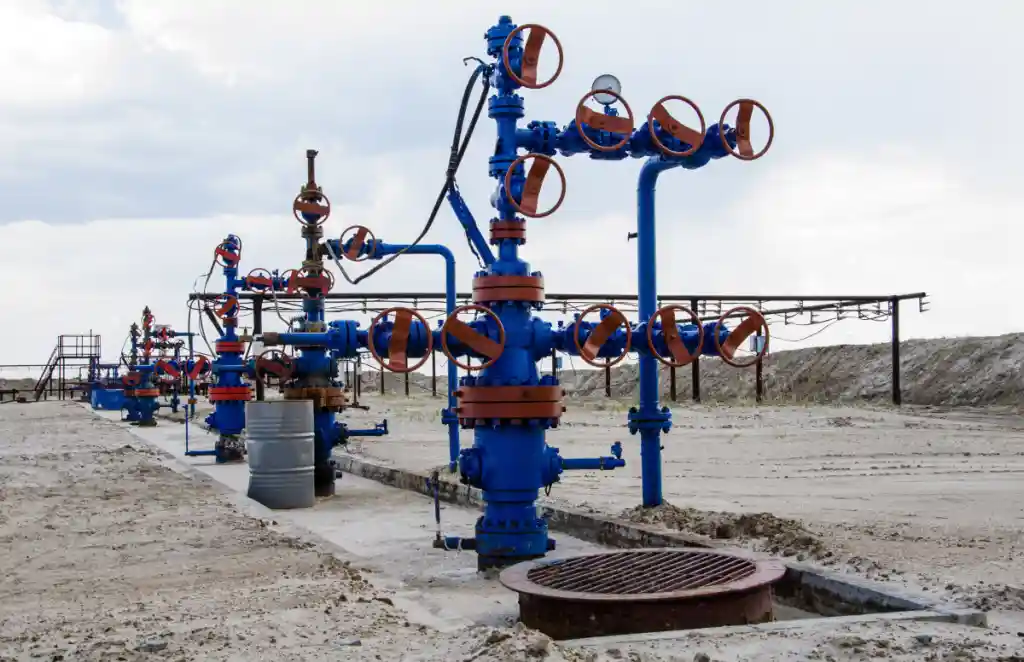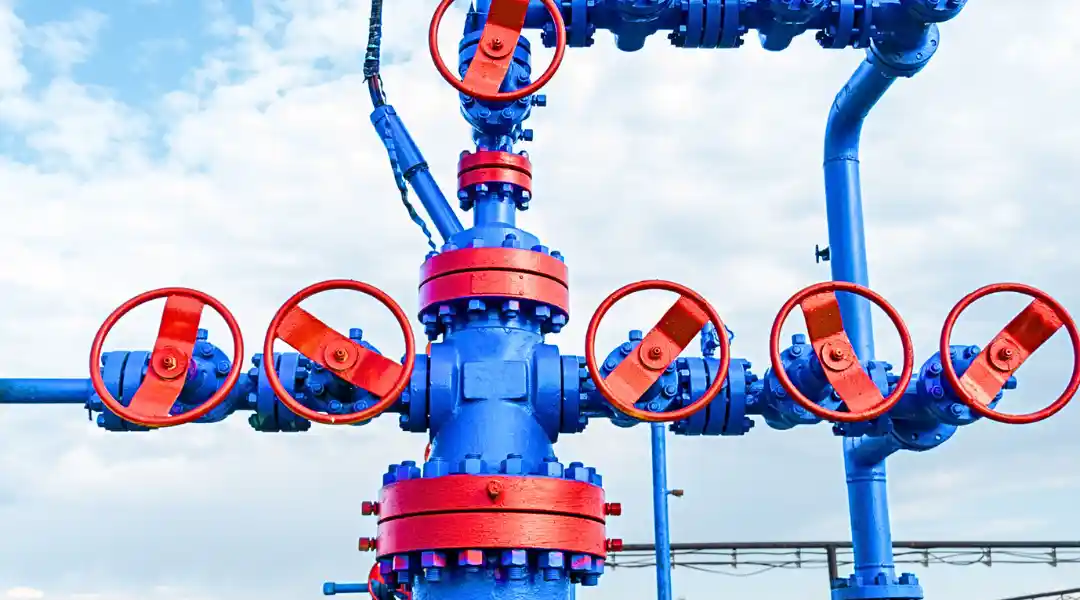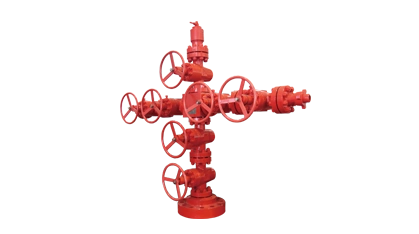
Proper wellhead christmas tree maintenance is the backbone of safe oilfield operations. The wellhead equipment primarily functions to suspend the tubing and seal the annular space between the tubing and casing. Its most basic parts include the tubing head (casing tee or cross), tubing tee, and stuffing box. Additionally, it consists of production valves, back-pressure valves, bleed/sampling valves, and tubing-casing communication valves. It is also equipped with tubing and casing pressure gauges to monitor pressures.
1. Core Functions in Wellhead Christmas Tree Maintenance
The wellhead assembly, commonly known as the “Christmas tree,” is the most important and common equipment for oil, gas, and water wells. Therefore, it acts as the primary device for controlling and regulating well production. Its main functions include:
- Suspending the tubing and supporting the entire weight of the downhole tubing string.
- Sealing the annular space between the tubing and casing to control casing gas.
- Controlling and regulating the production of the oil well.
- Facilitating daily management such as recording tubing/casing pressure data, testing, and wax removal.
- Ensuring smooth downhole operations like well flushing, sand washing, acidizing, and fracturing.
For instance, the KY65-21 model represents a standard configuration. In our workshop, we usually see this model equipped with test valves, left/right production valves, clamps, tubing crosses, master valves, upper/lower flanges, casing crosses, left/right casing valves, and tubing hanger lockdown screws.
2. Types of Christmas Trees
Christmas trees are divided into two main categories: older models and newer models. Older models refer to those from the 1960s, such as Dalong (imitating large Romanian designs), Rongfeng (imitating small Romanian designs), and Lianggong (imitating Soviet designs). Meanwhile, newer models refer to domestically designed and manufactured units like Daqing 150, Daqing 160 Micro, Sheng 251, and Sheng II.
3. Structure of the Equipment
Taking the domestic KY65-21 as an example, the components include the casing cross, left and right casing valves, tubing head, tubing cross, master valve, left and right production valves, test valve or dewaxing valve (blowout preventer), tubing hanger lockdown screws, clamps, steel ring gaskets, and other accessories. All these parts must meet API Spec 6A standards for wellhead equipment to ensure safety.
4. Connection Methods
There are five main connection methods used in the assembly. As a result, selecting the right one depends on the specific well pressure ratings.
- Clamp connection: Components are primarily connected by clamps (e.g., Daqing 150II, Sheng 261 Micro, Sheng 254).
- Threaded connection: Components are mainly connected by threads (e.g., Daqing 150, Sheng 251).
- Iron hoop connection: Components are connected by iron hoops (e.g., Sheng I, Sheng II).
- Flange connection: Components are connected by flanges (e.g., Shanghai Dalong, Rongfeng, Lianggong).
- Clamp-flange connection: A hybrid method using both clamps and flanges (e.g., original CY250).
5. Standard Installation Method (Video Tutorial)
Note: The original documentation includes a 09:35 minute video tutorial demonstrating the standard assembly process.
6. Component Functions in Wellhead Christmas Tree Maintenance
- 1. Blowout Preventer (BOP) Pipe
- Made of
φ73mmtubing, often jacketed withφ89mmpipe to circulate steam or hot water (oil) for insulation in the annulus. In flowing wells, it serves two purposes. First, running/pulling dewaxing tools and melting wax brought up by scrapers. Second, running tools for various tests. In electric submersible pump (ESP) wells, it facilitates running tools for measuring flowing/static pressure and allows tool running/venting during dewaxing. - 2. Rubber Valve (with BOP)
- Cuts off downhole pressure when the scraper/test tool rises into the BOP pipe. Furthermore, test-closing it verifies the tool has safely entered the BOP pipe, preventing drops. In pumping wells, this must be closed before adding polished rod packing.
- 3. Test Valve (250 Valve)
- Connects to the rubber valve to facilitate pressure measurement and well testing.
- 4. Tubing Cross
- Connects the test valve, master valve, and production valves. It is the mandatory passage for oil output and water well testing.
- 5. Master Valve
- Used to open/close the well and cut off bottom-hole pressure during the maintenance of outer equipment.
- 6. Casing Cross
- The main component for gathering and diverting tubing/casing fluids. It seals the tubing-casing annulus. The outside bears casing pressure, while the inside bears tubing pressure. The lower part connects to the casing pup joint.
- 7. Casing Pup Joint
- Connects to the lower flange thread of the cross at the top, and the casing at the bottom. It can be adjusted to raise or lower the assembly based on site elevation and operational needs.
- 8. Steel Plate Support
- Connects the production casing and surface casing to prevent the tree from vibrating.
7. Wellhead Christmas Tree Maintenance and Troubleshooting
Routine wellhead christmas tree maintenance prevents catastrophic failures. Below are common faults and our recommended fixes.
(I) Valve Inspection and Maintenance
1.1 Leakage between Valve Body and Bonnet: Vibration from fluid media can loosen bolts. Simply tighten the bonnet nuts symmetrically. However, check for gaps first. If there is no gap (single-face seal ring), do not over-tighten, wich could worsen the leak. In this case, replace the seal ring. Before replacing, close the main valve (requires production unit approval). Disassemble the handwheel, set screw, bearing housing, stem nut, and bolts. Polish minor damage with a fine oilstone. Severe damage requires a new ring. If the groove is ruined, report to the oil/gas field management for pressure-sealing replacement.
1.2 Internal Valve Leakage: If fluid seeps between the gate and seat, inject sealing grease through the bonnet fitting. If severe, replace the valve.
1.3 Stem Seal Leakage: Replace the packing ring or inject grease to compensate for the gap.
1.4 Connection Leakage: Tighten bolts or replace the gasket. Severe groove damage requires specialized repair.
2. Routine Valve Upkeep: Injecting grease (type 7903) is mandatory. High-pressure media washes away grease during every cycle. Regular injection ensures sealing, lubricates faces, and reduces torque. Flat gate valves need grease annually. Also, check bearings (replace if damaged by forced operation), tighten bonnet bolts, secure bearing set screws, and check stem packing glands.
(II) Tubing Head to Tree Connection Maintenance
The tubing hanger has primary (O-ring and square ring) and secondary seals. If both are fine, the flange gasket bears no pressure.
- Primary Seal Leak: Tighten the lockdown screws to expand the square ring. Inject grease through the adapter flange test port.
- Secondary Seal Leak: Inject grease through the test port.
- Lockdown Screw Leak: Tighten the packing gland.
- Test Port Thread Leak: Indicates hanger seal failure. Tighten the grease fitting.
If these fail, report for under-pressure repair using a tubing plug. Regularly check flange nuts and lockdown screw glands, especially one month after a new well starts production.
(III) Tubing Head Cross to Casing Head Maintenance
The casing hanger uses a square rubber/O-ring primary seal and a “BT” seal (PTFE injected) secondary seal.
Flange Gasket Leak: This means hanger seals failed. Primary failure happens if the square ring is damaged during landing or lifted by thermal expansion. Secondary failure occurs when PTFE depletes over time. To fix secondary leaks, inject PTFE. To fix primary leaks, tighten casing cross lockdown screws to push the hanger down, or inject grease. Maintain by injecting PTFE every 6 months.
(IV) Manual Choke Valve Inspection
Choke valves are consumables. The choke bean easily washes out. If downstream pressure rises while well pressure is stable, the bean is washed out. Replace it immediately to protect downstream equipment.
(V) Wedge Valve Maintenance
Though largely replaced by modern designs, older fields still use wedge valves. They have high operating torque and longer opening times. If torque is too high, check for burrs, debris, or a bent stem. If the stem packing leaks due to corrosion or wear, replace the stem or add new packing.
For specialized components or custom fabrication, feel free to reach out to our engineering team. You can also explore more about standard petroleum engineering principles to understand the metallurgy behind these systems.