

Project Description
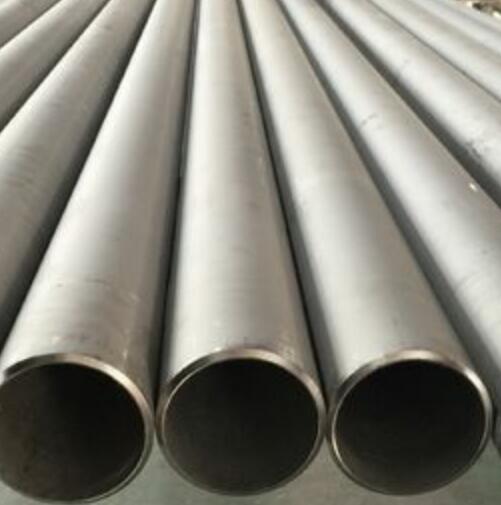
API 15Cr Corrosion Resistance Steel Pipe / Tubing – SHUNFU METAL
What Makes 15Cr Steel Different
15 Chrome steel—also called Super 15 Chrome or Ultra Hyper Chrome—sits at the intersection of performance and economics for oilfield operators drilling in aggressive CO2 environments. This quenched and tempered martensitic-ferritic stainless steel delivers what standard 13 Chrome cannot: sustained corrosion resistance at temperatures up to 400°F (204°C), combined with a 125 ksi minimum yield strength that handles the crushing pressures found in modern HPHT wells.
The metallurgy tells the story. By pushing chromium content to 14-16% and adding 6-7% nickel with 1.8-2.5% molybdenum, 15Cr achieves a fundamentally more stable passive layer than its 13Cr predecessor. That translates directly to slower corrosion rates when your downhole environment combines high CO2 partial pressures with moderate chloride concentrations. For procurement managers evaluating total lifecycle costs, this means fewer workovers, longer tubing service life, and reduced unplanned downtime.
At SHUNFU METAL, we manufacture 15Cr seamless pipe and tubing for operators who refuse to compromise on material integrity. Our production facilities handle large-volume orders for projects spanning the Middle East, West Africa, Southeast Asia, and the Americas. We control the entire manufacturing chain—from electric furnace steelmaking through hot tube rolling and final quench-and-temper heat treatment—to deliver consistent mechanical properties across every shipment.
15Cr occupies the sweet spot between 13Cr’s cost efficiency and duplex’s extreme corrosion resistance. For many HPHT sweet wells, it’s the material that makes projects economically viable.
Technical Designations and Trade Names
Procurement specifications vary by operator and region. You’ll encounter 15Cr under several designations across the industry:
- 15Cr
- Super 15 Chrome
- Ultra Hyper Chrome (UHP™)
- JFE-UHP™-15CR
- API 15Cr
These names reference the same fundamental alloy chemistry. When preparing tender documents or material requisitions, confirm the specification explicitly calls out the 14-16% Cr range with nickel and molybdenum additions. SHUNFU METAL’s technical team can cross-reference any proprietary designation against our production capabilities—contact us with your project specifications for rapid confirmation.
Where 15Cr Steel Performs Best
This alloy exists because conventional carbon steel and basic 13Cr cannot survive certain well conditions. Understanding where 15Cr excels helps procurement teams specify the right material from the outset.
Deep HPHT Sweet Wells
Wells exceeding 15,000 feet TVD with bottomhole temperatures above 300°F and CO2 partial pressures over 30 psi push 13Cr beyond its limits. The 15Cr alloy’s enhanced passive layer stability maintains corrosion resistance at these conditions. Many operators drilling in the North Sea, Gulf of Mexico deepwater, and offshore Brazil have standardized on 15Cr for production tubing in these environments.
High-Pressure Gas Reservoirs
Gas wells with high CO2 content and operating pressures exceeding 10,000 psi demand tubing with both corrosion resistance and high mechanical strength. The 125 ksi yield strength of 15Cr—versus 80-95 ksi typical for L80 or C95 carbon steel grades—allows for thinner wall sections and lighter string weights while maintaining the required pressure containment.
Moderate Chloride Environments
Unlike 13Cr, which suffers accelerated pitting in chloride-bearing brines, 15Cr tolerates moderate chloride concentrations up to approximately 50,000 ppm at temperatures below 300°F. This makes it suitable for completions where formation water or injected fluids carry dissolved salts.
Downhole Components Beyond Tubing
Packers, mandrels, nipples, and other subsurface equipment operating in sweet HPHT conditions benefit from 15Cr’s combination of strength and corrosion resistance. SHUNFU METAL’s product range includes the raw seamless pipe that component manufacturers machine into finished downhole tools.
Economic Alternative to Duplex
For wells where 22Cr duplex would be technically appropriate, 15Cr often delivers adequate corrosion resistance at 30-40% lower material cost. This makes projects marginal on duplex economics suddenly viable. However, environmental evaluation remains essential—H2S presence or extreme chloride levels still require duplex or higher CRA grades.
- Temperature Range: Effective up to 400°F (204°C) in CO2 service—well beyond 13Cr’s practical limits
- Yield Strength: 125 ksi minimum enables use in ultra-deep high-pressure applications
- CO2 Resistance: Martensitic-ferritic structure with Mo addition resists carbonic acid attack
- Chloride Tolerance: Moderate concentrations do not compromise passive layer integrity
Chemical Composition Specification
The alloy chemistry distinguishes 15Cr from both 13Cr and duplex grades. Each element serves a specific metallurgical purpose.
| Element | C | Cr | Ni | Mo | Mn | Si | Cu | P | S | Fe |
|---|---|---|---|---|---|---|---|---|---|---|
| Specification | ≤0.04 | 14–16 | 6–7 | 1.8–2.5 | ≤0.6 | ≤0.50 | ≤1.5 | ≤0.02 | ≤0.005 | BAL |
Why These Elements Matter
Chromium (14-16%): The primary corrosion-resistant element. This concentration—two percentage points higher than standard 13Cr—significantly enhances the protective Cr2O3 passive layer’s stability, particularly at elevated temperatures where lower-chrome grades fail.
Nickel (6-7%): Stabilizes the austenite phase during heat treatment, improving toughness and enabling the martensitic-ferritic final microstructure. This nickel content positions 15Cr between standard martensitic 13Cr and the fully austenitic-ferritic structure of duplex grades.
Molybdenum (1.8-2.5%): Dramatically improves resistance to localized pitting and crevice corrosion in chloride environments. Molybdenum also enhances high-temperature strength retention—critical for HPHT applications.
Low Carbon (≤0.04%): Restricted carbon content prevents chromium carbide precipitation at grain boundaries during welding and heat treatment. This preserves the chromium available for passive layer formation and prevents sensitization.
Sulfur (≤0.005%): Extremely tight sulfur limits ensure good hot workability during pipe manufacturing and prevent the formation of manganese sulfide inclusions that could initiate pitting.
SHUNFU METAL maintains strict chemistry control at the melt shop level. Every heat receives full spectrometric analysis before tapping, with adjustments made to bring all elements within specification. Mill test certificates document the actual chemistry for each production lot.
Available Sizes and Dimensions
Our manufacturing capabilities cover the full range of oilfield tubular sizes specified by major operators.
| Parameter | Specification |
|---|---|
| Product Forms | Seamless Pipe, Tubing |
| Minimum OD | 2-7/8″ (73.0 mm) |
| Maximum OD | 10-3/4″ (273.1 mm) |
| Pipe Range | R1, R2, R3 |
| Wall Thickness | Per API or customer specification |
| Length Range R1 | 18-22 ft (5.5-6.7 m) |
| Length Range R2 | 28-32 ft (8.5-9.8 m) |
| Length Range R3 | 38-45 ft (11.6-13.7 m) |
Non-standard sizes are available for projects requiring specific dimensions. Our engineering team works with procurement and operations personnel to define wall thickness, length, and tolerance requirements outside standard API specifications. For deep HPHT wells with unusual completion designs, custom sizing eliminates the compromises inherent in forcing standard products into non-standard applications.
Minimum order quantities for custom dimensions depend on the specific size—contact SHUNFU METAL directly with your requirements for lead time and MOQ confirmation.
Manufacturing Process Control
The performance of 15Cr steel depends entirely on how it’s made. Material defects introduced during steelmaking or pipe manufacturing cannot be corrected downstream. SHUNFU METAL’s manufacturing sequence incorporates controls at each critical stage.
Primary Steelmaking
Electric arc furnace (EAF) or basic oxygen furnace (BOF) melting produces the initial liquid steel. Secondary refining in a ladle furnace allows precise chemistry adjustment. Vacuum degassing removes dissolved hydrogen and nitrogen that would otherwise cause embrittlement. Argon stirring ensures compositional homogeneity throughout the heat.
Continuous Casting and Billet Production
Liquid steel solidifies into round billets through continuous casting. Electromagnetic stirring during solidification minimizes centerline segregation—essential for maintaining consistent properties through the full pipe wall thickness. Billets undergo ultrasonic inspection before proceeding to the pipe mill.
Seamless Pipe Manufacturing
Hot piercing converts solid billets into hollow shells. The Mannesmann process—rotating the heated billet against a piercing plug—creates the initial tube form. Subsequent elongation through plug rolling or pilger rolling achieves the required wall thickness and OD. For 15Cr production, temperature control during hot working is critical to prevent delta ferrite precipitation that would compromise corrosion resistance.
Quench and Temper Heat Treatment
This stage defines the final properties. Pipes are heated to austenitizing temperature (typically 950-1050°C for 15Cr), then water or polymer quenched to develop the martensitic matrix. Tempering at 600-680°C relieves residual stresses and achieves the specified hardness and strength. SHUNFU METAL’s heat treatment facilities use continuous furnaces with automated temperature control to ensure uniform properties along the entire pipe length.
| Process Stage | Description | Quality Control |
|---|---|---|
| Steel Making | EF or BOF with secondary refining | Spectrometric analysis, hydrogen measurement |
| Casting | Continuous casting with EM stirring | Ultrasonic billet inspection |
| Pipe Making | Traditional hot tube manufacturing | Dimensional measurement, surface inspection |
| Heat Treatment | Quenched and tempered | Hardness survey, microstructure verification |
| Finishing | Straightening, end preparation | Final UT, hydrostatic test, drift test |
Mechanical Properties
The 15Cr grade delivers mechanical performance suitable for demanding downhole service. The combination of high strength and controlled hardness allows operation in high-pressure environments while maintaining adequate toughness.
| Property | Minimum | Maximum | Unit |
|---|---|---|---|
| Yield Strength (0.2% offset) | 125 | 150 | ksi |
| Tensile Strength | 135 | — | ksi |
| Elongation | Function of specimen size | — | % |
| Hardness | — | 37 | HRC |
Understanding the Numbers
125-150 ksi Yield Strength: This range exceeds what carbon steel grades (L80 at 80 ksi, P110 at 110 ksi) can deliver. Higher yield strength means pipe can handle greater pressure differentials without plastic deformation—critical for wells with 10,000+ psi bottomhole pressures.
37 HRC Maximum Hardness: The hardness limit prevents stress corrosion cracking susceptibility while still allowing the high strength levels. Heat treatment parameters must be carefully controlled to hit the strength targets without exceeding the hardness ceiling.
H2S Service Limitation: 15Cr is explicitly not recommended for sour service per NACE MR0175/ISO 15156. Even trace H2S concentrations can initiate sulfide stress cracking in this martensitic structure. Wells with any H2S content require different material selection—duplex or nickel alloys depending on concentration and conditions.
SHUNFU METAL can produce non-standard mechanical properties upon customer agreement. Higher or lower strength grades may suit specific applications—our metallurgical engineering team will evaluate feasibility and provide adjusted heat treatment parameters.
Machining and Processing Considerations
Component manufacturers and machine shops working with 15Cr pipe need to understand its machining characteristics. The high alloy content and martensitic structure create different behavior than carbon steel or even 13Cr grades.
General Machinability
15Cr machines at roughly 40-50% of the rate achievable with low-carbon steel. The high work-hardening tendency requires sharp tooling, rigid setups, and adequate coolant flow. Carbide inserts are standard; high-speed steel tooling dulls quickly. Cutting speeds typically run 80-120 surface feet per minute with carbide, depending on the operation.
Threading Operations
API connections and proprietary premium threads are regularly machined on 15Cr tubing. Thread cutting requires:
Single-point threading with high-positive rake carbide inserts
Flood coolant with extreme pressure additives
Multiple light passes rather than few heavy cuts
Thread verification gauging at increased frequency
The work-hardened surface layer that forms during each pass can cause premature tool wear if not accounted for in the programming.
Boring and Honing
Internal machining for tight tolerance bores—as required for packer mandrels and similar components—benefits from dedicated boring bars with vibration damping. Honing to achieve surface finish specifications of 16 microinch Ra or better is achievable with silicon carbide or CBN abrasives.
Welding
Field welding of 15Cr is not recommended for pressure-containing applications. If welding is unavoidable, preheat to 200-300°F (95-150°C), use matching filler metals with low hydrogen electrodes, and post-weld heat treatment is mandatory to restore corrosion resistance in the heat-affected zone. Improper welding procedures destroy the passive layer chemistry and create failure initiation sites.
Surface Treatments
Phosphate coating or other conversion coatings can be applied for thread protection during storage and transport. The high chromium content requires modified phosphating chemistry compared to carbon steel. Zinc or manganese phosphate baths must be reformulated for proper adhesion to stainless grades.
Standards and Specification Compliance
15Cr seamless pipe production follows API and ISO specifications that define testing, inspection, and documentation requirements.
| Standard | Scope |
|---|---|
| API 5CRA | Corrosion-resistant alloy seamless tubes for casing and tubing |
| API 5CT | Casing and tubing specifications (testing methods referenced) |
| ISO 13680 | CRA seamless tubes for casing, tubing, and coupling stock |
| NACE MR0175 / ISO 15156 | Materials for use in H2S-containing environments (15Cr not suitable) |
| ASTM A370 | Mechanical testing methods |
| ASTM E165 | Liquid penetrant examination |
| ASTM E213 | Ultrasonic testing of metal pipe and tubing |
All SHUNFU METAL production carries full documentation including mill test certificates (MTCs/MTRs), chemical analysis reports, mechanical test results, and NDT records. Third-party inspection (TPI) is available upon request—we work with all major inspection agencies including SGS, Bureau Veritas, Lloyd’s, and DNV.
Material Selection: 15Cr vs. Alternatives
Choosing between 15Cr and other CRA grades requires evaluating your specific well conditions against each alloy’s capabilities and limitations.
15Cr vs. 13Cr (Standard Martensitic)
Standard 13Cr costs less but fails faster in high-temperature CO2 environments. At temperatures above 250°F or with chloride concentrations exceeding 10,000 ppm, the corrosion rate advantage of 15Cr becomes significant. For short-lived wells or mild conditions, 13Cr may suffice. For long production horizons in moderate-to-aggressive sweet environments, 15Cr often delivers lower total cost of ownership.
15Cr vs. Super 13Cr
Super 13Cr grades (modified 13Cr with reduced carbon and added nickel/molybdenum) offer intermediate performance between standard 13Cr and 15Cr. The choice between Super 13Cr and 15Cr often comes down to temperature—above 350°F, 15Cr’s advantage becomes clear. Below that threshold, both grades may be viable and the decision turns on pricing and availability.
15Cr vs. 22Cr Duplex
Duplex 22Cr provides superior corrosion resistance in chloride environments and tolerates moderate H2S. It costs 40-60% more than 15Cr. For pure CO2 service without H2S, 15Cr often represents the economically optimal choice. When any sour gas exposure is possible, duplex becomes mandatory regardless of cost considerations.
15Cr vs. 25Cr Super Duplex
Super duplex addresses extreme chloride concentrations and temperatures where 22Cr falls short. If your application demands super duplex, 15Cr is not a substitute—the environments differ fundamentally. However, many wells initially specified for super duplex can be safely reevaluated for 22Cr or even 15Cr if actual operating conditions prove less aggressive than anticipated.
Why Source 15Cr from SHUNFU METAL
Procurement decisions for critical oilfield materials extend beyond unit price. Supply chain reliability, technical support, and quality consistency determine whether your project stays on schedule and within budget.
- Manufacturer Pricing: Direct factory supply eliminates trading company margins. Our quotations reflect actual production costs, not middleman markup.
- Bulk Order Capacity: With 8,000+ tons of inventory and integrated steelmaking-to-finishing production, we handle project-scale requirements without sourcing delays.
- Technical Engineering Support: Our 22-person metallurgical engineering team assists with grade selection, specification development, and application engineering questions.
- Quality System Certification: ISO 9001 certified quality management with documented procedures for every production stage.
- Global Logistics: Export experience to 52+ countries with established freight forwarding relationships for major oilfield destinations.
- Third-Party Inspection Welcome: All major TPI agencies have inspected our facilities. Your QA representative is welcome on-site during production.
Ready to discuss your 15Cr requirements?
Our team responds to technical inquiries within 24 hours with preliminary quotations and lead time estimates.
Request a Quotation
Prepare the following information to expedite your quote request:
Quantity: Total tonnage or piece count with length requirements.
Size: OD, wall thickness, and length range (R1/R2/R3).
End Finish: Plain end, beveled, or threaded (specify connection if applicable).
Delivery: Required delivery date and destination port.
Inspection: Third-party inspection requirements, if any.
Documentation: Specific MTC/MTR requirements, certificates needed.
Email your requirements to [email protected] or call +86-731-89903933 for immediate assistance. Our sales engineers speak English, Chinese, and Arabic to support customers across major oilfield markets.
We are committed to integrate steel resources in china and serve the global steel market. Our company has more than 15 years of experience in steel researching, production, managing and sales. And our team mostly are based on and worked in national famous steel enterprise before. In the aspect of resources and information, we have established cooperative relationship with nearly hundred enterprises, either state-owned or private owned in China.

What’s more, we have built long, deep and close business relationship with dozens of steel company, Sharing and holding equities with several steel enterprises. Because of the close cooperation with steel companies and our pioneering spirit, which can ensure us stay at the top competition, and ensure our customers get what they really want. We provide preffesional one-stop service to the Contractors of follows project:
- Oil and Gas Pipeline Construction
- Onshore and Offshore
- Boiler Manufacturers
- Oil Refining Equipment
- Petroleum and Chemical Plant Construction
- Fire Protection
- Heating & Air Conditioning

Our ability to purchase materials directly from leading mills at the best possible price will give you the competitive edge. This coupled with a skilled workforce dedicated to embracing the demands of the markets we serve. Just give us a call +86-731-89903933.

