Project Description
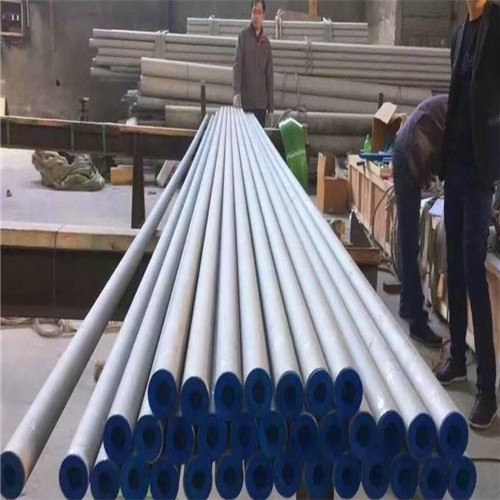
We are committed to integrate steel resources in china and serve the global steel market. We have 15+ years of experience in steel researching and production.
Our ability to purchase materials directly from leading mills will give you the competitive edge. Any Questions Just Call +86-731-89903933.
[addtoany]
2507 Duplex Stainless Steel Pipe / Tubing – SHUNFU METAL
2507 duplex stainless steel. The name alone tells experienced procurement managers what they’re dealing with: a 25% chromium, 7% nickel super duplex grade engineered for the harshest downhole conditions. This isn’t a general-purpose alloy. It exists for one reason—to survive where standard stainless steels fail.
High chlorides. Elevated temperatures. CO2-rich formations. Moderate H2S exposure. These conditions destroy 316L within months. They degrade 22Cr duplex over time. But 2507? It holds. As a direct manufacturer of CRA oilfield tubulars, SHUNFU METAL supplies 2507 duplex pipe and tubing to operators drilling HPHT wells across the Middle East, North Sea, Gulf of Mexico, and Southeast Asia.
Also designated as 1.4410 (EN), UNS S32750, or simply 25 Chrome, this alloy delivers yield strengths from 65 ksi to 140 ksi depending on processing condition. Cold-worked grades reach 140 ksi—strength levels that compete with low-alloy steel but with corrosion resistance that carbon steel cannot touch.
Here’s what matters to you as a buyer: availability, lead time, and consistent metallurgical quality across large tonnage orders. We address all three. Our production capacity handles bulk orders for major drilling campaigns. Our quality system—ISO 9001 certified and aligned with API 5CRA / ISO 13680 requirements—ensures every heat meets specification.
What Makes 2507 Duplex Different From 2205 and 22Cr Grades
The duplex family includes multiple grades. 2205 (22Cr-5Ni-3Mo) remains the workhorse for many industrial applications. But oilfield service demands more. That’s where 2507 steps in.
Three percentage points of additional chromium. That sounds minor on paper. In practice, it shifts the alloy’s pitting resistance equivalent number (PREN) from approximately 35 (for 2205) to above 40 for 2507. Higher PREN means better resistance to localized corrosion—pitting and crevice attack—in chloride-bearing brines.
The chemistry tells the story. 2507 contains 24-26% chromium, 6-7% nickel, 3-3.5% molybdenum, plus nitrogen additions that stabilize the austenite phase and boost strength. Tungsten and copper additions enhance corrosion performance in specific environments. The result: a balanced austenite-ferrite microstructure (roughly 50/50) that combines the strength of ferrite with the toughness and corrosion resistance of austenite.
For procurement teams evaluating CRA options, the decision framework is straightforward. If your well conditions include chlorides above 50,000 ppm, temperatures approaching 450°F, and CO2 partial pressures that would cause mesa corrosion in carbon steel, 2507 belongs on your shortlist. If H2S partial pressure stays below 3.0 psi, the alloy qualifies under NACE MR0175/ISO 15156 sour service limits.
Oilfield Applications for 2507 Duplex Stainless Steel Pipe
Every meter of 2507 pipe we ship goes into demanding service. The alloy isn’t specified for simple applications—that would be cost-prohibitive. It’s selected when failure consequences justify premium material costs.
HPHT Production Tubing
High-pressure, high-temperature wells push equipment to design limits. Bottomhole temperatures exceeding 300°F combined with reservoir pressures above 15,000 psi create conditions where material selection directly impacts well integrity. 2507 duplex tubing handles these conditions while resisting the chloride-induced pitting that destroys lesser alloys.
Operators in the Gulf of Mexico’s deepwater fields specify 2507 for production strings. North Sea operators do the same. The alloy’s combination of strength (up to 140 ksi yield in cold-worked condition) and corrosion resistance makes it suitable for tubing that must last 20+ years without intervention.
Subsea Flowlines and Risers
Subsea infrastructure represents massive capital investment. Flowline replacement costs run into hundreds of millions of dollars when you factor in vessel time, installation, and lost production. 2507 duplex reduces that risk. Its resistance to external seawater corrosion (critical for risers) and internal produced-fluid corrosion makes it a preferred choice for tieback systems.
Downhole Completion Equipment
Packers, mandrels, seal assemblies, and other completion hardware often use 2507 components. These items sit in the annulus for the life of the well, exposed to completion fluids, reservoir brines, and temperature cycling. The alloy’s resistance to stress corrosion cracking—a failure mode that plagues conventional stainless steels in chloride environments—makes it reliable for long-term service.
Water Injection Systems
Secondary recovery operations inject seawater or produced water to maintain reservoir pressure. This water—often treated but still containing significant dissolved salts—flows through injection tubing under pressure. 2507 handles the combination of high chlorides, oxygen (if treatment is imperfect), and elevated temperatures that cause rapid corrosion in carbon steel systems.
SHUNFU METAL supplies 2507 duplex pipe for all these applications. Our product range covers OD from 2-7/8″ to 10-3/4″ in R1, R2, and R3 lengths. Non-standard dimensions? We accommodate those too. Contact our technical team with your specifications.
International Standards and Material Equivalents
Global procurement means navigating multiple designation systems. The same alloy appears under different names depending on which standard your engineering team references. Here’s how 2507 maps across major specification frameworks:
| Standard System | Designation | Notes |
|---|---|---|
| UNS | S32750 / S32760 | S32760 has higher W content |
| EN / DIN | 1.4410 | European designation |
| ASTM | A789 / A790 | Seamless and welded pipe |
| API | API 5CRA Group 2 | Category 25-7-3 |
| ISO | ISO 13680 | CRA line pipe and tubing |
| NACE | MR0175 / ISO 15156 | Sour service qualification |
| Trade Names | SM25CR, VM 25, Duplex 2507 | Various manufacturer brands |
When you order from SHUNFU METAL, specify your required standard. We manufacture to API 5CRA/ISO 13680 as our baseline for oilfield tubulars. Additional testing and certification—including NACE TM0177 SSC testing, corrosion testing per ASTM G48, and full NACE MR0175 compliance documentation—are available on request.
Chemical Composition of 2507 Duplex Stainless Steel
Chemistry defines performance. Every element in 2507’s composition serves a purpose. The table below shows specified ranges per API 5CRA and ISO 13680:
| C | Cr | Ni | Mo | N | Mn | Si | Cu | W | P | S | Fe |
|---|---|---|---|---|---|---|---|---|---|---|---|
| ≤0.03 | 24-26 | 5.5-7.5 | 2.5-3.5 | 0.1-0.3 | ≤1.0 | ≤0.75 | 0.2-0.8 | 0.1-0.5 | ≤0.03 | ≤0.03 | BAL |
The Role of Each Alloying Element
Chromium (24-26%): The primary corrosion-resisting element. Forms a passive oxide layer that protects the base metal. Higher Cr content (compared to 2205’s 22%) directly improves pitting resistance.
Molybdenum (2.5-3.5%): Enhances resistance to pitting and crevice corrosion in chloride environments. Mo is weighted heavily in PREN calculations (PREN = Cr + 3.3Mo + 16N), making it a critical addition.
Nitrogen (0.1-0.3%): Stabilizes austenite phase. Increases strength without cold working. Improves pitting resistance. Nitrogen is the reason duplex stainless steels achieve high strength in solution-annealed condition.
Nickel (5.5-7.5%): Balances the duplex microstructure. Too little nickel results in excessive ferrite; too much produces predominantly austenitic structure. The 50/50 balance optimizes properties.
Tungsten (0.1-0.5%): Further enhances pitting and crevice corrosion resistance. Not all 2507 grades contain tungsten—S32760 (Zeron 100) has higher W content than S32750.
Copper (0.2-0.8%): Improves corrosion resistance in reducing acids. Also beneficial in certain sour environments.
Carbon (≤0.03%): Kept low to prevent carbide precipitation during welding and heat treatment. Carbides at grain boundaries cause sensitization and intergranular corrosion.
Available Sizes and Dimensions
Our 2507 duplex seamless pipe and tubing production covers a practical size range for oilfield applications:
| Parameter | Specification |
|---|---|
| Product Form | Seamless Pipe, Seamless Tubing |
| Minimum OD | 2-7/8″ (73.0 mm) |
| Maximum OD | 10-3/4″ (273.1 mm) |
| Length Range | R1, R2, R3 per API 5CT/5CRA |
| Wall Thickness | Per standard and custom requirements |
| End Finish | Plain end, threaded, coupled as required |
Non-standard sizes? We handle them. Many oilfield projects require dimensions outside API standard schedules. Our manufacturing process accommodates custom OD/ID combinations within our equipment capabilities. Discuss your requirements with our engineering team before finalizing specifications.
Length ranges explained: R1 covers 18-22 feet (single random). R2 spans 28-32 feet (double random). R3 extends to 38-45 feet (triple random). Longer lengths reduce connection count and potential leak paths in tubing strings.
Heat Treatment Process for 2507 Duplex
Duplex stainless steels require precise thermal processing. Get it wrong, and you compromise both corrosion resistance and mechanical properties. Get it right, and the material delivers its full potential.
Solution Annealing
All 2507 products undergo solution annealing as a minimum heat treatment. The process heats the material to 1880-2060°F (1025-1125°C), dissolves any secondary phases (sigma, chi, carbides), and establishes the balanced ferrite-austenite structure. Rapid water quenching follows to prevent precipitation during cooling.
Solution-annealed 2507 delivers Grade 65 or Grade 75 properties per API 5CRA. These grades suit many applications where extreme strength isn’t required but corrosion resistance takes priority.
Cold Working for High-Strength Grades
When applications demand higher strength—Grade 110, 125, or 140—cold working becomes essential. The process involves controlled plastic deformation after solution annealing. Cold drawing or cold pilger milling increases yield strength dramatically while maintaining acceptable ductility.
Cold-worked 2507 reaches 140 ksi yield strength. That compares favorably with quenched and tempered low-alloy steels like 4140 or P110 casing. The difference: 2507 achieves this strength while retaining superior corrosion resistance.
Trade-offs exist. Cold working increases hardness (up to 38 HRC for Grade 140), which can reduce H2S serviceability. Per NACE MR0175/ISO 15156, Grade 140 cold-worked 2507 is not recommended for sour service. Grades 110 and 125 qualify for H2S partial pressures up to 3.0 psi.
“The duplex structure’s response to cold work differs from austenitic grades. Both phases deform, but ferrite hardens more rapidly. Proper processing maintains the phase balance needed for optimal corrosion behavior.”
Mechanical Properties by Grade
API 5CRA and ISO 13680 define multiple strength grades for 2507 duplex. Selection depends on well conditions, pressure ratings, and H2S exposure limits.
| Grade | YS Min (ksi) | YS Max (ksi) | UTS Min (ksi) | Elongation Min (%) | Hardness Max (HRC) | Condition |
|---|---|---|---|---|---|---|
| 65 | 65 | 90 | 90 | 25 | 26 | Annealed |
| 75 | 75 | 100 | 90 | 25 | 26 | Annealed |
| 110 | 110 | 140 | 125 | 11 | 36 | Cold-Worked |
| 125 | 125 | 150 | 130 | 10 | 36 | Cold-Worked |
| 140 | 140 | 160 | 145 | 9 | 38 | Cold-Worked |
NACE Sour Service Qualification
Sour service limits differ by grade. Annealed grades (65, 75) and cold-worked grades (110, 125) qualify for H2S partial pressures up to 3.0 psi at temperatures up to 450°F per NACE MR0175/ISO 15156 Tables A.24 and A.25. Grade 140 exceeds hardness limits for sour service and should be restricted to sweet applications.
Non-standard mechanical properties? Available by agreement. Contact SHUNFU METAL technical support to discuss specific project requirements.
Physical Properties
Engineering design requires accurate physical property data across the operating temperature range:
| Property | 70°F | 200°F | 400°F |
|---|---|---|---|
| Density (lbs/in³) | 0.28 | — | — |
| Thermal Expansion (×10⁻⁶/°F) | 7.0 | 7.5 | 8.0 |
| Elastic Modulus (psi × 10⁶) | 29 | 28.2 | 27 |
| Poisson’s Ratio | 0.24 | 0.24 | 0.24 |
| Thermal Conductivity (Btu/ft·h·°F) | 8 | 9 | 10 |
| Specific Heat (Btu/lb·°F) | 0.12 | 0.12 | 0.12 |
Note the lower thermal expansion compared to austenitic grades like 316L. This reduces thermal stress in tubing strings subject to temperature cycling. The higher elastic modulus (compared to austenitic stainless) affects stiffness calculations for completion designs.
Corrosion Resistance Performance
Four corrosion mechanisms threaten oilfield tubulars. 2507 addresses all of them.
Pitting Corrosion Resistance
Pitting occurs when the passive layer breaks down locally, typically at inclusions or surface defects, in chloride-containing environments. 2507’s high PREN (≥40) pushes the critical pitting temperature (CPT) well above typical operating temperatures. Electrochemical testing per ASTM G61 demonstrates CPT values exceeding 140°F in 1M NaCl—far higher than 2205 or 316L.
Crevice Corrosion Resistance
Crevices trap stagnant fluid. Oxygen depletion and chloride concentration within the crevice accelerate corrosion. Every threaded connection creates potential crevice sites. 2507’s high Mo and Cr content resists crevice attack better than standard duplex grades. Critical crevice temperature (CCT) testing confirms performance margins above competing alloys.
Stress Corrosion Cracking (SCC) Resistance
Chloride SCC destroys austenitic stainless steels under tension in hot chloride solutions. The failure mode is sudden and catastrophic—no warning, just brittle fracture. 2507’s duplex structure provides excellent SCC resistance. The ferrite phase acts as a barrier to crack propagation through the austenite. Field experience confirms reliability in environments that cause rapid SCC failure in 304/316 grades.
Intergranular Corrosion Resistance
Carbide precipitation at grain boundaries causes sensitization—a condition where chromium-depleted zones become susceptible to intergranular attack. 2507’s low carbon content (≤0.03%) minimizes carbide formation risk. Proper solution annealing and quenching further ensure freedom from sensitization.
Manufacturing Process and Machining Capability
Steelmaking
Production starts with electric arc furnace (EAF) or blast furnace primary melting. Secondary refining via Vacuum Oxygen Decarburization (VOD) or Argon Oxygen Decarburization (AOD) achieves the low carbon and precise nitrogen content that 2507 requires. AOD processing is most common for duplex grades due to efficient nitrogen control.
Pipe Manufacturing
Seamless pipe production uses hot extrusion or rotary piercing followed by hot rolling. Multiple cold drawing or cold pilger passes reduce wall thickness and increase strength for high-grade products. Each processing step includes intermediate heat treatment to maintain workability and prevent phase imbalance.
Threading and End Finishing
SHUNFU METAL offers complete end finishing services including API thread cutting (BTC, LTC, STC), premium connection threading, and custom thread forms. Our CNC machining centers handle threads to tight tolerances required for gas-tight premium connections. Phosphate coating or other thread compounds applied per customer specification.
Machining Considerations
Duplex stainless steels work-harden during machining. This demands appropriate cutting parameters: lower surface speeds than carbon steel, positive rake angles, sharp tooling, and adequate coolant flow. Carbide or coated carbide inserts outperform HSS. Rigid setups minimize chatter that accelerates tool wear.
Our production facility handles turning, boring, and threading of 2507 products routinely. Equipment includes CNC lathes with live tooling capability, dedicated threading machines, and inspection equipment calibrated to API and ISO standards.
Quality Assurance and Testing
CRA products demand rigorous quality control. A single substandard pipe in a tubing string can cause well failure, environmental release, and millions in remediation costs. Our QA program addresses this reality.
OES and wet chemistry verification of each heat. Full composition reported on MTR.
Tensile, yield, elongation, and hardness per API 5CRA. Impact testing when specified.
ASTM G48 pitting test. NACE TM0177 SSC testing for sour service qualification.
Ferrite content measurement. Verification of balanced phase structure. No deleterious phases.
100% ultrasonic testing. Eddy current inspection. Hydrostatic testing per specification.
OD, ID, wall thickness, length, and straightness per API tolerances.
Third-party inspection and witness testing available. Major operators routinely station inspectors at our facility during production runs. We accommodate this—transparency builds confidence in material quality.
Why Source 2507 Duplex From SHUNFU METAL
Procurement decisions involve more than material specification. You need a supplier who delivers consistent quality, meets delivery schedules, and communicates effectively throughout the order process. Here’s why buyers choose us:
Manufacturer, Not Trader: We make what we sell. Direct manufacturing control means consistent quality and competitive pricing without middleman markups. Our 20,000 square meter facility houses modern equipment operated by trained personnel.
Technical Expertise: Our engineering team includes 22 metallurgists and materials specialists. They support material selection, provide application recommendations, and troubleshoot issues that arise during service.
Bulk Order Capability: Major drilling campaigns require large tonnage with tight delivery windows. Our inventory (8,000+ tons across 250 grades) and production capacity handle orders that would strain smaller suppliers.
Global Supply Experience: We export to 52+ countries. Experience with international logistics, documentation requirements, and customs procedures means your material arrives where and when you need it.
Quality System Certification: ISO 9001 certified. Qualified supplier to world’s top 10 oilfield service companies. Our QMS aligns with API and customer-specific requirements.
Request a Quote for 2507 Duplex Stainless Steel Pipe
Contact our technical sales team with your specifications. We respond within 24 hours with pricing and lead time.
Email: [email protected] |
Phone: +86-731-89903933
We are committed to integrate steel resources in china and serve the global steel market. Our company has more than 15 years of experience in steel researching, production, managing and sales. And our team mostly are based on and worked in national famous steel enterprise before. In the aspect of resources and information, we have established cooperative relationship with nearly hundred enterprises, either state-owned or private owned in China.
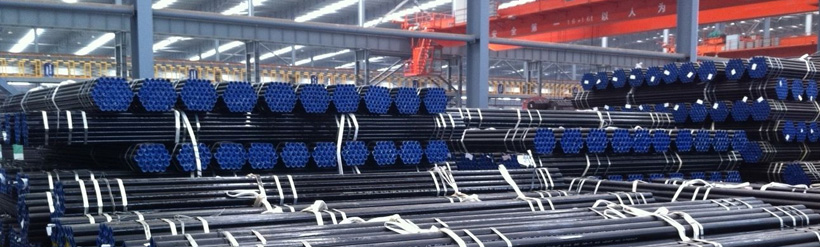
What’s more, we have built long, deep and close business relationship with dozens of steel company, Sharing and holding equities with several steel enterprises. Because of the close cooperation with steel companies and our pioneering spirit, which can ensure us stay at the top competition, and ensure our customers get what they really want. We provide preffesional one-stop service to the Contractors of follows project:
- Oil and Gas Pipeline Construction
- Onshore and Offshore
- Boiler Manufacturers
- Oil Refining Equipment
- Petroleum and Chemical Plant Construction
- Fire Protection
- Heating & Air Conditioning
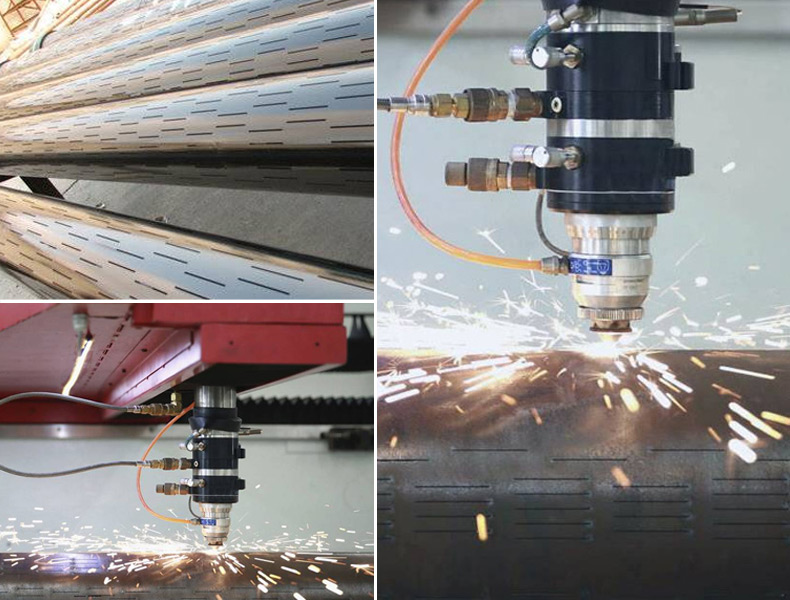
Our ability to purchase materials directly from leading mills at the best possible price will give you the competitive edge. This coupled with a skilled workforce dedicated to embracing the demands of the markets we serve. Just give us a call +86-731-89903933.